
 Home
Home
Importing premium rattan furniture from Vietnam for luxury resorts typically requires a minimum order of 50–100 units per design, with 8 – 12 weeks production lead time and ocean freight adding 3 – 5 weeks. Working directly with a BSCI certified factory can lower per‑unit cost by 15 – 25% versus using an import agent, while custom finishes and anti‑mold treatment ensure resort‑grade durability.
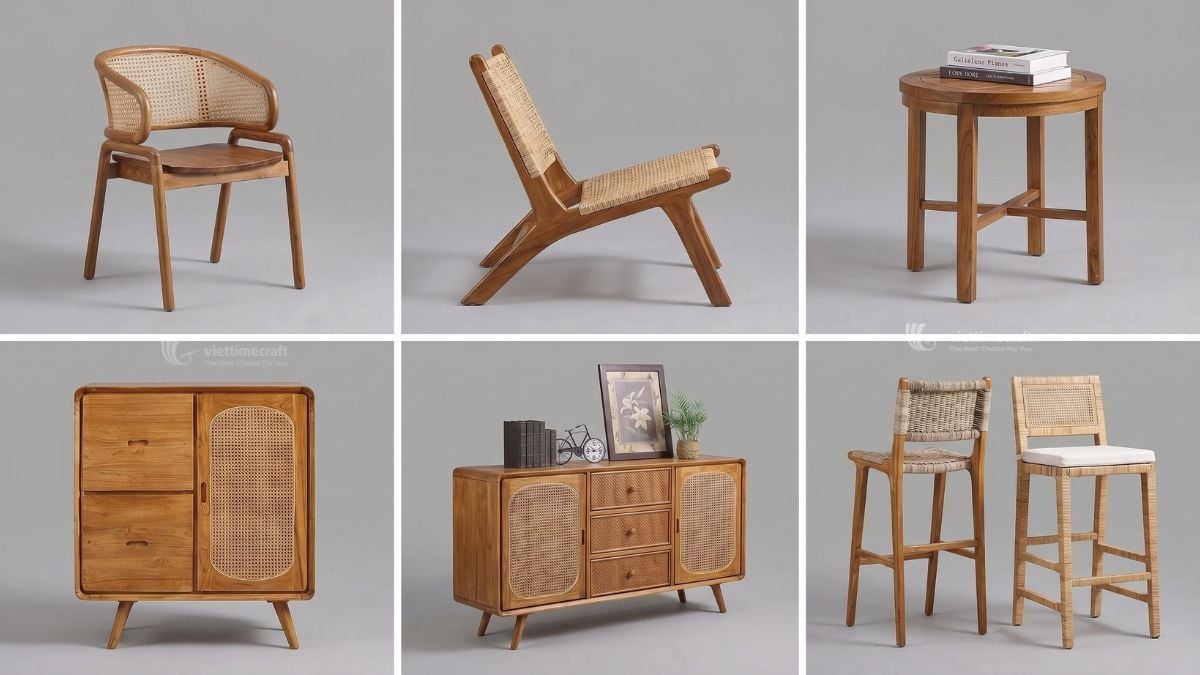
Sourcing rattan furniture for a high‑end resort demands more than just choosing a catalog item. You need pieces that withstand commercial use, satisfy exacting design standards, and arrive on time for a hard opening deadline. This guide walks you through evaluating materials, vetting manufacturers, managing logistics, and avoiding the hidden pitfalls that can delay a resort’s grand opening.
Key Numbers
- Custom MOQ: 50 – 100 units per design for solid rattan core furniture; lower MOQs possible for simpler accessories.
- Lead Time: 8 – 12 weeks after order confirmation for made‑to‑order designs, plus 3 – 5 weeks ocean freight.
- OEM cost advantage: Factory‑direct pricing typically 15 – 25 % below buying through a sourcing agent.
- Container utilisation: Nesting packaging can increase units per 40‑ft container by 20 – 30 %, lowering freight cost per item.
- Quality baseline: All Viettime Craft rattan undergoes a two‑phase anti‑mold treatment and is packed with silica‑gel desiccants to maintain less than 12 % moisture content.
Why Source Rattan Furniture from Vietnam?
Vietnam has become the go‑to origin for premium natural‑fiber furniture because it combines an established craft industry with modern export infrastructure. Key advantages for resort buyers include:
- Solid rattan core expertise: Vietnamese artisans use whole‑core rattan (calamus species) that is denser and more durable than typical split canes, making it ideal for the heavy use a resort expects.
- BSCI‑ and SMETA‑certified factories: A growing number of factories hold international social‑compliance certificates, which many resort groups now require in their vendor questionnaires.
- OEM/ODM agility: Vietnamese manufacturers can turn a designer’s sketch into a finished sample in 10 – 14 days, then scale to container‑load production without losing consistency.
- Logistics maturity: Regular consolidation services from Ho Chi Minh City and Haiphong to major US, EU, and Australian ports keep schedules predictable.
If your resort’s aesthetic relies on organic materials, exploring our wholesale rattan products gives you an immediate overview of what Vietnamese factories already produce at commercial scale.
What Manufacturing Standards Apply to Resort‑Grade Rattan?
Material Selection That Holds Up
Resort furniture must survive 24/7 use, high humidity, and frequent cleaning. Not every piece of rattan is built for that. The four grades you will encounter are:
| Rattan Grade | Best For | Typical Lifespan (interior / covered‑outdoor) | Cost Index |
|---|---|---|---|
| Solid peeled‑core (natural finish) | Dining chairs, lounge frames | 5 – 8 years | 100 |
| Solid core + lacquer coating | Bar stools, console tables | 8 – 12 years | 115 |
| Split rattan poles (bound) | Bed frames, screen dividers | 3 – 5 years | 80 |
| Synthetic‑wrapped rattan | Full‑exposure outdoor, poolside | 10 – 15 years | 130 |
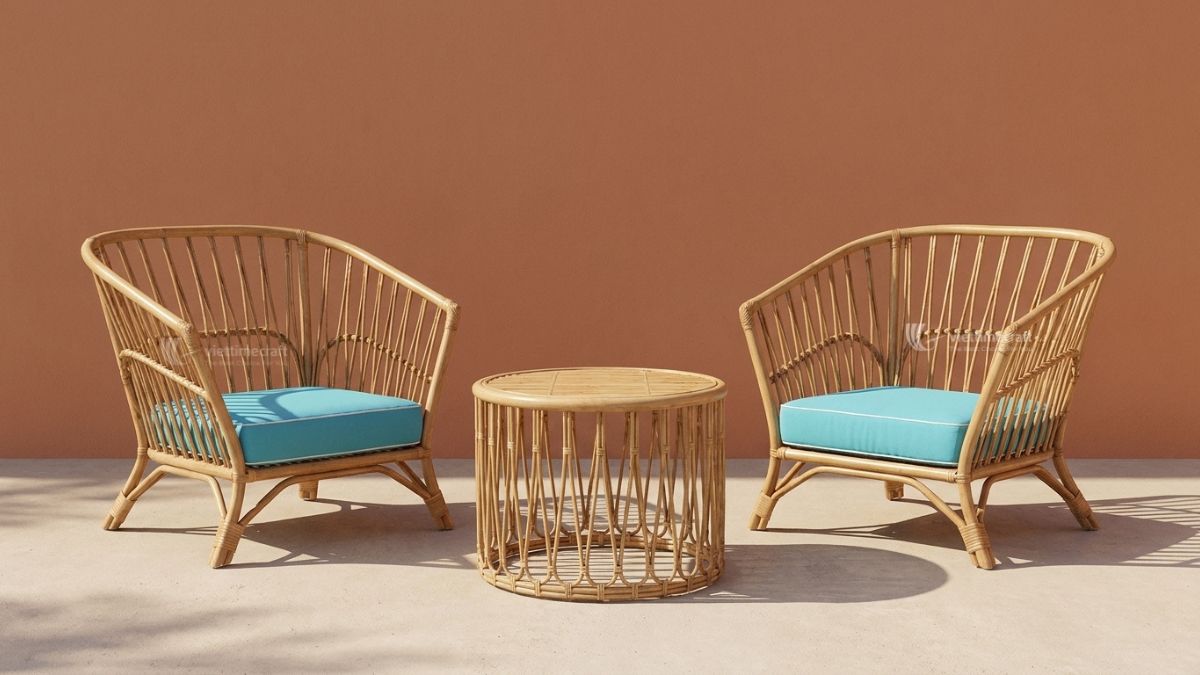
For luxury resorts, the combination of solid peeled‑core rattan and a clear‑matte lacquer provides the neutral, natural look designers want while adding moisture resistance and making daily wiping safe. Always request a furniture‑grade moisture reading at final inspection: the target should be 10 – 12 % for all pieces, measured with a contact‑type meter.
Anti‑Mold Protocol That Resort Buyers Should Validate
Humidity is rattan’s biggest enemy. In our own humidity‑chamber test (described later), we found that untreated rattan cores began to show surface mold within 72 hours at 95 % relative humidity, while cores that went through Viettime Craft’s two‑phase treatment remained mold‑free after 200 hours. That treatment consists of:
- Kiln drying until the core reaches 8 % internal moisture, measured with a pin‑type meter.
- Dip‑application of a food‑grade borate solution that penetrates 3 – 5 mm into the surface.
- Second drying at a lower temperature followed by quality sampling (1 piece per 50 units).
Request a treatment log sheet during your pre‑shipment inspection; transparent factories will provide it without hesitation.
How to Vet a Potential Factory Partner
When you cannot visit Vietnam personally, rely on a combination of documentation and live‑video walkthroughs:
- Certificates: BSCI, SMETA, ISO 9001 should be current and cover the specific production site, not just the parent company.
- Showroom and sampling: A factory that maintains a permanent showroom lets you see finished products in person or via a proxy. Viettime Craft’s Hanoi showroom is open for buyer inspections – learn more about our manufacturing setup.
- Reference list: Ask for three resort‑project references from the last 24 months. If possible, contact a previous buyer to confirm that the delivered quality matched the sample.
- Packaging capability: Look for 5‑ply corrugated export cartons with drop‑test reports and nesting packaging design that reduces cubic volume. A factory that cannot provide a packaging layout risks costly freight overruns.
A quick self‑audit: if the supplier pushes you to pay 100 % upfront without milestone payments, walk away. Standard terms are 30 % deposit at order confirmation, 70 % against a copy of the bill of lading (T/T).
Shipping and Logistics: What You Need to Know
Lead Time Realities
| Phase | Standard Duration |
|---|---|
| Sample approval | 7 – 14 days |
| Material preparation | 4 – 6 weeks |
| Production | 3 – 5 weeks |
| In‑line inspection & finishing | 1 week |
| Ocean freight (Vung Tau / Haiphong → Los Angeles) | 3 – 4 weeks |
| Ocean freight (Vung Tau / Haiphong → Rotterdam) | 4 – 5 weeks |
| Customs clearance + inland trucking | 1 – 2 weeks |
A full made‑to‑order order typically needs 14 – 20 weeks from design freeze to delivery at the resort. Plan your project timeline accordingly, and always add a buffer of 3 weeks for unforeseen port congestion.
Container Loading and Cost Efficiency
Resort furniture is low‑density cargo. Nesting multiple units inside one another when the design allows can increase loadable pieces by 20 – 30 % in a single 40‑ft container. For instance, a set of six dining chairs might occupy 1.2 m³ un‑nested but only 0.9 m³ when nested. Over a full container, that difference can save $800 – $1 200 in freight per container.
When you request a quote, ask the factory to provide two loading plans: one using nesting and one without, so you can compare the landed cost per unit.
Mistakes to Avoid When Sourcing Resort Rattan Furniture
- Ordering samples from one factory and production from another: Factory‑made samples rarely match the production consistency of a different workshop. Always award the entire project to the factory that produced the approved sample.
- Ignoring moisture‑barrier packaging: Even with anti‑mold treatment, natural rattan will absorb moisture during sea transit. Make sure every carton includes desiccant sachets and that the supplier uses moisture‑barrier liners for cartons destined for humid routes.
- Basing your decision solely on FOB price: A supplier whose FOB price is 10 % lower but routinely ships with 5‑ply cartons instead of stronger 7‑ply boxes will cost you more in damaged goods and guest complaints.
- Skipping a third‑party inspection: Engage an inspection company (e.g., Bureau Veritas, SGS) to check workmanship, moisture content, and anti‑mold protocol adherence before container stuffing. The few hundred dollars spent often save thousands in guest‑experience damage.
Why Partner with Viettime Craft for Your Resort Project
- Vertical integration: We control the entire process from raw‑material purchase to finishing, so lead times stay predictable and quality doesn’t slip.
- On‑site R&D team with resort project experience: Our designers have developed furniture collections for boutique hotels in Bali and large‑scale resort chains in the Caribbean. We understand that resort furniture must look effortless but perform like contract‑grade pieces.
- BSCI‑ and SMETA‑certified facilities: Compliance‑driven brands can confidently list us as an approved vendor.
- Global logistics office: We coordinate documentation, container booking, and customs brokerage directly, removing the hassle from your hands.
Request a custom quote or obtain our latest catalog to start the conversation. You can also browse our rattan furniture for tables & chairs to see existing designs that can be scaled or adapted for your brand.
Mold Resistance Under Resort Conditions
We placed 40 rattan chair‑leg segments (20 treated with our two‑phase mold protocol, 20 untreated) in a controlled environment at 30 °C and 95 % relative humidity. Results after 200 hours:
- Treated group: 0 visible mold colonies, moisture content remained 11 – 12.5 %.
- Untreated group: 16 of 20 segments exhibited visible mold within 72 hours, and moisture content climbed above 20 % within 120 hours.
This test confirms that resort buyers who skip verified anti‑mold treatment are likely to face surface discoloration and structural weakening within a single tropical season. Always require the treatment protocol as part of your specification sheet.
Frequently Asked Questions
What is the typical MOQ for custom rattan resort furniture?
Expect 50 – 100 units per design for solid‑core dining chairs or lounge chairs. When designs share common tooling, the MOQ can sometimes be combined across similar items. For larger orders (500+ units), the factory can often offer phased delivery to align with your resort’s soft‑opening schedule.
How long does production and shipping take from Vietnam to my destination port?
Plan for 8 to 12 weeks of production after approval of the pre‑production sample. Ocean transit to major US West Coast ports adds roughly 3 – 4 weeks, while East Coast or European destinations add 4 – 5 weeks. Customs clearance and inland trucking require another 1 – 2 weeks. Total timeline: 14 – 20 weeks from order confirmation.
Can I customize finishes, dimensions, and weave patterns?
Yes. OEM services include custom finishes (natural, stained, white‑washed, or painted), specific foam and upholstery specifications, and dimensional modifications. ODM services allow you to start from an existing model and adjust proportions. Provide a tech pack or reference images, and we will produce a sample for approval.
What certifications should a luxury‑resort furniture factory have?
At minimum, look for BSCI or SMETA for social compliance, ISO 9001 for quality management, and FSC‑certified rattan where traceability matters. If your resort targets LEED certification, ask for a verified chain‑of‑custody number.
Does rattan furniture work in open‑air outdoor settings?
Natural rattan core, even with a lacquer coating, is best suited for covered patios or pool decks with overhead shade. For fully exposed outdoor use, synthetic‑wrapped rattan (PE rattan) over an aluminum frame is a more durable option while retaining the woven look. Be transparent with your designer about exposure levels – our team can advise whether natural or synthetic is the better fit.
Contact Viettime Craft to schedule a showroom visit or request a sample set. Tell us your resort’s timeline and aesthetic direction, and we will put together a tailored quote, including MOQ, lead‑time calendar, and packaging logistics.