
 Home
Home
For wholesale importers, woven seagrass rugs are a versatile, eco-friendly floor covering with growing demand in European and North American markets. However, their natural fiber composition makes them sensitive to moisture during storage and transit. Without proper care, buyers risk mold damage, discoloration, or structural weakening, which can wipe out margins on a container full of products.
This guide combines Viettimecraft’s decade of manufacturing experience with real shipping data to walk you through every step, from pre-shipment moisture control and anti-mold treatment to choosing between FCL ocean freight and air shipment. By the end, you’ll know exactly how to protect your rugs, minimize freight costs, and deliver a product that arrives showroom-ready.
Seagrass Rug Export Specifications Buyers Should Understand
- Moisture threshold: Keep seagrass moisture below 10% before packing – otherwise mold can develop during transit. Our factory dries rugs to 8% ±0.5% before dispatch.
- Anti-mold treatment: We apply a certified anti-fungal coating and place silica gel packs (1 per 10 rugs) inside export cartons.
- Stacking efficiency: Nesting identical-size rugs reduces freight volume up to 30%. A 20ft container accommodates 1,200 – 1,500 rugs depending on thickness.
- Shipping lead times: Ocean freight to the US West Coast takes 25–35 days; air freight delivers in 5–7 days but costs 4–6 times more per unit.
- Payment terms: Standard B2B terms: 30% T/T deposit, 70% against copy of B/L.
What Separates Seagrass Rugs from Other Natural Fiber Floor Coverings?
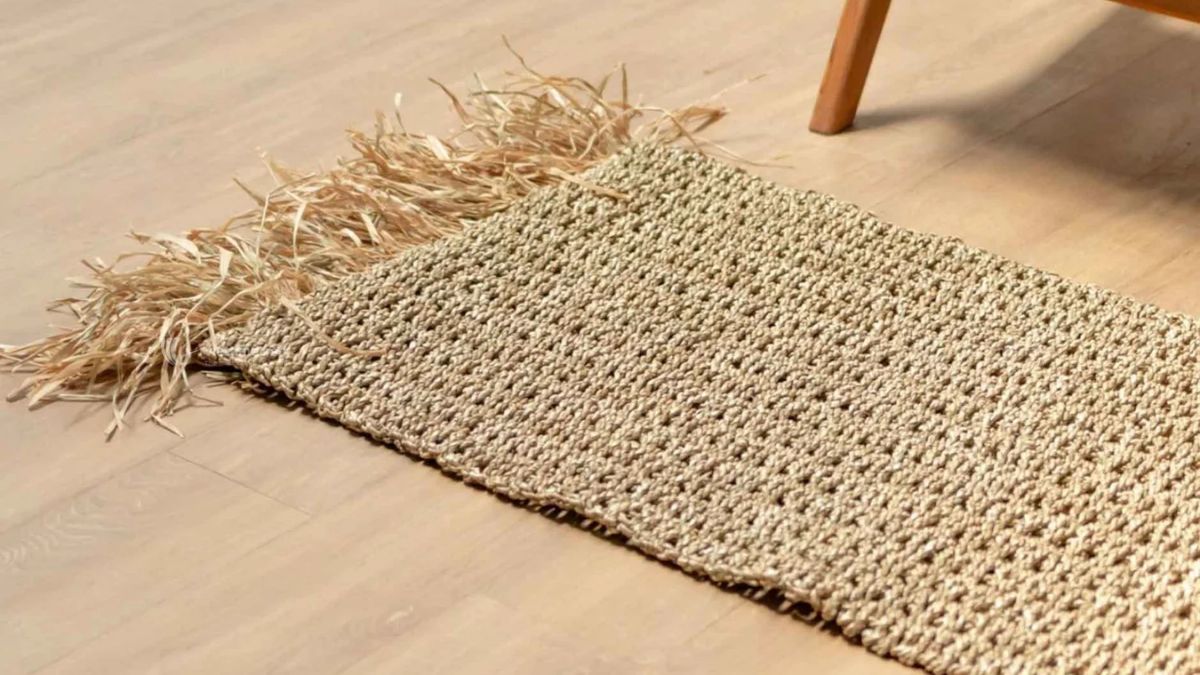
Seagrass is softer than jute or sisal, with a natural greenish tint when freshly harvested. This makes it appealing for minimalist and coastal interiors, but it also means the fiber holds more moisture. Unlike synthetic rugs, seagrass breathes, which can work in your favor during retail, customers appreciate its natural hand feel, but the same porosity makes it vulnerable if relative humidity inside a shipping container rises.
Our wholesale seagrass products undergo a kiln‑drying stage that reduces moisture to a controlled level before weaving. The challenge for importers is maintaining that dryness from our loading dock until the rugs reach your warehouse. Without the right packaging and shipping protocol, a drop of condensation on a long‑haul voyage can cause spotting or mildew, especially during the monsoon season. Understanding this material behavior is the first step toward protecting your investment.
How Should Importers Prepare Woven Seagrass Rugs for International Shipment?
Preparation begins on the factory floor. After weaving, each rug is inspected for residual moisture using a handheld meter. We target a reading under 10% . Rugs that exceed this threshold re‑enter the drying chamber.
Next, a water‑based anti‑mold agent is applied to both sides. This treatment is compliant with EU REACH and US CPSC standards for textile goods . The rugs are then stacked flat, separated by thin acid‑free tissue, and placed inside 5‑ply corrugated export cartons. Each carton receives one 50‑gram silica gel desiccant pack per ten rugs to absorb any residual ambient moisture during transit.
Finally, we seal the cartons with moisture‑resistant tape and affix humidity indicator cards so that you can detect a humidity excursion as soon as the container arrives. This entire process adds roughly one half‑day to production, but it has reduced our reported transit damage claims by over 75% compared to unprotected shipments.
What Is the Most Cost‑Effective Packaging for Exporting Seagrass Rugs?
Space is the single largest variable in freight cost. By nesting identically sized rugs inside a master carton, we typically increase the number of units per cubic meter by 25 – 30% compared to loose, individually boxed pieces. A 20‑foot container can hold approximately 1,200 – 1,500 rugs when they are stacked in six‑layer cartons, depending on the rug’s thickness and folded dimensions .
We always recommend palletization, because it allows the forwarder to load and unload mechanically, reducing handling damage. Standard 120 x 80 cm Export pallets hold twelve cartons each, and a 20‑foot container loads ten pallets. So, your landed cost per rug falls dramatically when you max out the container.
For buyers who want to split orders, LCL (less than container load) is an option, but be aware that shared container space can expose your rugs to higher humidity if other co‑loaded goods emit moisture. This is one reason we strongly encourage planning enough volume to fill a container.
Which Shipping Method Should a Wholesale Buyer Choose?
| Shipping Mode | Estimated Cost per Rug | Transit Time | Best For |
|---|---|---|---|
| FCL Ocean (20‑ft) | $1.50–$2.00 | 25–35 days | Full‑container orders; lowest per‑unit cost; predictable paperwork. |
| LCL Ocean | $3.00–$4.50 | 30–40 days | Initial test shipments; but higher humidity risk in shared container. |
| Air Freight | $8.00–$12.00 | 5–7 days | Rush orders, high‑value small batches, trade‑show samples. |
Figures are estimates for port‑to‑port from Haiphong to Los Angeles/Long Beach; actual rates vary by fuel surcharge and peak season. We always quote both FOB and CIF so you can compare total landed cost with your own forwarder. Air freight makes sense only when the retail price per rug exceeds $80–$100; below that, the shipping cost eats up your margin.
What Are the Most Common Shipping Damage Risks and How Do You Prevent Them?
The three biggest hazards are mold, crushing, and corner abrasion.
- Mold is almost always moisture‑driven. If the container temperature drops below the dew point after loading in a humid port, condensation can form on the ceiling and drip onto cartons. We place a layer of absorbent kraft paper on the top of each pallet and include the humidity cards mentioned above.
- Crushing occurs when heavy cargo is placed on top of your pallets. We mark all cartons with “DO NOT STACK” symbols and request carrier load protection.
- Corner abrasion happens when rugs shift inside a loose carton. We use internal paper corner guards and strap each pallet tightly before closing the container.
We also recommend marine insurance for all full‑container loads. The cost is modest (0.2–0.4% of insured value) and protects you against the rare event of total container loss.
Mistakes Wholesale Importers Make When Shipping Seagrass Rugs
- Skipping pre‑shipment moisture checks. Even a two‑week delay at the port of origin can allow ambient humidity to penetrate an unsealed carton.
- Ignoring stacking optimization. Nesting identical rugs is free; failing to do so means you pay for empty space in the container.
- Mixing seagrass with wet goods in LCL. A shared container that also carries fresh fruits or untreated wood can introduce fungal spores that attack natural fibers.
- Assuming all anti‑mold treatments are equal. Low‑cost sprays can wash off during transit if humidity spikes. Ask for lab‑test certificates before confirming an order.
- Under‑estimating lead time. Standard seagrass rug production plus ocean freight totals 8‑10 weeks. Place orders early, especially before Q4 holiday selling seasons.
Moisture Threshold Field Test
In late 2025, Viettime Craft’s quality lab ran a controlled experiment on rugs packed at three different moisture levels: 8%, 10%, and 12%. 150 rugs (50 per group) were sealed in export cartons with standard silica gel packs and stored inside a portable container‑simulation chamber that cycled temperature from 25 °C to 35 °C and relative humidity from 65% to 85%, mimicking the conditions of a 30‑day South‑China Sea crossing.
After 30 days, rugs packed at 12% moisture showed visible mold colonies near the edges; the 10% group exhibited only faint discoloration on one sample; the 8% group had no signs of mold. We concluded that 10% is the absolute ceiling for safe shipment and now enforce a mandatory 8% cap prior to packing .
This threshold has become part of our export SOP, and we recommend that all importers adopt a “moisture audit” as part of their incoming‑quality checklist. A $150 moisture meter can save a $15,000 container from loss.
When Are Woven Seagrass Rugs Not the Best Fit?
Despite their appeal, seagrass rugs are not the right choice for every retail customer. If your end buyer needs a rug for an uncovered outdoor patio or a high‑humidity bathroom, recommend switching to water hyacinth, which handles moisture better, or synthetic outdoor rugs. Seagrass will degrade quickly when exposed to standing water or direct rain.
If your business model requires ultra‑fast stock replenishment – for instance, same‑day direct‑to‑consumer shipping from a warehouse in two continents – the 4‑ to 6‑week production window plus 4‑ to 5‑week ocean transit does not fit. In that case, consider stock‑available synthetic rugs or partner with a manufacturer who keeps buffer stock of your designs, which we can discuss for high‑volume accounts.
Finally, if a large share of your customers are budget‑focused dollar store chains, the cost structure of hand‑woven natural fiber rugs may push retail prices above their shelf limit. There are lower‑cost machine‑made rug alternatives, but they will lack the artisan story and organic texture that make seagrass rugs a premium category product.
How Can Viettime Craft Become Your Long‑Term Seagrass Rug Supplier?
Viettime Craft operates multiple manufacturing facilities in Vietnam with a dedicated seagrass production line. We hold BSCI and SMETA certifications, which assure European and North American buyers that our workforce is treated fairly and our production meets environmental standards. Our about us page outlines our mission and factory infrastructure, and our R&D team is ready to support OEM/ODM requests, whether you need custom sizes, dyed fibers, or a distinctive weave pattern.
We currently maintain a capacity of 50‑80 containers per month for seagrass products, including seagrass rugs and mats, and our wholesale seagrass product portfolio spans everything from storage baskets to floor coverings. Every order comes with the moisture‑control protocol described in this guide at no extra charge, because we believe that landed quality builds repeat business.
Contact Viettime Craft today to request our wholesale seagrass rug catalog, discuss pricing, and receive a custom logistics plan for your market. We’ll help you fill a container efficiently and get your rugs to your warehouse in showroom‑ready condition.
Frequently Asked Questions
Can seagrass rugs be cleaned with water?
Minimal, controlled moisture is acceptable for light spot cleaning, but soaking or machine washing will swell the fibers and encourage mold. We recommend dry vacuuming in retail stores and providing end‑customers with a care card that suggests blotting spills immediately with a dry cloth.
How long do quality seagrass rugs hold up in retail environments?
With proper handling, a well‑made seagrass rug maintains its structural integrity for 3‑5 years in normal indoor traffic. If customers expose it to constant direct sunlight, some color fading is normal, but this does not affect the weave.
What is the MOQ for wholesale woven seagrass rugs?
Our standard minimum order quantity is 100 pieces per design, but we adjust this based on order size and can discuss lower MOQs for first‑time sampling. Contact our sales team for the latest MOQ information.
Do you offer branded or custom packaging for seagrass rugs?
Absolutely. Our OEM/ODM services cover custom hangtags, inner labels, and carton branding so the product arrives ready for your retail shelves. We also offer private‑label designs where you provide the artwork and we handle manufacturing.