
 Home
Home
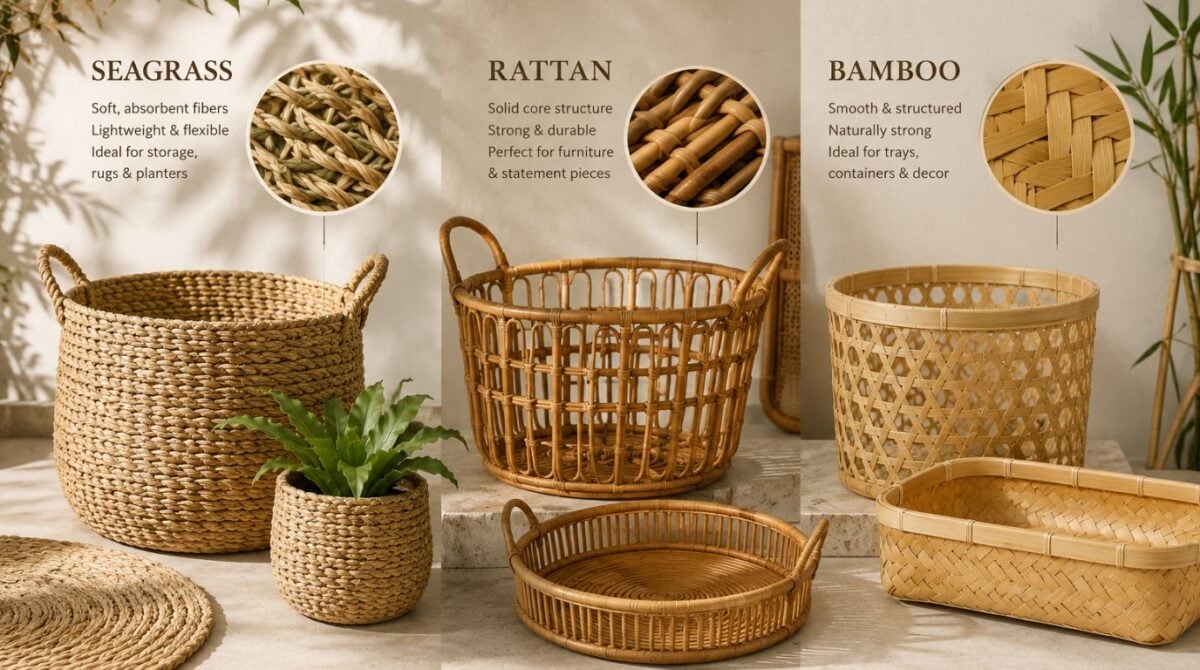
Natural seagrass differs from rattan and bamboo in both texture and moisture behavior. Unlike rattan’s solid core, seagrass fibers are softer, more absorbent, and lighter, making them ideal for storage baskets, rugs, and planter covers. However, that same absorbency means seagrass will readily pull in ambient humidity and swell if not controlled.
For importers, the practical implication is clear: moisture management is not optional. A container arriving in a humid port can develop surface mold within 48 hours if the internal moisture of the fiber exceeds 12% . Partner factories that skip pre‑treatment and merely sun‑dry seagrass may deliver up to 30% higher defect rates in transit .
How Should You Inspect and Care for Seagrass Baskets Before Warehouse Storage?
Upon receipt, open a random carton from the middle of the pallet (the area most prone to condensation) and check:
- The surface of the weave for any white or dark spots (early‑stage mold).
- A moisture meter reading taken from the thickest section, acceptable range is 8‑12%.
- Whether the baskets retain their shape; distortion often indicates internal moisture or inadequate carton support.
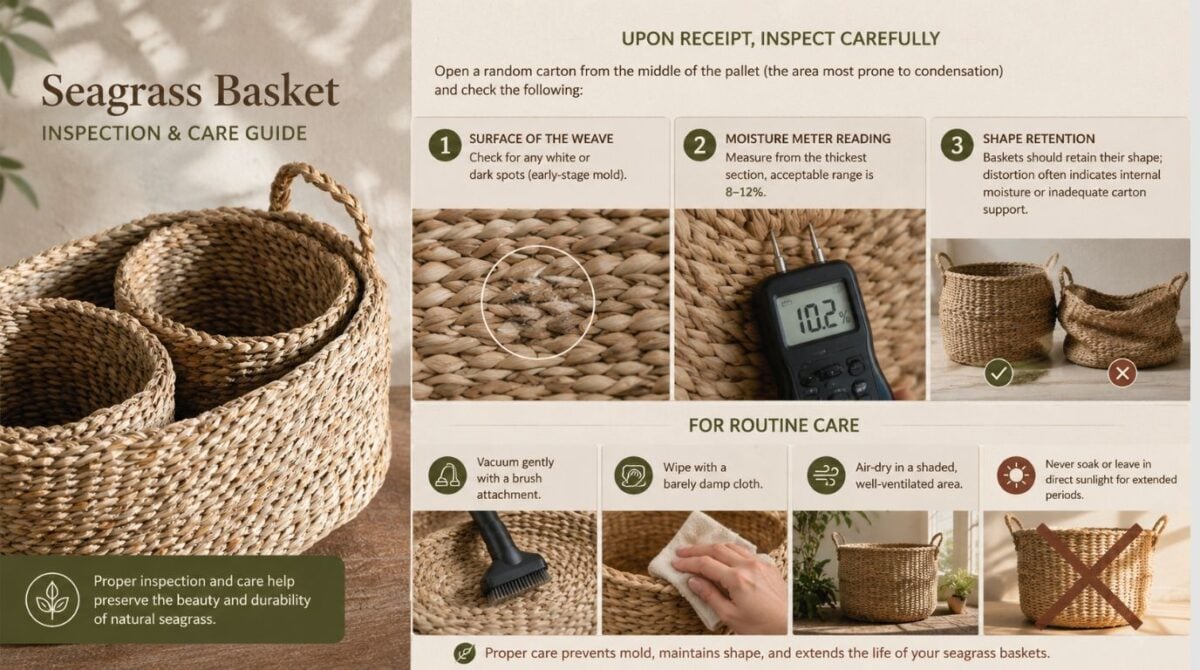
For routine care, vacuum gently with a brush attachment or wipe with a barely damp cloth, then air‑dry in a shaded, well‑ventilated area. Never soak seagrass or leave it in direct sunlight for extended periods, as UV exposure can cause brittleness and color fading within weeks.
What Environmental Conditions Prevent Mold and Degradation in Bulk Inventory?
Store seagrass baskets in a climate‑controlled space where temperature stays between 15‑25 °C and relative humidity remains below 60% . If your warehouse lacks full HVAC, use portable dehumidifiers and verify the moisture content of the ambient air weekly. Wooden pallets should be replaced with plastic pallets to avoid moisture wicking from the floor.
Maintain at least 15 cm clearance between carton stacks and exterior walls, where condensation can build. During monsoon season in Asia, we reduce the warehouse‑hold window to under 14 days before loading to minimize exposure to saturated air .
How Does ViettimeCraft Pre‑Treat Seagrass to Minimize Shipping Damage?
Before weaving, our seagrass undergoes a minimum four‑week shade‑curing cycle that brings the inherent moisture from roughly 25% down to about 10%. After weaving, baskets enter a two‑stage solar‑kiln drying process: first at 45°C for 24 hours, then at 55°C for 18 hours. This protocol reduces fiber‑bound water to below 8%, well under the mold‑initiation threshold .
Every batch is then sprayed with a BSCI‑compliant anti‑mold solution during final inspection. We insert silica gel sachets (10 g per 30L basket volume) and a polyethylene‑lined inner bag inside every master carton to block humidity ingress from the container wall .
Packaging Strategies That Cut Freight Costs and Protect Shape
Nestable designs are essential. By ordering baskets in three graduated sizes that fit inside one another, you can reduce the per‑unit volume by up to 40% compared with shipping each basket in separate cartons . Our standard export cartons use 5‑ply corrugated board that passes ISTA 3E drop tests at 76 cm.
For mixed shipments, we pack baskets upright with kraft‑paper spacers and include a moisture‑indicator card on the inside of the outer carton flap. If the card arrives pink, your receiving team knows humidity breached the barrier and can act before unstacking the entire container. Explore our wholesale seagrass products and seagrass storage baskets to see which shapes offer the best nesting ratios.
The Most Costly Mistakes Importers Make with Seagrass Shipments
- Skipping the pre‑shipment moisture test. A $150 lab check can prevent a full container write‑off that costs $15,000+.
- Using wooden pallets without fumigation. ISPM 15 requirements for wood packing apply; non‑compliant pallets can delay customs clearance by 2‑3 weeks.
- Over‑optimizing for cube without securing structural support. Nesting reduces space but can amplify compression damage if baskets are not internally supported with cardboard inserts.
- Ignoring the “first‑in, first‑out” rotation for older inventory. Long‑held seagrass that wasn’t stored in climate‑controlled conditions will degrade, even if it appears sound.
- Demanding guaranteed ship dates without a buffer. Port congestion in Hai Phong added an average 7‑day delay in 2024 ; always plan for a two‑week slip.
Frequently Asked Questions
How do I clean a seagrass basket without damaging the fibers?
Use a soft brush or vacuum with a brush attachment and, if necessary, a barely damp microfiber cloth. Avoid soaking or applying liquid cleaners; let the basket dry completely in the shade before repacking.
Can seagrass baskets get wet during transport?
If properly shielded inside PE‑lined master cartons with silica gel, occasional condensation on the container wall won’t reach the product. However, direct water ingress from leaks can cause irreversible staining and mold; always inspect cartons for water marks before signing for a shipment.
How long do natural seagrass baskets last in retail use?
With proper care, seagrass baskets can retain their shape and color for 3–5 years in indoor settings. In humid bathrooms or sun‑exposed patios, lifespan may drop to 1–2 years. End‑customer care cards help manage expectations and reduce returns.
Partner with ViettimeCraft for Your Seagrass Wholesale Order
We are a direct Vietnam manufacturer with BSCI, SMETA, and ISO 9001‑certified facilities. Our engineers collaborate on nestable designs from sample stage, and we offer free moisture‑test reports with every pre‑shipment inspection. Request a quote or browse our best‑selling seagrass storage range to start a conversation about your next catalog refresh.