
 Home
Home
Assessing lacquer vase quality before a wholesale purchase prevents costly returns. Key checks: surface gloss consistency, layer thickness (target 0.8–1.2 mm), moisture content ≤12%, even coating without bubbles, and compliance with export safety standards. Viettimecraft’s 12‑point in‑house inspection and anti‑mold drying process reduce buyer risk.
Why a Detailed Quality Checklist Matters When Sourcing Lacquer Vases
Buyers importing lacquer vases face risks that a visual glance cannot catch: adhesion failures, hidden moisture that causes cracks months later, or uneven layers that degrade under retail display lights. A structured checklist gives you the same evaluation rigor a factory quality control team applies on‑site. Without it, your warehouse might receive products that look acceptable but fail in the hands of end customers.
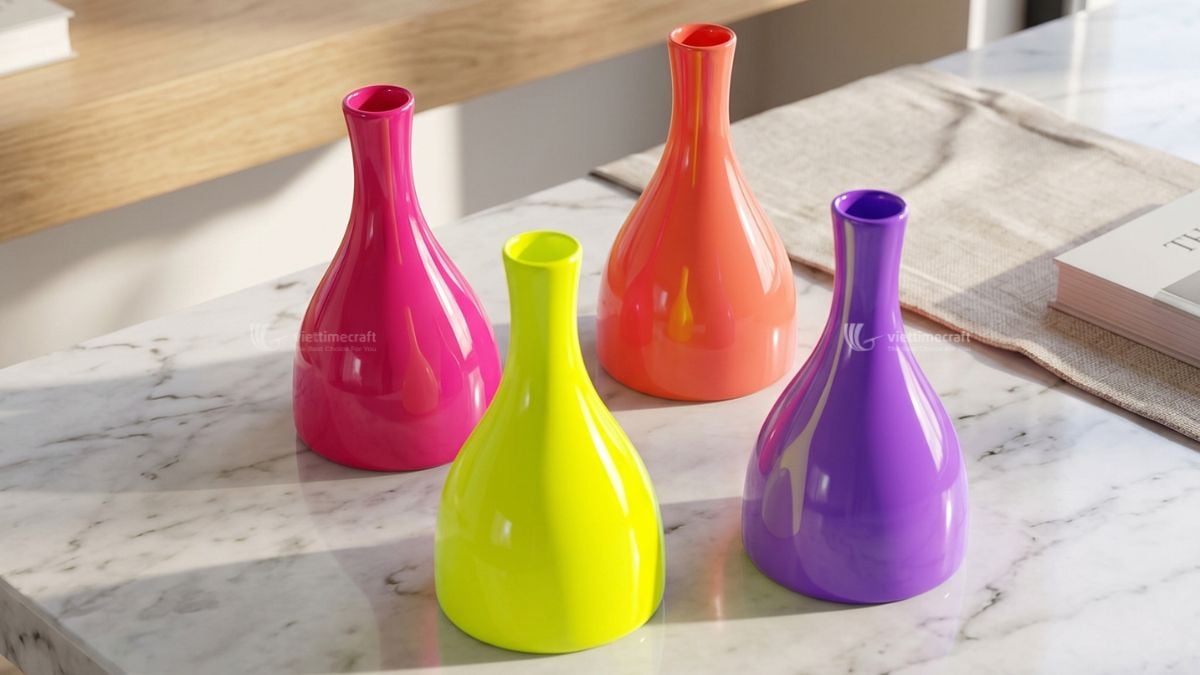
This guide walks you through the critical parameters you need to verify, from coating thickness to export‑grade compliance. Both experienced importers and first‑time buyers can use it to make informed sourcing decisions without technical jargon.
Quick‑Scan Summary
- Surface Finish: Gloss uniformity, no pinholes or orange peel, consistent colour across a batch.
- Layer Integrity: Minimum 12 lacquer layers for premium vases; total thickness 0.8–1.2 mm measured with a digital gauge.
- Moisture Control: Substrate moisture must be ≤12% to avoid later deformation; anti‑mold kiln treatment required.
- Dimensional Tolerance: Acceptable deviation on height/diameter ±2 mm for standard shapes; critical for insert‑fit items like candle holders.
- Export Compliance: EU REACH limits on heavy metals, US FDA‑compliant if food‑contact, no lead‑based pigments.
What Are the Key Quality Indicators for Lacquer Vases?
Vase quality rests on three pillars: the base material, the lacquer layers, and the post‑processing finishing. Each pillar has a handful of measurable sub‑indicators that factory QC checklists use.
Base Material
Lacquer vases from Viettime Craft typically start with a dense bamboo, wood, or composite core that resists warping. The base must be sanded to an even surface before any lacquer is applied. Common issues to inspect: leftover splinters, uneven sanding marks, or internal cracks that could expand during transport.
Lacquer Layers
Traditional Vietnamese lacquerware builds successive layers of natural resin, each dried in a humidity‑controlled chamber. A premium wholesale vase will have at least 12 visible layers and a total coating thickness of 0.8–1.2 mm. Thinner coatings (under 0.6 mm) often wear prematurely under handling and lose their high‑gloss effect after a few months on display shelves.
Post‑Processing
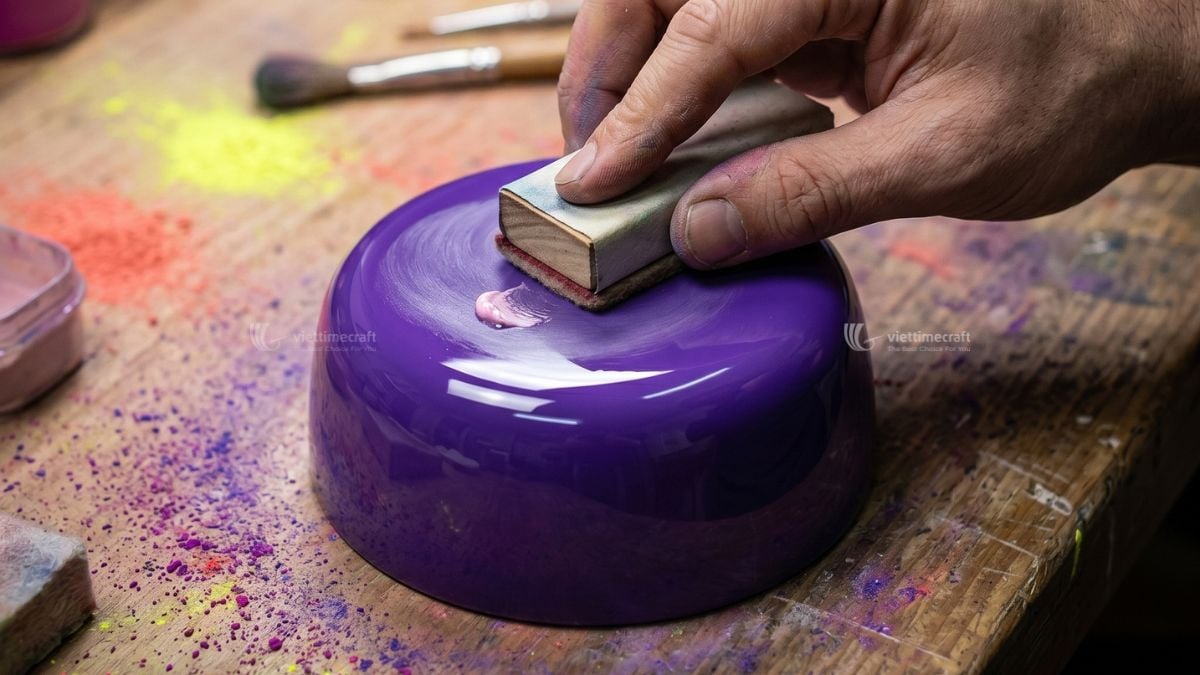
After the final lacquer layer, skilled artisans polish the surface with fine abrasives and sometimes apply a thin protective wax. Look for consistent sheen, absence of swirl marks, and sharp definition of any hand‑painted motifs.
| Grade | Gloss & Smoothness | Acceptable Minor Blemishes | Typical Layer Count | Best Fit |
|---|---|---|---|---|
| Premium (A) | Mirror‑like gloss, no visible bubbles | None allowed | 10+ layers | High‑end boutiques, gift retailers |
| Standard (B) | Consistent gloss, tiny pinholes (<0.5 mm) possible | Up to 2 microscopic spots per vase | 10 layers | Mid‑market wholesale, subscription boxes |
| Economy (C) | Semi‑gloss, slight waviness acceptable | Minor colour variance across batch | 10 layers | Budget retailers, promotional items |
How Can You Verify Lacquer Layer Durability and Adhesion?
Adhesion failure – where the lacquer peels away from the base or between layers – is one of the most expensive defects because it may not appear until the vase experiences temperature changes during sea freight. Use these practical tests during a factory visit or on pre‑shipment samples.
- Cross‑hatch Tape Test: Score the coating with a grid (1 mm spacing), apply standard packing tape, and pull sharply. Less than 5% detachment is considered a pass for export‑grade lacquer.
- Accelerated Temperature Cycling: Expose sample vases to a cycle of 30°C for 4 hours, then 10°C for 4 hours, repeated 3 times. Assess for any cracking or delamination.
- Real‑World Transit Simulation: Place vases in an export carton with standard cushioning, subject to a drop test from 1 m on all sides. This is part of Viettime Craft’s pre‑shipment inspection for any new OEM design.
Pro‑Tip: Ask your supplier whether they cure lacquer layers in a humidity‑controlled environment (50‑60% RH). Open‑air drying can introduce dust inclusions and layer inconsistency.
How to Test Moisture Content and Anti‑Mold Treatment
Natural‑fiber bases (bamboo, wood) that contain excess moisture will warp or crack after several weeks in a heated retail environment. Even a flawless lacquer coat cannot reverse internal movement driven by trapped moisture.
- Target Moisture Level: ≤12% wood moisture content before lacquer application. Use a handheld pin‑type moisture meter on at least 5% of the production batch.
- Anti‑Mold Regime: Viettime Craft dries all base forms in a kiln at 55°C for 48 hours prior to coating. Silica gel sachets are then added to each carton to maintain low humidity during transit.
- Visual Mold Check: Examine the inside of the vase’s neck with a flashlight for any black speckles. Even microscopic mold spores can grow in high‑humidity containers.
What Size, Shape, and Finish Tolerances Are Acceptable for Wholesale Orders?
Consistency across a thousand‑piece order matters more than the perfection of a single sample. Define tolerance ranges in your purchase contract to avoid disputes.
| Parameter | Typical Tolerance (wholesale) | Why It Matters |
|---|---|---|
| Height | ±2 mm | Retail shelf planograms demand uniform rows; variation >3 mm causes visual clutter |
| Diameter (body) | ±1.5 mm | For vases that nest for shipping, excess variation wastes container space |
| Weight | ±8% of agreed sample weight | Heavily underweight indicates thinner coating or hollow base risks |
| Colour shade (lacquer tint) | Delta‑E ≤2 (per CIE76) | Critical for sets or collections sold together; a human eye can perceive Delta‑E >3 |
Request a golden sample approved by both parties, photographed with a colour calibration card, and use it as the reference during any pre‑shipment inspection.
Viettime Craft’s 12‑Point Lacquer Vase Quality Scorecard
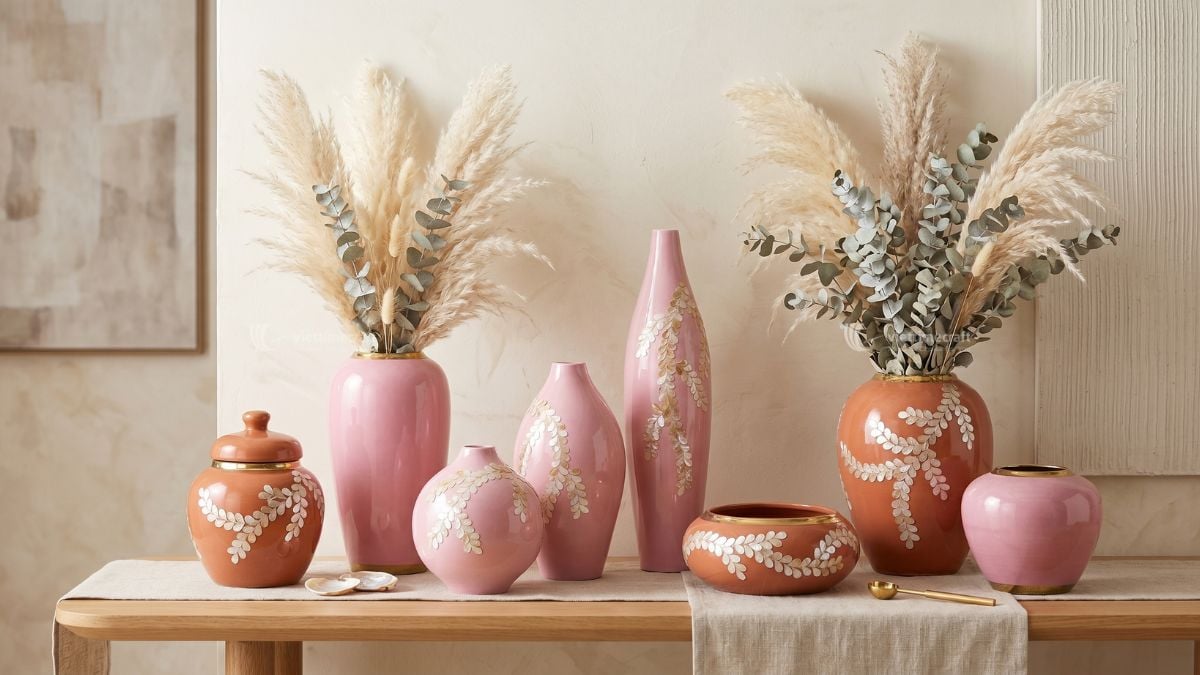
Our factory employs a structured scorecard that every export‑quality lacquer vase must pass before packing. You can adapt this same checklist for your own inbound QC or third‑party inspection.
- Base Material: Sound, no cracks, sanded smooth.
- Moisture Content: ≤12% measured with pin meter.
- Layer Count: Minimum 5 for standard, 7 for premium grade.
- Coating Thickness: 0.8–1.2 mm at five random points on body.
- Adhesion (cross‑hatch): <5% removal across test area.
- Surface Gloss: Uniform when viewed under a 500‑lux light aligned at 45°.
- Colour Consistency: Delta‑E ≤2 versus approved sample.
- Mold / Humidity Stains: Zero visible at 5x magnification.
- Dimensions: Height ±2 mm, diameter ±1.5 mm.
- Weight Variation: ±8% of approved sample mass.
- Chemical Safety: Lacquer tested for lead, cadmium, mercury per EU 1907/2006 (REACH).
- Packaging Integrity: 5‑ply export carton, anti‑shock inserts, silica gel packet present.
During a recent internal audit of 200 premium vases, we recorded a 1.8% rejection rate, primarily due to minor clouding (point 6). That data feeds continuous improvement in our curing chamber parameters.
This scorecard can be shared with your own inspection partner; we provide it as part of our B2B service because transparent quality standards lower risk for both sides.
Mistakes Buyers Make When Inspecting Lacquer Vases
Even seasoned importers sometimes skip steps that cost them later. Here are the most common missteps — and how to avoid them.
- Relying solely on a photograph of a sample. A high‑resolution photo won’t reveal texture, adhesion, or thickness. Always request a physical sample and put it through the same tests described above.
- Ignoring moisture content because “the lacquer looks fine.” Moisture‑related deformation can take six to eight weeks to appear. A cheap moisture meter (under $50) is the best insurance.
- Assuming “natural” means chemical‑free. Natural lacquer is a resin but may still contain solvents that are restricted in your market. Confirm compliance with your country’s relevant safety regulations.
- Over‑tightening tolerance specifications without considering handcraft variations. Lacquer vases are artisanal products. Setting tolerance at ±0.5 mm on a hand‑finished vase may push your factory to reject pieces that are perfectly acceptable, raising costs.
- Skipping the drop test and container simulation. Many breakages happen not during handling but when a carton is dropped onto concrete during unloading. Insist on seeing packaging test results.
When an option is not right for you: if your supply chain demands sub‑$2 cost per vase with perfect machine consistency, full‑handcrafted lacquer may not be the ideal choice — look at coated resin or glass alternatives instead. We’ll tell you honestly when another material might serve your margin better.
Frequently Asked Questions
How many layers of lacquer should a high‑quality vase have?
For export‑grade B2B orders, a minimum of 5 distinct layers. Premium collections typically use 7 to 9 layers because each additional coat deepens the gloss and makes the finish more scratch‑resistant.
What is the difference between lacquer and ceramic vases for wholesale buyers?
Lacquer vases are lighter, less fragile during shipping, and can be hand‑painted for intricate motifs at a lower production cost. Ceramic vases offer higher heat resistance but heavier weight and risk of chipping. Our wholesale lacquer vases combine the visual appeal of ceramic gloss with the shipping efficiencies natural‑fiber cores provide.
How should lacquer vases be stored to prevent damage?
Keep them in a cool, dry environment (15–30°C, <65% relative humidity). Avoid direct sunlight, which can fade natural lacquer tones over extended exposure. If storing for more than six months, leave them in their original export cartons with silica gel packets.
Can Viettime Craft provide custom colour matching for OEM projects?
Yes. Our R&D team uses spectrophotometers to match any Pantone or RAL reference, and we maintain a colour library for repeat orders. Custom OEM/ODM is a core part of our offering for wholesale partners.
How do you ensure lacquer vases meet EU safety standards?
Every export order is tested against the EU REACH regulation for heavy metals and phthalates. Our in‑house quality control records are available for customer audits, and we can provide third‑party lab reports upon request.
Connect with Viettime Craft for Your Wholesale Lacquer Vase Order
We manufacture lacquer vases at scale with consistent quality, using time‑tested Vietnamese lacquer techniques and modern anti‑mold treatment. Our dedicated export team offers:
- OEM and ODM services — submit your own design or adapt ours.
- MOQs starting from 100 pieces per design.
- Pre‑shipment inspection reports using the 12‑point scorecard described above.
- Space‑saving nested packaging to reduce freight cost per unit.
Review our manufacturing process to see how each batch is produced and inspected. When you’re ready to discuss your product requirements, contact us to request a wholesale catalogue or a bespoke quote. Our team will respond with detailed pricing and lead‑time estimates within 24 business hours.