
 Home
Home
Hey there, importer! When you’re sourcing mother-of-pearl accessories: lacquer trays, inlaid boxes, decorative vases, you need a systematic checklist that ensures every piece meets your retail standards before it leaves the factory. This guide walks you through the seven‑point QC framework ViettimeCraft uses daily in its Vietnam facility. You’ll learn what to inspect in raw shell selection, inlay uniformity, lacquer adhesion, edge finishing, moisture prevention, and packaging.
From small boutique orders to container‑load purchases, having clear acceptance criteria protects your brand’s reputation and reduces costly returns. By the end, you’ll know exactly which tolerances matter, which trade‑offs are acceptable, and how to speak the same quality language as your manufacturing partner.
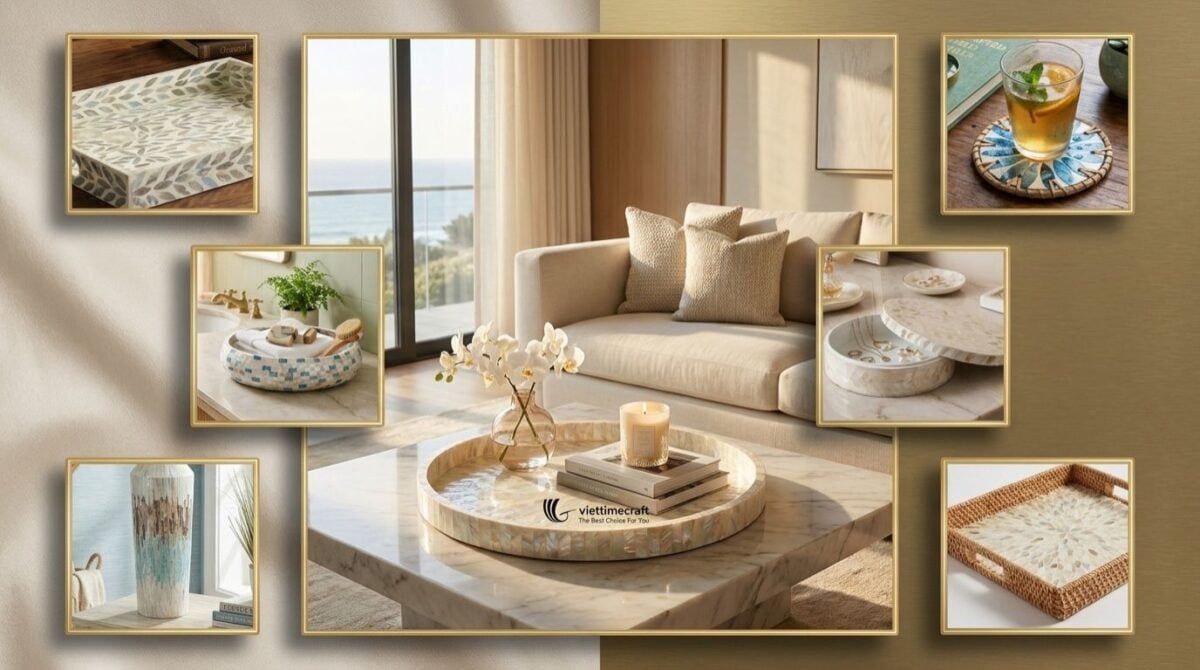
Why a Detailed Quality Checklist Drives Repeat B2B Orders
A quantified checklist eliminates subjective “looks fine” judgments and gives your importing team a repeatable yardstick. When you present a checklist to your manufacturer before production, you set clear expectations and reduce back‑and‑forth rework. The result: faster lead times, lower defect rates, and higher buyer confidence, exactly the metrics that turn a one‑time order into a long‑term partnership.
Criterion 1: Raw Shell Quality and Nacre Luster
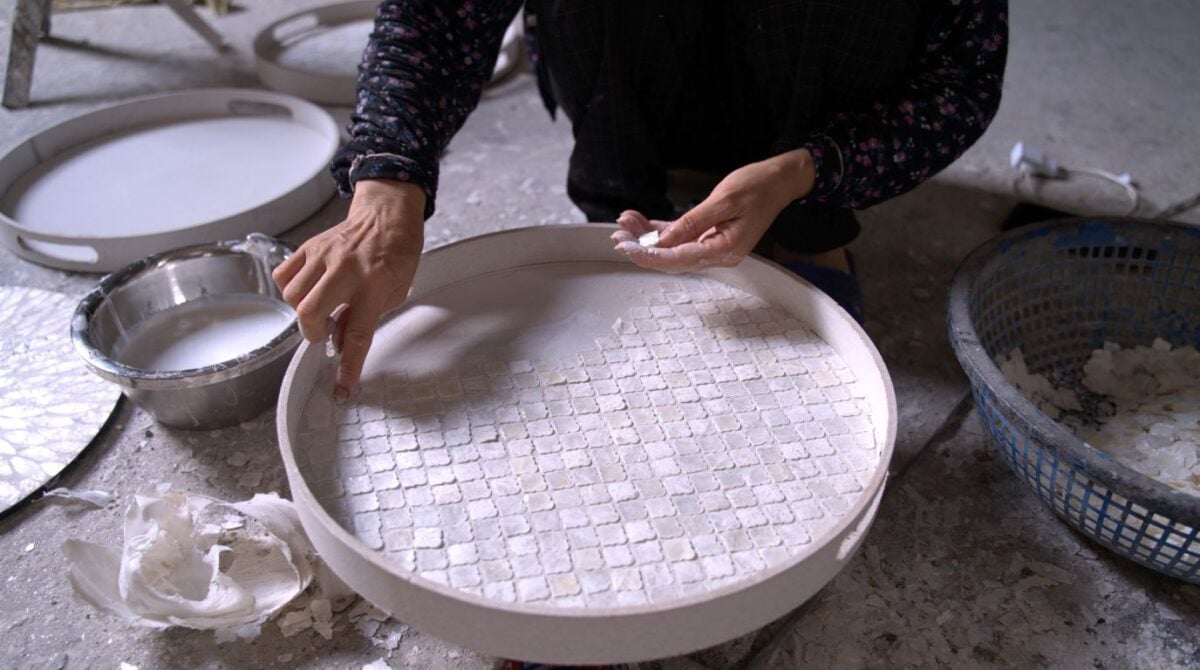
Real mother‑of‑pearl (from oyster and abalone shells) exhibits a deep, shifting iridescence that plastic imitations cannot replicate. Start by examining pieces under diffused 4000 K light, the same light retailers use to display them. Look for:
| Attribute | Acceptable | Red Flag |
|---|---|---|
| Color uniformity | Subtle natural variations; no abrupt dead zones | Large chalky patches or greyish areas |
| Surface texture | Smooth, glass‑like feel | Pitting, roughness, or plastic‑coated feel |
| Thickness (sheet) | 0.5–1.2 mm depending on design | Thinner spots below 0.3 mm, which crack easily |
| Sonic test | Tap produces clear, bell‑like tone | Thud sound (dull) often signals synthetic imitation |
Criterion 2: Inlay Precision and Pattern Consistency
Mother‑of‑pearl inlay is often combined with wood, lacquer, or rattan. The most common QC failures happen at the inlay‑to‑base interface. Our checklist measures:
- Joint gap: Use a feeler gauge; maximum acceptable gap is 0.5 mm. Anything wider catches dirt and makes cleaning difficult for end users.
- Pattern continuity: If the design uses repeating shell tiles, misalignment of more than 1 mm breaks the visual flow. Hold the product at arm’s length, if you immediately notice a break, it fails.
- Glue bloom: Check edges with UV light. Excess adhesive that fluoresces indicates poor clean‑up and potential bond failure later.
Criterion 3: Lacquer and Finishing Standards
Lacquer over mother‑of‑pearl serves two roles: protecting the delicate shell and adding depth. A poor finish creates peeling, cloudiness, or a plastic‑like coating that hides the natural iridescence.
- Lacquer adhesion test: We use the cross‑hatch tape test per ISO 2409. After conditioning the piece at 35 °C and 85 % humidity for 48 hours, we apply and peel standard tape. Any flaking beyond 5 % of the cut area is a rejection .
- Gloss level: Premium pieces achieve a deep, glassy gloss without orange‑peel texture. Turn the item under a single light source; if the reflection appears wavy or speckled, the lacquer coat was applied unevenly.
- Layer thickness: Too thick (> 150 µm) hides the nacre, too thin (< 50 µm) offers no protection. We target 80–120 µm measured by digital film gauge.
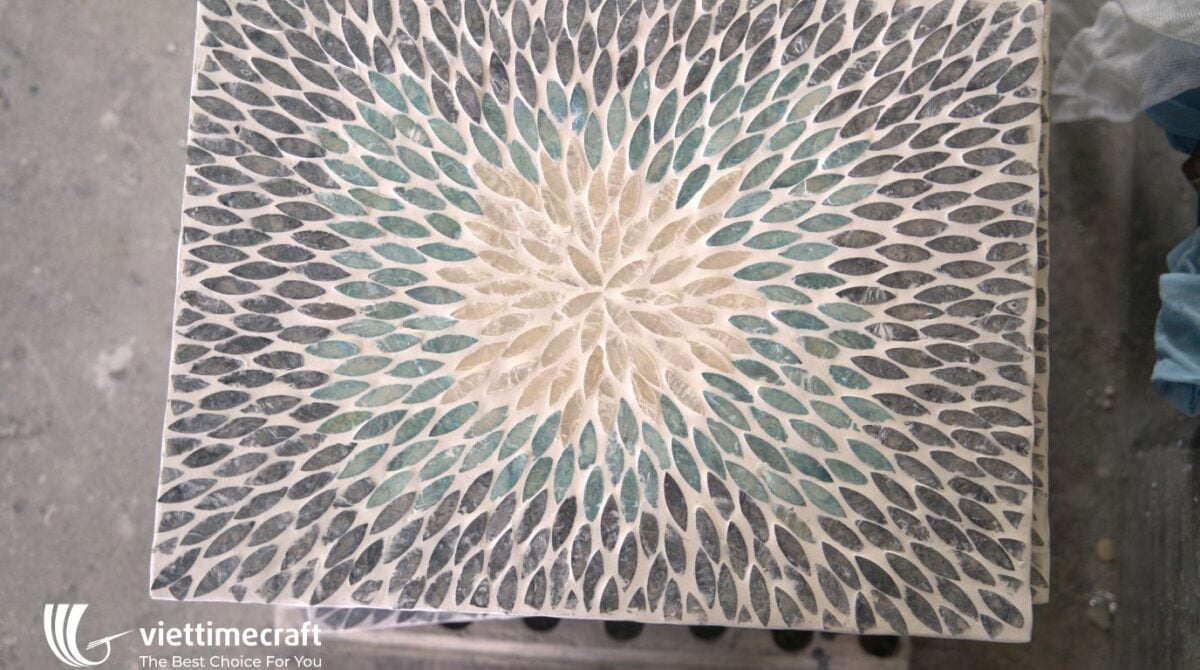
Criterion 4: Durability, Adhesion, and Edge Finishing
Accessories that sit on retail shelves and get handled daily must survive mild knocks. In our QC workflow:
- Edge rounding: Run a fingertip along every outer and inner edge. Any sharp point, splinter, or burr is flagged for rework.
- Bond strength: For combined‑material pieces (e.g., mother‑of‑pearl on a rattan base), we perform a controlled drop from 30 cm onto hardwood three times. Dismantlement or cracking of the bond line = fail.
- Cold‑heat cycling: Samples move between 5 °C and 45 °C for three cycles; after testing, no new cracks or lifted inlay.
Criterion 5: Moisture Control and Anti‑Mold Protection
Natural shell is hygroscopic; if moisture exceeds 12 % before packing, mold can develop during sea freight. ViettimeCraft dries all shell sheets in temperature‑controlled kilns until the digital moisture meter reads ≤ 10 % . Additionally:
- Silica gel packs are placed inside every export carton.
- Cartons use 5‑ply corrugated board and undergo a 1‑meter drop test (ISTA 1A) to confirm they protect against transit shocks.
Criterion 6: Packaging and Shipping Readiness
Packaging directly affects landed cost and quality preservation. Our checklist covers:
- Space‑saving nest‑design: Nested trays reduce container volume by up to 30 %.
- Inner wrapping: Each piece wrapped in acid‑free tissue to prevent lacquer marring.
- Label compliance: Outer cartons marked with handling symbols and destination‑country import data.
Our Multi‑Point QC Process at ViettimeCraft
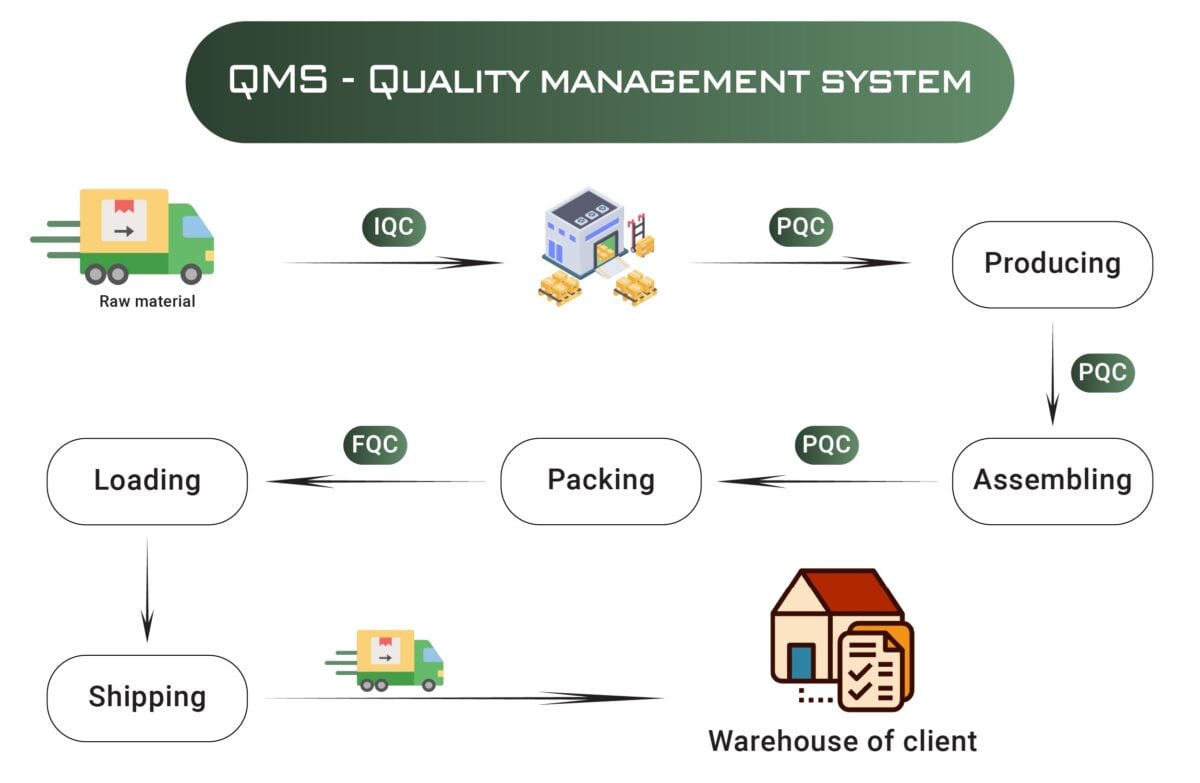
At ViettimeCraft, mother‑of‑pearl items go through a seven‑gate quality assessment before shipment:
- Raw material gate: Shell sheets are sorted by thickness, color, and freedom from cracks.
- In‑process inlay gate: Artisans check alignment with reference templates; non‑conforming pieces are reworked immediately.
- Primary lacquer gate: First coat inspected for orange‑peel; if failed, recoated.
- Adhesion test gate: Random sample cross‑hatch test; batch is halted if failure rate exceeds 2 %.
- Moisture gate: Digital meter check on assembly line end; only ≤ 10 % moisture allowed.
- Final visual gate: Inspectors under 4000 K light check for the seven checklist attributes in this guide.
- Packaging gate: Sealed cartons go through drop and vibration tests.
Data from the last 12 months shows average post‑QC defect rate below 1.5 %, with inlay gap variance shrinking by 30 % after introducing magnifying‑lamp workstations. Buyers are welcome to visit our Hanoi showroom and witness this process firsthand; you can also request video walkthroughs of your production lot.
Common Mistakes to Avoid When Evaluating Mother‑of‑Pearl Accessories
- Trusting photos alone: camera lighting can hide chalky patches or uneven lacquer. Always handle physical samples or request a video under controlled light.
- Ignoring moisture content: even beautiful pieces can arrive moldy if drying wasn’t rigorous. Demand a moisture log for the batch.
- Skipping the edge test: a razor‑sharp burr can cause injury returns. Run a gloved hand over every edge during inspection.
- Accepting “natural variation” without limits: some variation is normal, but excessive patchiness signals low‑grade shell. Set a visual reference sample.
- Neglecting the packaging stage: a perfect product can be destroyed by flimsy cartons. Verify that cartons meet ISTA 1A drop‑test standards.
Frequently Asked Questions
How do I distinguish real mother‑of‑pearl from plastic imitation? Real mother‑of‑pearl feels cool to the touch like stone, shows shifting iridescence when you rotate it, and sinks in water (plastic often floats). Under magnification, natural nacre has a layered, organic structure, whereas plastic appears homogeneous. At ViettimeCraft, we source only genuine oyster and abalone shell and can provide a certificate of natural material upon request.
What is the typical MOQ for customized mother‑of‑pearl accessories? For standard shapes, our MOQ is 100-200 pieces per design. OEM projects can start at 100-200 units depending on tooling requirements. We recommend starting with a technical sample to confirm specs before mass production.
How long does production of mother‑of‑pearl accessories take at ViettimeCraft? Standard lead time is 35–45 days after sample approval, plus 5–8 weeks for ocean freight to major ports. Urgent orders can be accommodated with air freight; speak with our team for a custom timeline.
Can I combine mother‑of‑pearl with other materials like rattan or bamboo? Absolutely. Our most popular mixed‑material items include mother‑of‑pearl inlay on rattan trays and lacquer boxes with bamboo rims. Browse our lacquer and mother‑of‑pearl collection for inspiration, and use our OEM/ODM service to create exclusive designs.
How do you prevent mold during sea freight? We kiln‑dry all shell sheets and include moisture‑absorbing silica gel in every carton. Final moisture content is verified by digital meter before packing, and every shipment passes our environmental‑chamber test.
Next Step: Let’s Put This Checklist to Work
Your brand deserves mother‑of‑pearl accessories that match the standards you promise your customers. ViettimeCraft’s factory teams are ready to run your order through this exact QC framework, and we encourage you to send your own inspector or visit our showroom in Hanoi to see it in action.
Request a sample and our latest wholesale catalog today, together we’ll build a quality‑verified supply chain that sets you apart.
Contact ViettimeCraft for a sample and wholesale quote →
Related categories: lacquer and mother‑of‑pearl products | mother‑of‑pearl rattan basket | our manufacturing process