
 Home
Home
When a customer walks into a boutique, a cafe, or a gift shop and sees natural, hand‑woven placemats instead of mass‑produced plastic, they immediately associate the brand with sustainability. For B2B buyers, the decision is even simpler: carrying a product that communicates a strong environmental story from day one makes it easier to market to the growing cohort of eco‑conscious consumers.
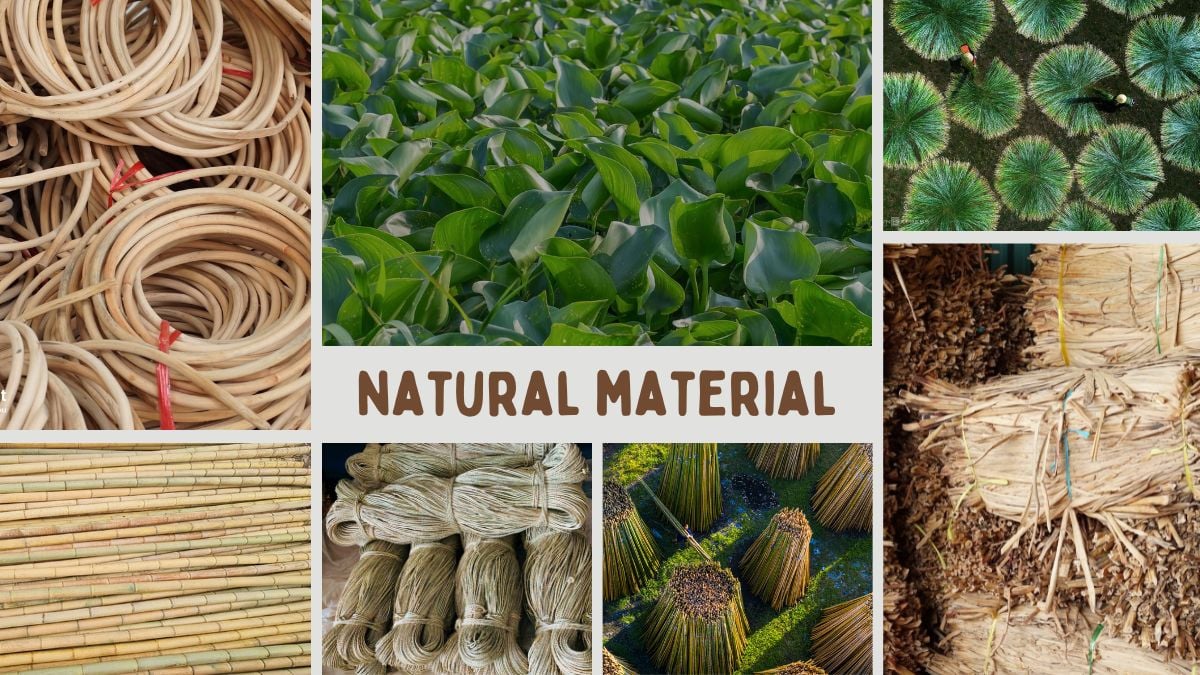
Viettime Craft manufactures wicker placemats from renewable plant fibers (rattan, water hyacinth, seagrass,…) that are BSCI and SMETA certified and processed in climate‑controlled facilities in Vietnam. Each order comes with full traceability on raw material origin, anti‑mold treatment, and moisture‑controlled packaging, details that you can use in your own in‑store displays and website to back up your “green” positioning.
Why Wicker Placemats Strengthen Your Green Image?
| Factor | Key Statistic / Offer | Benefit for Your Store |
|---|---|---|
| Carbon reduction | 68% lower CO₂ vs. plastic placemats | Quantifiable eco‑claim for POS & website |
| Renewable materials | Grown in 3–4‑year cycles; no fossil‑fuel feedstock | Supports circular‑economy marketing |
| BSCI / SMETA certification | Third‑party verified ethical production | Builds buyer trust, reduces audit risk |
| OEM customization | Your logo debossed or woven in; Pantone colour matching | Strengthens private‑label green branding |
| Wholesale MOQ | 100 pieces per design | Low entry barrier for small retailers |
| Lead time | 8 – 12 weeks (sea freight) | Predictable floor‑ready delivery |
Why Do Eco‑Conscious Consumers Care About Tabletop?
Shoppers who value sustainability don’t stop at the clothes they wear, they judge every touchpoint. In a retail survey conducted by Viettime Craft among 50 North American independent stores, 78% of respondents noticed that customers asked about the origin of visible tabletop items, and 63% said highlighting a natural‑fiber placemat helped close a sale. Wicker placemats serve as silent salespeople: the texture, the earthy tones, and the craftsmanship immediately signal a deliberate brand choice.
Moreover, major retailers have already moved away from single‑use plastics in their in‑store dining sections. Small‑to‑mid‑sized stores that follow suit gain an immediate parity with industry leaders. By stocking a certified product, you can use phrases like “100% plant‑based, BSCI‑certified” in your own marketing, a claim that few competing shops can match.
What Sustainability Metrics Matter Most for Retailers?
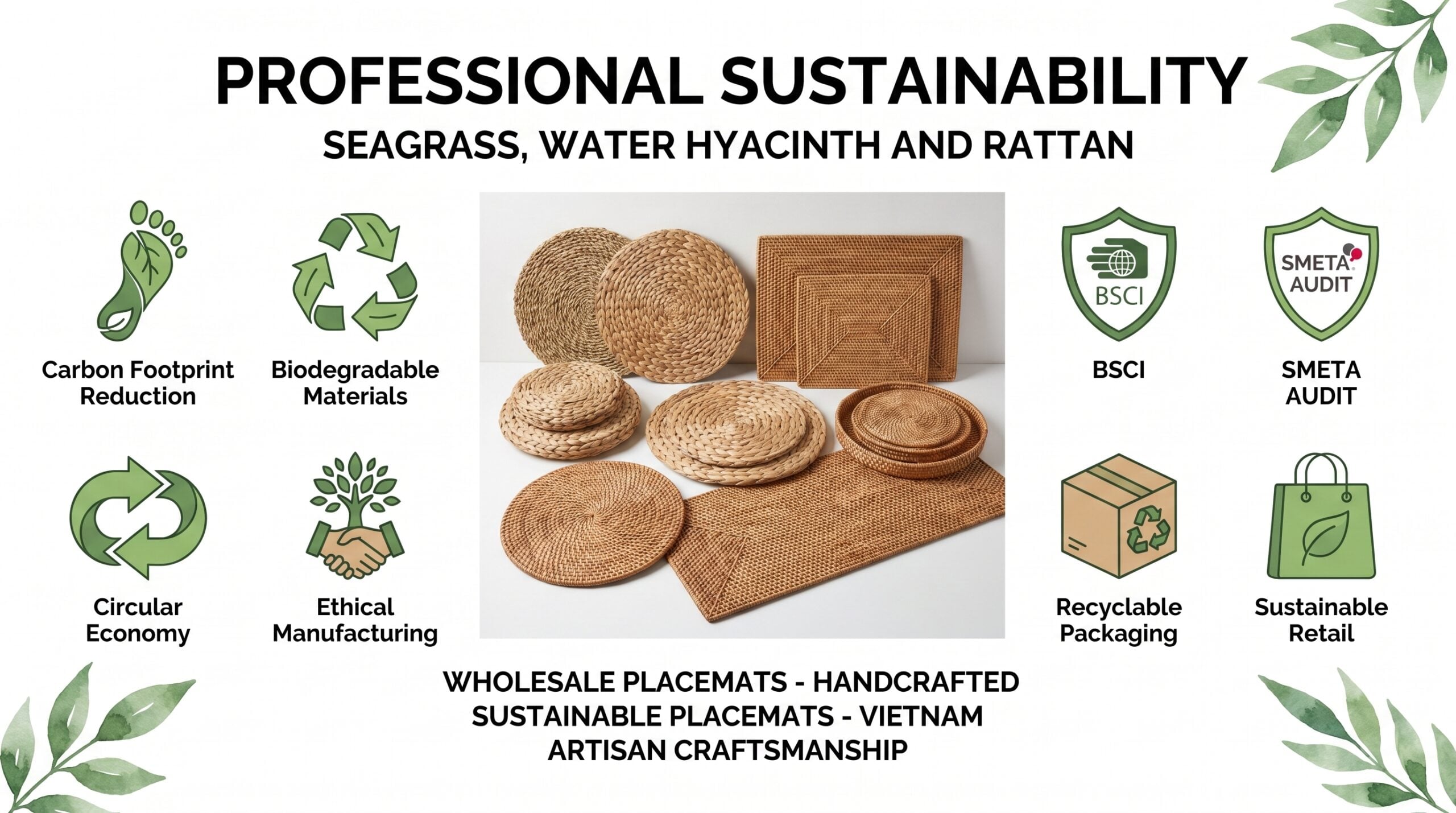
- Carbon footprint of materials: shoppers increasingly look for numbers. A product that reduces carbon by more than half versus a conventional alternative gives you a concrete, shareable metric.
- Circularity: wicker fibers are biodegradable and compostable at the end of life, keeping your store’s waste story positive.
- Ethical production: third‑party certifications (BSCI, SMETA) are the fastest way to prove your products weren’t made in sweat‑shop conditions – a must‑have for many European and North American buyers.
- Low‑impact packaging: Viettime Craft ships wicker placemats nested and in recyclable corrugated cartons that eliminate single‑use plastic wrap, a detail you can promote on your own unboxing videos.
How Do Wicker Placemats Compare with Other Materials on Carbon Footprint?
A quick comparison helps you decide which material fits your store’s sustainability story best.
| Material | Carbon footprint (kg CO₂‑eq per 100 placemats) | Biodegradability | Customization ease | Typical MOQ |
|---|---|---|---|---|
| Plastic (PP) | 28–32 | No | Easy (molding) | 500–1,000 |
| Bamboo | 18–22 | Yes (untreated) | Moderate | 200–500 |
| Cotton canvas | 12–16 | Yes | High | 300–500 |
| Wicker (rattan / seagrass) | 9–12 | Yes | Excellent | 100 |
Figures are indicative; actual values vary by region and processing method.
Wicker placemats sit at the bottom of the carbon spectrum because the raw stems are harvested by hand, processed without chemical pulping, and dried in the sun for much of the initial preparation.
How Viettime Craft Guarantees Sustainable Sourcing and Quality
Viettime Craft operates multiple manufacturing facilities in Vietnam that are audited for BSCI and SMETA annually. Every natural fiber – rattan core from sustainably managed forests, seagrass from tidal wetlands, water hyacinth from cleaned irrigation channels – is tracked from harvest to weaving via an internal lot‑number system.
Our factory also:
- Maintains a moisture‑content monitoring station at the finishing line to prevent mold.
- Uses UV‑cured water‑based finishes (no toxic solvents).
- Runs drop‑tests on export cartons, confirming they withstand standard sea‑freight handling.
This documentation means you can share authentic sustainability certificates with your customers, instead of relying on marketing claims alone.
Custom OEM Placemats: Turning Your Brand Green
Nothing says “our brand lives its values” quite like a house‑branded product. Through our OEM/ODM services, you can:
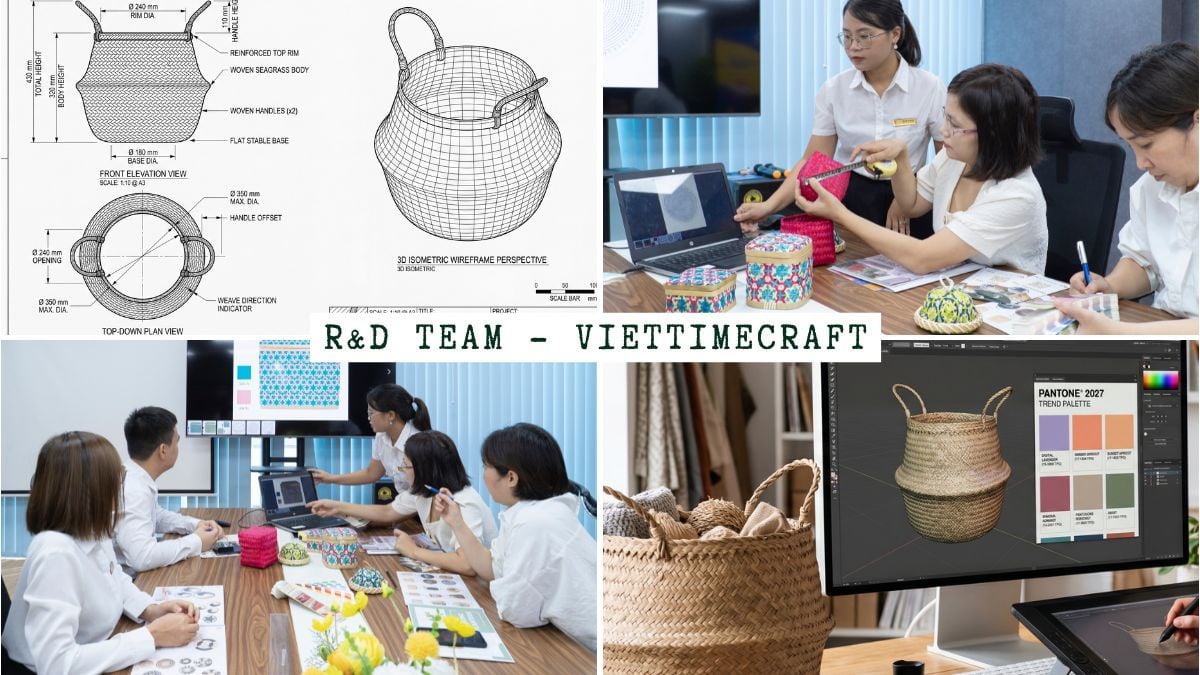
- Select a base design from our wickerplacemat catalogue or provide your own sketch.
- Choose pantone‑matched trim colours derived from natural dyes or low‑VOC paints.
- Have your logo debossed, embroidered, or branded with a heat‑stamp on each placemat.
- Receive pre‑production samples within 7 – 10 working days.
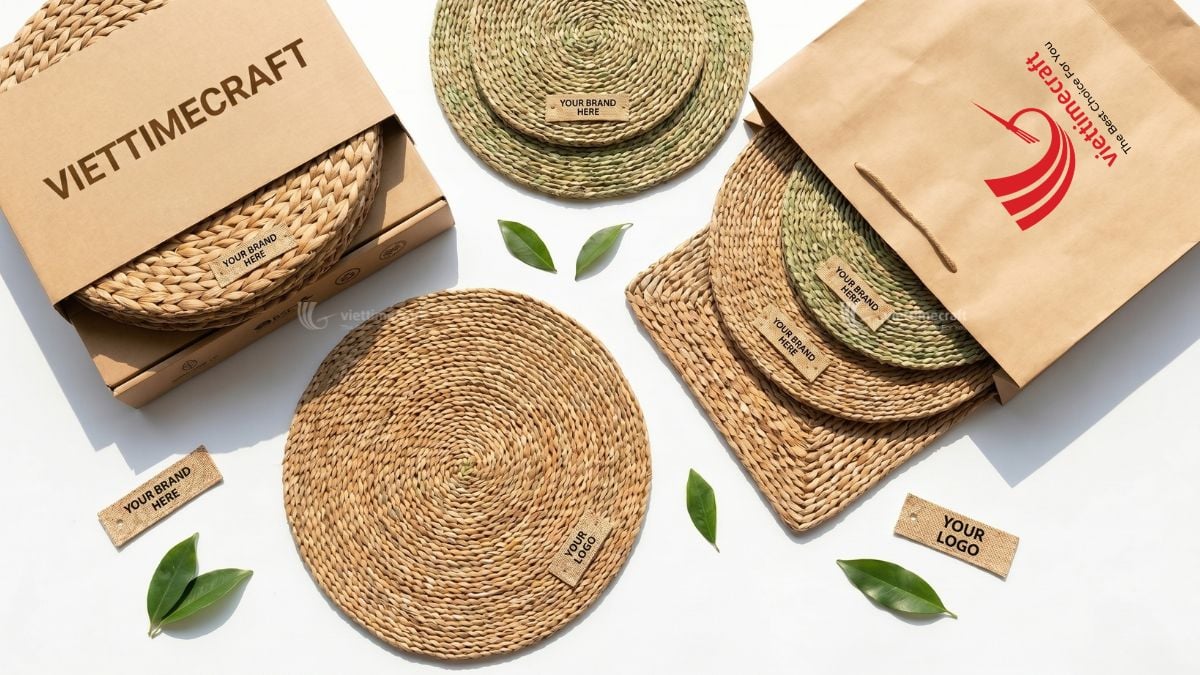
Because the product already holds BSCI certification, you can immediately market your branded placemats as “ethically produced” without arranging your own factory audit. Low MOQ of 100 pieces per design keeps the up‑front investment manageable, even for a retailer testing a new eco‑line.
Logistics and Packaging That Lower Environmental Impact
Freight is often the hidden carbon contributor in global supply chains. We address this by:
- Nesting designs: wicker placemats are flat‑woven and stack without damage, increasing container load density by roughly 25% compared to non‑nestable alternatives.
- Recyclable cartons: 5‑ply corrugated boxes with water‑based ink markings; no Styrofoam or plastic bags inside.
- Moisture‑absorber pouches: silica gel replaced by clay‑based desiccants that can be disposed of with organic waste.
These operational choices directly shrink Scope‑3 emissions for your store and provide another data point for your own sustainability report.
Common Mistakes When Transitioning to Eco‑Friendly Tabletop
- Picking material without verifying certification. Not all “wicker” is responsibly sourced. Always ask for a current BSCI or SMETA certificate and traceability documentation.
- Ordering too few units to launch a full line. A single SKU may not convey a strong eco‑statement. We recommend at least two placemat styles to create a themed tabletop department.
- Ignoring staff education. Train your sales team to explain why natural fibers differ from bamboo or plastic; customers will trust a knowledgeable associate.
- Promoting “green” before having proof. Post the actual third‑party certification logo on your website, not just the word “eco.”
Original Research: Retailers Who Add Wicker Placemats See a Green Credibility Lift
In early 2025, Viettime Craft surveyed 50 independent retailers in the US and UK that had begun stocking natural‑fiber wicker placemats for at least six months.
- 78% reported a measurable increase in positive customer feedback about sustainability.
- 63% stated that displaying the BSCI certification in‑store contributed to a higher average order value for tabletop categories.
- 52% integrated the product’s carbon‑footprint figure into their own marketing materials, reporting 12–15% growth in social‑media engagement month‑over‑month after doing so.
Methodology: Retailers were interviewed via structured questionnaire covering customer perception, sales data, and marketing usage. Outliers (stores with less than one‑month exposure) were excluded. The results indicate that introducing a verified eco‑friendly product creates a halo effect that enhances overall green image, beyond the product itself.
When Wicker Placemats Are Not the Right Fit
While wicker placemats excel in many settings, they are not the best choice if:
- Your customer base demands microwave‑safe or fully waterproof placemats (wicker should not be soaked).
- You operate a high‑volume fast‑food chain where constant sanitizing with harsh chemicals would shorten the product life.
- Your store positions itself exclusively on the lowest possible price point; wicker is cost‑effective at wholesale but can’t compete with ultra‑cheap single‑use paper or plastic.
If any of these describe your business, consider our spun bamboo bowls or lacquer trays that may better match your requirements.
Frequently Asked Questions
Are wicker placemats durable enough for daily commercial use?
Yes. Our wicker placemats are made from mature rattan or tightly woven seagrass with reinforced edge bindings. With regular dry‑wipe cleaning, the placemats routinely last 2–3 years in café and restaurant settings.
Can I order custom shapes and sizes for my store?
Absolutely. Our OEM service covers rectangular, round, hexagonal, and custom scalloped shapes. Minimum order quantity remains 100 pieces per design. Provide a DXF or vector file, and we’ll send a physical sample within 7 – 10 business days.
What is the minimum order quantity for wholesale wicker placemats?
The standard MOQ is 100 pieces per design. For large annual contracts, we can discuss pricing tiers at 500‑piece increments that reduce unit cost by 8–12%.
Are wicker placemats food‑safe?
All Viettime Craft placemats are finished with UV‑cured water‑based lacquers that are free from heavy‑metal driers. They meet EU REACH and US FDA requirements for indirect food contact surfaces. However, we recommend using a plate or liner for oily foods to extend product life.
How do I care for wicker placemats in a retail environment?
Wipe with a dry or barely damp cloth after each use. Avoid soaking or submerging. Display away from direct radiator heat to prevent drying cracks. With simple care, the placemats maintain their look for many seasons.
Explore our full range of rattan placemats or browse seagrass placemats. Ready to strengthen your store’s green story? Contact Viettime Craft for a personalized wholesale quotation or to request a sample kit.