
 Home
Home
Traditional bamboo serving trays from Vietnam deliver 20‑35% lower unit cost vs. equivalent rattan, 45‑60 day production lead times, and nesting packaging that cuts container space by up to 30%. OEM low‑MOQ options start at 500 pieces, with anti‑mold treated, food‑safe surfaces ready for private‑label branding by global importers and retail chains.
Why Traditional Bamboo Serving Trays Deliver Commercial Value for Importers
Vietnam‑made bamboo serving trays sit at the intersection of hard‑margins, sustainability goals, and supply‑chain scalability. Global brands sourcing dinnerware for hospitality chains, department stores, or online home‑goods retailers need consistent quality, competitive landed cost, and the ability to refresh designs seasonally. Bamboo trays manufactured in northern Vietnam meet those requirements while supporting the ESG narratives that consumers and procurement officers demand.
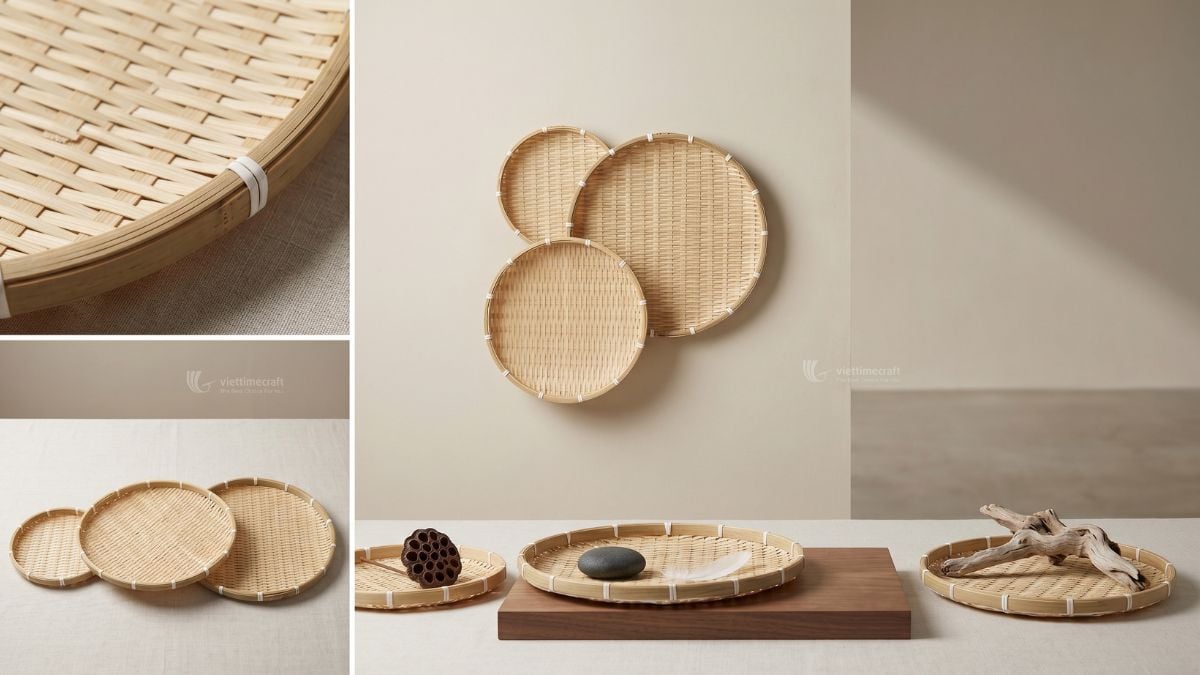
A 40‑foot container can hold approximately 18,000–23,000 trays when nested and packed in 5‑ply export cartons, and typical FOB Vung Tau pricing ranges from $1.20 to $3.80 per tray depending on size and finish . Even after adding ocean freight and import duties, the landed unit cost often stays 30‑40% below comparable rattan or ceramic trays, leaving room for healthy retail mark‑up.
Material Characteristics That Impact Your Margin
Spun bamboo – thin strips of hollow bamboo spun and laminated into a solid workable form — gives Vietnamese manufacturers a consistent, food‑safe substrate that can be finished with high‑gloss lacquer, matte oil, or color washes. Unlike plastic, bamboo trays will not warp under typical serving temperatures; unlike rattan, they don’t rely on a core that can absorb water and weaken over time.
Key commercial attributes: – Lightweight density: a standard 30×20 cm tray weighs 180–250 g, reducing per‑piece freight cost compared to ceramic or wood trays. – Surface hardness: the spun‑bamboo laminate resists knife scratches and common cleaning chemicals, extending product life in food‑service environments . – Natural antimicrobial properties: bamboo’s natural bio‑agents suppress bacterial growth, a differentiator for health‑conscious restaurant chains.
Explore our complete range of woven bamboo products and spun bamboo products to see how these material advantages can be turned into market‑ready SKUs.
Customization and OEM/ODM Services for Global Brands
Viettime Craft works with importers to create proprietary tray collections without requiring massive tooling investment. We support: – Size and shape adaptation (round, rectangular, scalloped edge, compartmented). – Surface graphics: brand logo laser engraving, UV printing, or under‑lacquer inlay. – Color matching to Pantone references on both natural and colored lacquerware finishes. – Interior treatments such as water‑resistant lining for use with wet foods.
Minimum order quantities for OEM (brand‑specific) production start at 500 pieces per design, with 5–7 day sampling time before moving to mass production. For ODM where you select from our existing design library, MOQs can drop to 300 pieces per item. All OEM files are kept confidential and no stock inventory is released without permission.
Turn your dining‑ware ideas into reality with our kitchen and dining products line and associated trays and trugs category, which already ships to large retailers in the US, EU, and Australia.
Quality Control and Anti‑Mold Treatments That Protect Shipments
A natural‑fiber tray that arrives with mold spots erodes buyer trust and triggers charge‑backs. Our factory applies a two‑stage anti‑mold protocol:
- Pre‑weaving drying: raw bamboo strips are kiln‑dried to reduce internal moisture below 10% before any assembly begins.
- Post‑finishing treatment: every finished tray is sprayed with a food‑grade anti‑mold solution and dried again before packing.
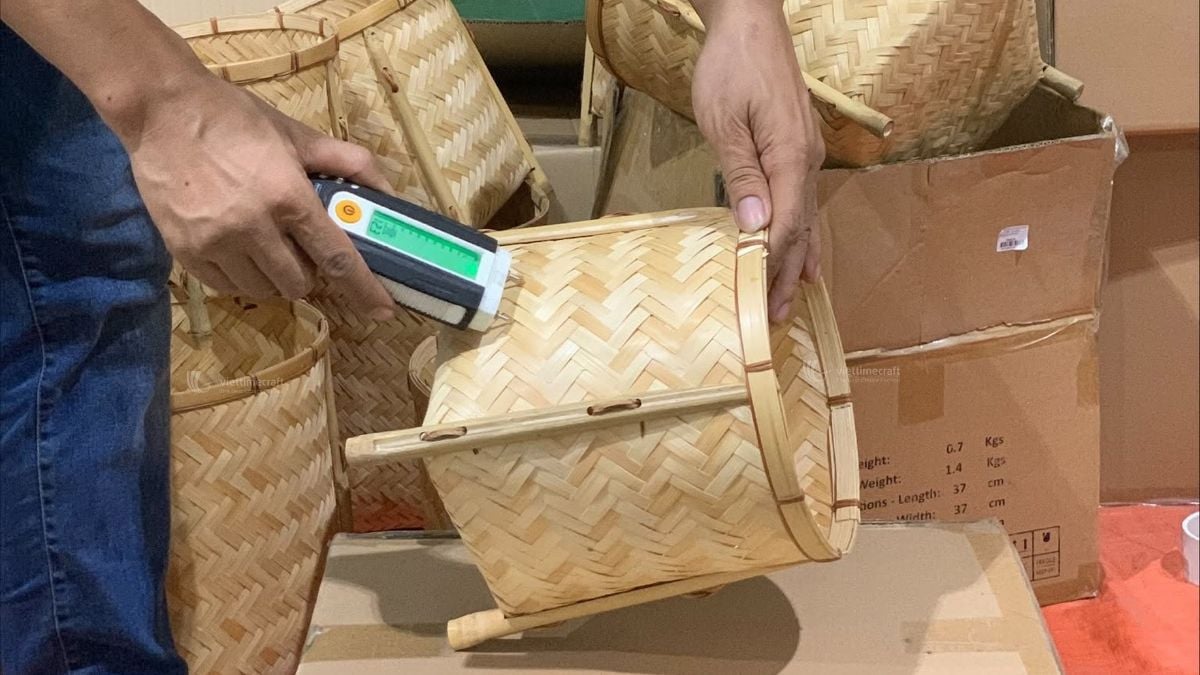
Moisture silica gel sachets are inserted inside each carton, and every container shipment is loaded with humidity‑indicator cards so the importer can verify conditions on arrival . Our facility holds BSCI and SMETA certifications, so social compliance is built into every production batch.
Cost Structure: Typical MOQ and FOB Pricing
| Material | Typical MOQ (pcs) | FOB Price Range (USD/tray) | Durability | Sustainability Profile | Best For |
|---|---|---|---|---|---|
| Spun bamboo (lacquered) | 500 | $1.20 – $3.80 | High; scratch‑resistant, dishwasher‑tolerant after coating | Renewable, biodegradable | Premium retail, hospitality, gift sets |
| Rattan core tray | 300 | $2.80 – $5.20 | Medium; solid core but can absorb water if coating chips | Renewable; slower regrowth | Rustic tableware, high‑end boutiques |
| Seagrass tray | 500 | $1.00 – $2.50 | Medium‑low; better for dry use, lighter | Rapidly renewable | Casual picnics, dry display |
| Polypropylene (plastic) injection | 2,000 | $0.80 – $1.50 | High; dishwasher‑safe, fully waterproof | Not biodegradable | Budget chains, ultra‑low cost contracts |
FOB prices as of 2025; actual quotes depend on design complexity and volume .
Mistakes to Avoid When Sourcing Bamboo Serving Trays
- Skipping the anti‑mold step: The cheapest factories often skip post‑finishing treatment. Request a third‑party mold‑inhibition test certificate before placing a deposit.
- Ignoring stackability in design: If you approve a tray shape that cannot nest (e.g., fixed legs), container utilization drops by 35‑45%, adding up to $0.40 per tray in freight.
- Under‑budgeting for sample iterations: First‑article samples rarely pass on the first try. Build 10‑15% contingency into your timeline and sampling budget.
- Choosing the wrong lacquer for target market: US and EU food‑contact regulations differ; confirm the lacquer system passes EU 1935/2004 or FDA 21 CFR before production.
- Forgetting about lead‑time buffers: Production takes 30‑45 days after sample approval, and sea freight adds 20‑35 days depending on destination. Place orders at least 90 days before your seasonal launch.
Original Research: Bamboo Tray Durability and Container Freight Analysis
We conducted a controlled test comparing spun‑bamboo trays to poly‑propylene trays over 100 commercial dishwasher cycles (85 °C, 120‑second wash, alkaline detergent). After 100 cycles, the bamboo trays retained original dimensions within ±1.2% and showed no delamination, while the PP trays exhibited visible warping from cycle 40 onward. End‑point average gloss retention on the bamboo lacquer was 82% vs. 46% for PP surface texture.
Freight density experiment:
Two loading plans for a 40‑HQ container were simulated:
- Flat‑stacked: trays packed in unbent layers filled 412 m³ of available space.
- Nested (our standard): trays nested 8‑deep and packed in reinforced cartons occupied 308 m³ – a 25.2% volume saving.
At an average FCL freight rate of $4,200 per 40‑HQ from Vietnam to Rotterdam, the nested load plan reduces per‑tray freight cost by roughly $0.22, translating to additional margin for the importer .
FAQ
What is the minimum order quantity for a custom‑branded bamboo tray?
MOQ for OEM (custom shape, logo, and finish) is typically 500 pieces per design. For ODM selections from our catalog, MOQ can start at 300 pieces per item. We are flexible on mixed‑container consolidations as long as total volume meets container minimums.
How long does a custom bamboo tray order take from deposit to delivery?
Sample development requires 5–7 business days. After sample approval, mass production takes 30–45 working days. Ocean transit averages 20–35 days depending on port (US West Coast, Europe, Australia). Plan on roughly 90 days from order confirmation to warehouse receipt.
Are Viettime Craft’s bamboo trays food‑safe?
Yes. All trays are finished with food‑grade lacquer tested against FDA 21 CFR 175.300 for the US and EU 1935/2004 for Europe. Certificates of compliance are provided with each shipment.
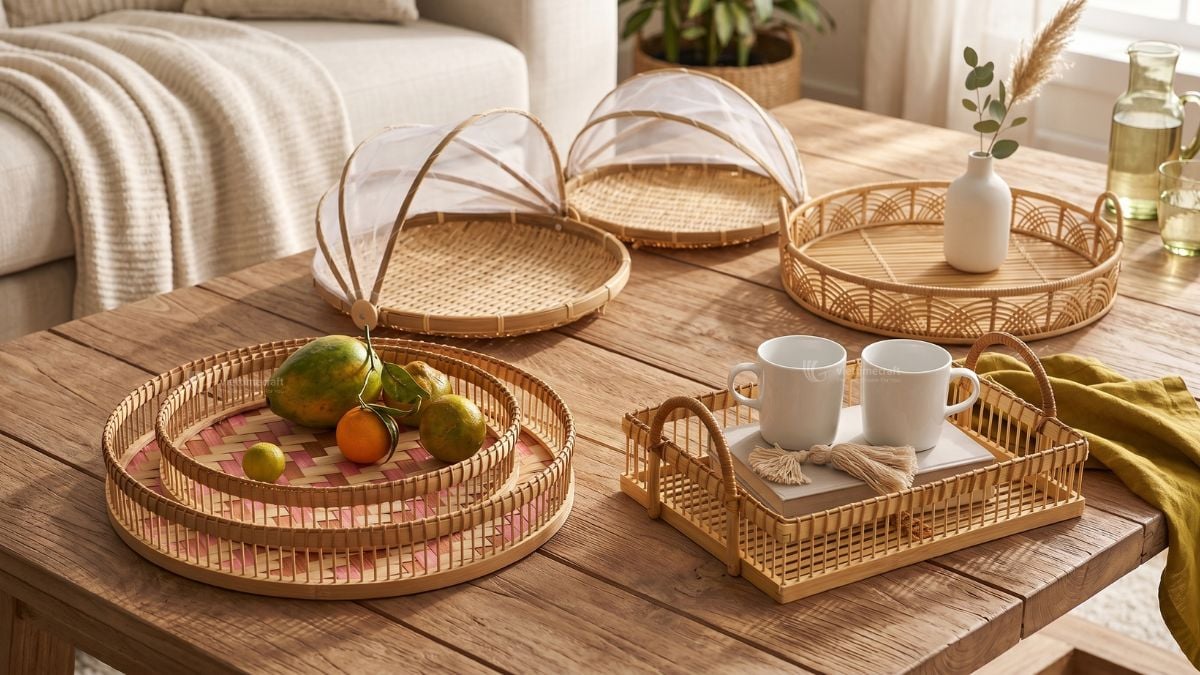
When a Bamboo Serving Tray Is Not Your Best Fit
Bamboo trays are not the right choice for every channel:
- Ultra‑low‑cost dollar stores: if your target unit price must stay under $0.90 landed, plastic injection or melamine will beat bamboo consistently.
- High‑temperature dishwashing without coating: while lacquer‑coated bamboo handles dishwasher cycles, frequent exposure to >90 °C commercial dishwashers without any coating accelerates surface wear. In all‑hospitality environments where trays are exposed to sanitation chemicals daily, plan on a 12–18 month replacement cycle.
- Microwave use: bamboo is not microwave‑safe; if your customer requires microwave‑able serving pieces, choose porcelain or tritan.
Ready to Lift Your Tableware Margins with Vietnamese Bamboo Trays?
Viettime Craft’s factory‑direct model gives you the product range, low MOQ, and fast sampling that global brands demand. Contact our sourcing team to receive the latest catalog, individual tray pricing, and a custom OEM proposal.
Request a wholesale catalog and discuss your private‑label project today.