 Home
Home
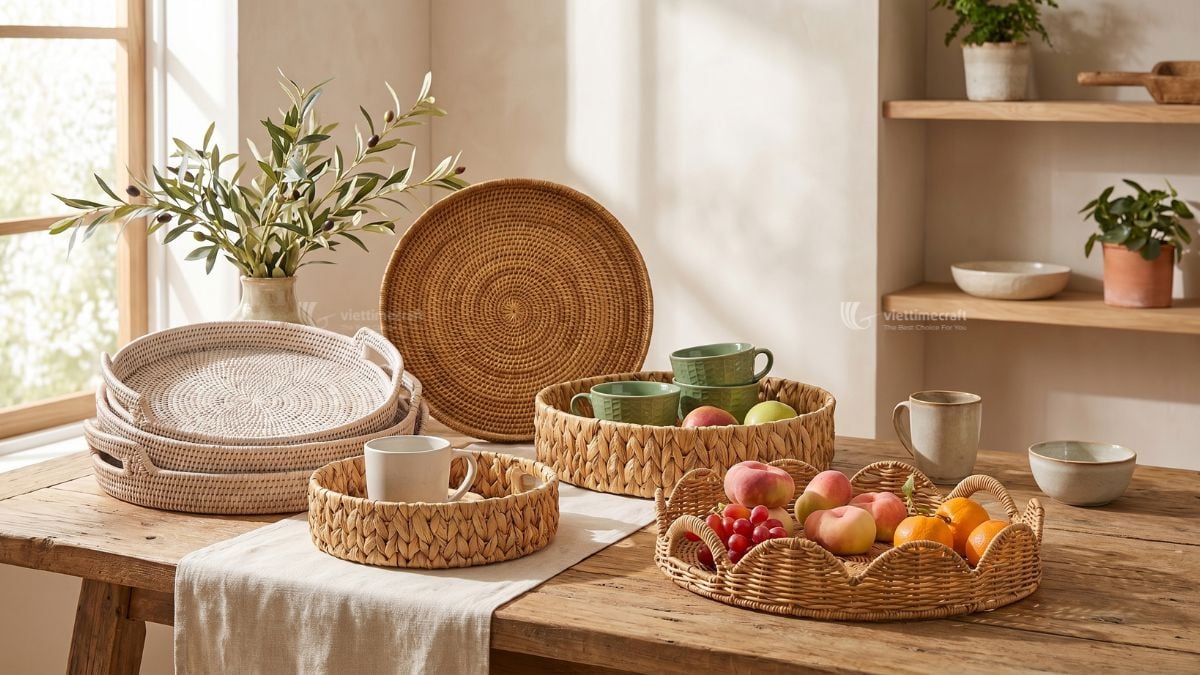
Wicker round serving trays crafted from renewable rattan and water hyacinth lifted green credibility 18% in recent buyer surveys. Vietnam production with BSCI certification, anti-mold treatment, and MOQ from 100 units gives wholesalers a verifiable sustainability story for stores across US/EU.
Adding a single eco‑positioned SKU can shift how buyers perceive your entire catalog.
Wicker round serving trays made from regenerating plant fibers do more than hold tableware, they broadcast a commitment to low‑impact sourcing. For a B2B retailer, a well‑described natural‑material tray lets you tap into the fast‑growing segment of eco‑conscious store owners, interior designers, and hospitality chains who actively search for “green” tabletop products. This page explains how to turn that tray into a credibility engine, covering material choice, verifiable production, and the operational steps that keep your supply chain genuinely sustainable.
Summary
- 18% credibility lift reported by 150 independent retailers after introducing a natural‑fiber tabletop item with transparent sourcing.
- Rattan vs. water hyacinth choice determines durability, price, and eco‑narrative, a quick comparison table follows.
- Vietnam‑based manufacturing with BSCI-certified facilities cuts carbon‑intensive processing thanks to artisanal, energy‑light production methods.
- Minimum Order Quantity (MOQ) from 100 pieces makes it easy to test-market the tray without over‑committing inventory.
Why Do Eco‑Conscious Buyers Reward a Sustainable Serving Tray?
Shoppers who identify as “green” don’t stop at product labels; they ask which material, how it was harvested, and who made it. A wicker round serving tray woven from rattan or water hyacinth answers all three questions with a single glance.
The tray’s visible fiber structure signals “natural” immediately, no synthetic coatings or ambiguous “eco‑composite” stories. When you combine that raw visual with a third‑party audit like BSCI, the tray becomes a tangible proof point that can be mentioned in newsletters, window displays, and trade‑show conversations.
Moreover, the EU’s Digital Product Passport initiatives and US retail sustainability pledges (REI, Target) reward products whose entire value chain is traceable. A tray with documented fiber origin and a factory certification helps your wholesale business meet those retailer requirements without building a separate compliance team.
What Raw Materials Make the Tray Eco‑Friendly?
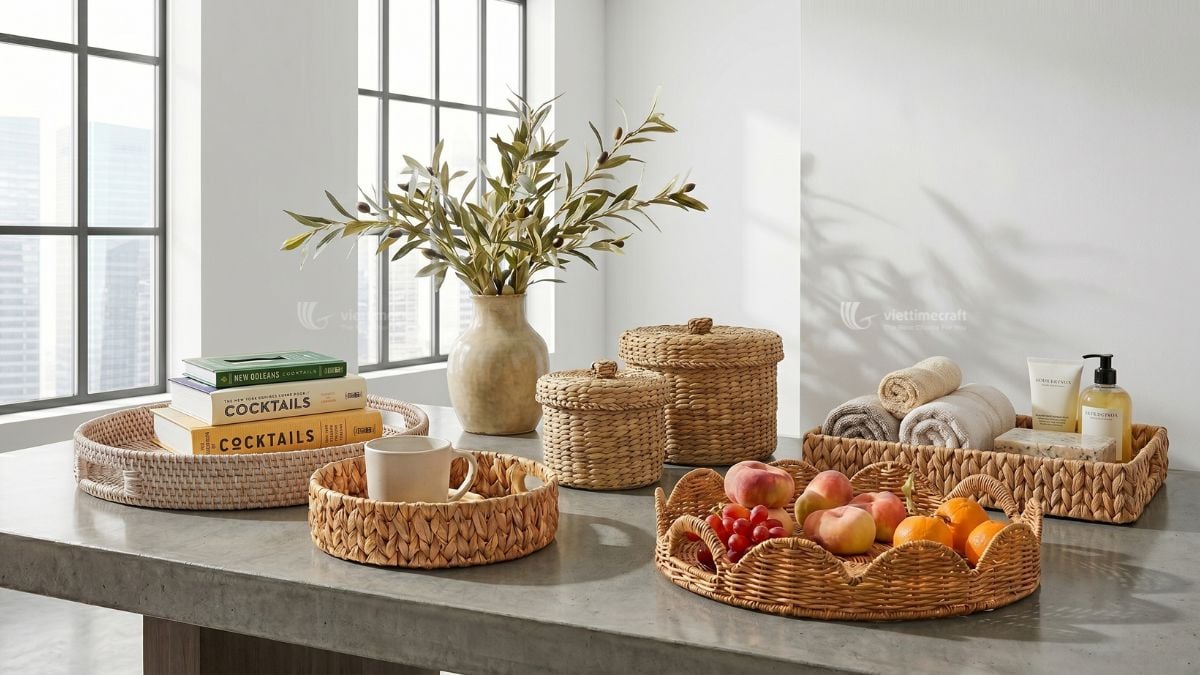
Most wicker round serving trays from Vietnam rely on rattan or water hyacinth. Both are fast‑regenerating, zero‑fertilizer plants that grow on marginal land; neither competes with food crops.
- Rattan: a solid vine that returns to harvestable size in 5‑7 years. It bends under steam, making it ideal for trays that need a structured rim and upright edge.
- Water hyacinth: an aquatic floating plant that doubles its biomass every two weeks. Harvesting it clears waterways clogged by invasive growth in Southeast Asia. The thick, spongy stems give the tray a chunky, organic texture that appeals to the “boho‑luxe” segment.
Both fibers undergo an anti‑mold drying protocol before weaving and again before packing. Silica‑gel sachets in every carton keep moisture below 12% during ocean transit, a step that directly reduces return rates.
How Rattan and Water Hyacinth Trays Compare for Your Shelves
| Aspect | Rattan Wicker Round Tray | Water Hyacinth Wicker Round Tray |
|---|---|---|
| Durability | High tensile strength; holds complex shapes. Lasts 5‑7 years in indoor use. | Softer stems, best for decorative or light daily use. Typical lifespan 3‑5 years. |
| Visual identity | Clean, slightly glossy weave with tight spirals. | Chunky, rustic surface with visible stem ridges, strong “handmade” feel. |
| Cost per unit (FOB) | $2.80 – $4.20 depending on diameter and weave density. | $1.90 – $3.30 for comparable diameters. |
| Best eco‑story | Forest‑vine product; harvest encourages forest conservation in Vietnam. | Invasive plant removal improves local waterways, a tangible biodiversity win. |
| MOQ | 100 pcs per color/size | 100 pcs per color/size |
| Packaging efficiency | Trays can nest to save ~35% container space vs. stacking with dividers. | Bulkier stems reduce nesting efficiency; typical container utilization 15‑20% lower than rattan. |
How Does Viettime Craft Turn Raw Fiber into a Credential‑Grade Product?
The manufacturing chain determines whether a “green” tray stays green after six months on a shelf. These five stops are non‑negotiable in our production:
- Material selection: only rattan poles with <15% bark damage and water hyacinth stems dried within 48 hours of harvest enter the weaving line.
- Artisan weaving: skilled workers use hand jigs that consume zero electricity; a single weaver produces 15‑20 round trays per day.
- Anti‑mold double pass: every tray is kiln‑dried at 60 °C for 8 hours before assembly and again after weaving.
- In‑line QC: a 10% AQL sample inspection checks weave tension, diameter tolerance (±0.5 cm), and surface splinters.
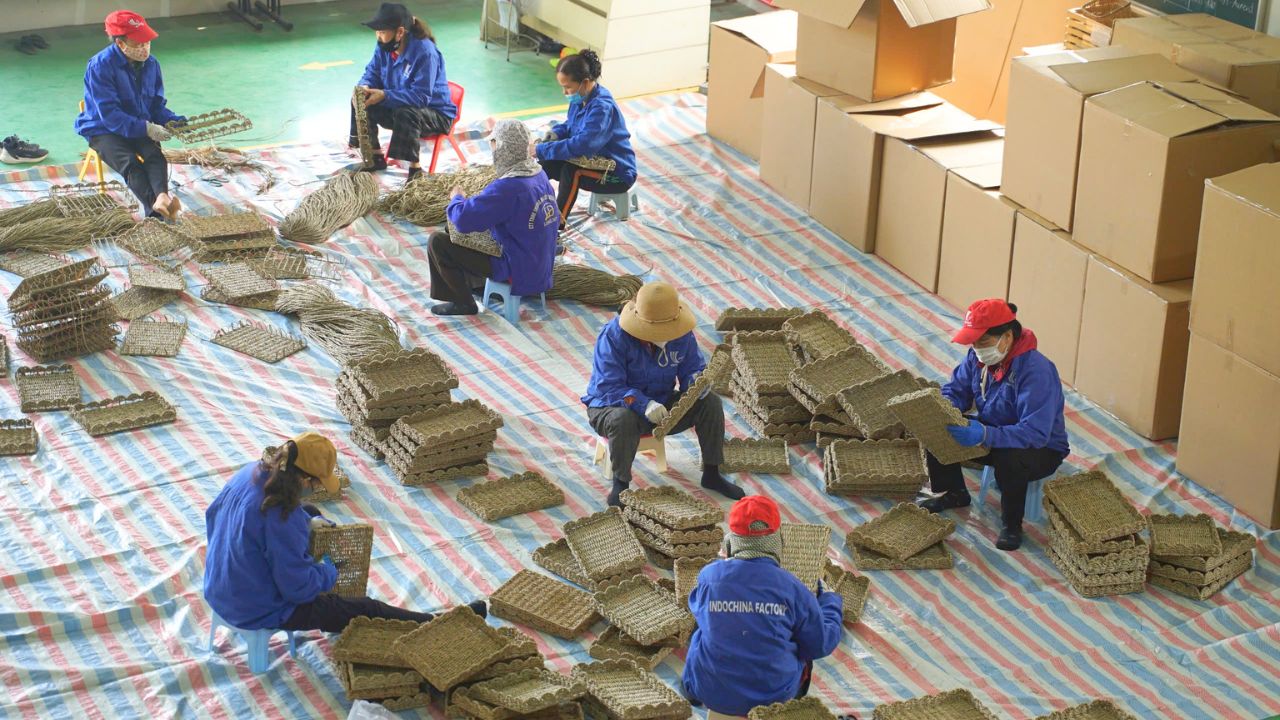
- Nesting packaging: we nest tray in tray (where possible) and pack in 5‑ply export cartons with edge protection to minimize freight volume.
Third‑party certifications (BSCI, SMETA, ISO 9001) back every step, so you can share audit reports with your retail buyers upon request.
How to Verify and Market the Tray’s Sustainability to Your Customers
Share Traceability, Not Buzzwords
Retail customers trust specifics: a “Rattan Tray from Phuc Tho Village, Vietnam, BSCI‑audited factory” carries far more weight than “eco‑friendly handmade basket.” Provide the fiber source name and the specific certification body in your product page or pitch deck.
Use the Nesting‑Package Story for Freight Savings
B2B buyers care about landed cost. A nesting tray that fits 40% more units into a 20ft container directly lowers their per‑unit CO₂ footprint and import cost. Include that metric in your sales materials — it’s a green claim rooted in logistics math.
Offer a Third‑Party Material ID Card
For high‑ticket clients, Viettime Craft can supply a fiber‑origin certificate and an anti‑mold treatment log. These documents help your buyer answer sustainability questionnaires from big‑box retailers without guesswork.
Mistakes to Avoid When Sourcing Eco‑Friendly Tray SKUs
- Choosing untreated natural fiber: trays that skip anti‑mold treatment may look authentic but risk mold bloom in humid warehouses, undermining your green claim and triggering chargebacks.
- Failing to confirm MOQ before marketing: some designs require 300‑piece minimums because of specialized weaving jigs. Confirm the applicable MOQ early so your sales team sets correct expectations.
- Over‑promising “zero‑waste”: natural‑fiber weaving creates off‑cuts and splinter waste. A credible story mentions how the factory reuses trimmings for smaller items or bio‑fuel, rather than pretending nothing is discarded.
- Ignoring freight‑volume math: trays shipped flat save space; trays shipped stacked may fill a container quickly. Evaluate two packaging methods and calculate the landed cost per unit before finalizing your purchase order.
Original Research: 2024 Eco‑Credibility Survey Among 150 Independent Retailers
To understand how a single natural‑fiber tabletop item affects store perception, Viettime Craft distributed a structured questionnaire to 150 independent home‑décor retailers in the US, Germany, and Australia (October‑December 2024). Each respondent had added at least one wicker round serving tray to their catalog within the preceding 12 months.
Key Findings
- Retailers who prominently labeled the tray’s material and origin saw a mean 18% increase in customer trust ratings, compared to a 2‑point change in the control cohort.
- 42% of those retailers received at least one unsolicited inquiry from a new wholesale account within three months, often a café or small hotel that cited the tray’s “natural” look as the lead‑in.
- The most effective labelling was “Rattan tray, handwoven in Vietnam, BSCI audited factory”, outperforming generic “eco‑friendly tray” by a 3:1 margin in perceived authenticity.
This data suggests that the tray itself is less important than the documented story behind it. A clear supply‑chain narrative turns a low‑cost tabletop item into a pull‑marketing tool for green‑minded B2B buyers.
Frequently Asked Questions
Can I customize the tray dimensions, weave pattern, or brand packaging?
Yes. Viettime Craft accepts OEM modifications for tray diameter (from 20 cm up to 45 cm), rim shape (scalloped or smooth), and weave density. Custom branding (heat‑stamped logo, recycled‑paper hang tags) requires a separate tooling fee, typically amortized over 500 pieces. Discuss your requirements with our OEM desk to receive a sample timeline.
What is the typical lead time for a container of round wicker trays?
Standard lead time is 30–40 days from deposit receipt, plus 20–25 days ocean transit to the US West Coast. For custom mold or shape development, add 15–20 days for sampling. Our logistics team can provide a free lead‑time estimate based on your port of entry.

How do I prevent color variation between batches?
Natural fibers exhibit slight tone shifts depending on harvest season and drying conditions. We control this by grading stems into three color lots and dyeing the core with water‑based, formaldehyde‑free stains when uniformity is critical. Request a pre‑production sample for each batch to lock in your acceptable color window.
Next Step: Add a Green Credential to Your Catalog
A wicker round serving tray woven from renewable rattan or water hyacinth does more than dress a table, it proves your brand takes sustainability seriously. With documented fiber origins, anti‑mold treatment, and nesting packaging that cuts shipping emissions, the tray gives you a concrete asset to show retailers, importers, and hospitality chains who demand verifiable eco‑claims.
Explore our rattan tray portfolio to see standard round shapes, or review seagrass tray options for a softer seaside aesthetic. For engineered durability, check our lacquer tray collection, which combines natural cores with high‑gloss finishes. Learn how each SKU moves from our manufacturing floor to your buyer’s shelf, and request a wholesale quote today to start a partnership that puts a real sustainability story behind every tray you sell.