
 Home
Home
Bamboo dinnerware costs 15‑30% less per unit than ceramic and reduces breakage losses. Viettime Craft’s Vietnamese factory offers OEM/ODM, anti‑mold treatment, and stackable packaging.
What Makes Traditional Bamboo Dinnerware a High‑Value Product for International Retailers?
Buyers consistently list three priorities: lower landed cost, stronger retail margins, and a brand story that sets shelves apart. Traditional bamboo dinnerware – plates, bowls, cups, and trays hand‑finished in Vietnam – hits all three. A single 20‑foot container of bamboo plates delivers roughly 5‑000 units at a per‑unit cost 15‑30% below comparable ceramic, while cutting breakage losses to under 2% in sea freight{{
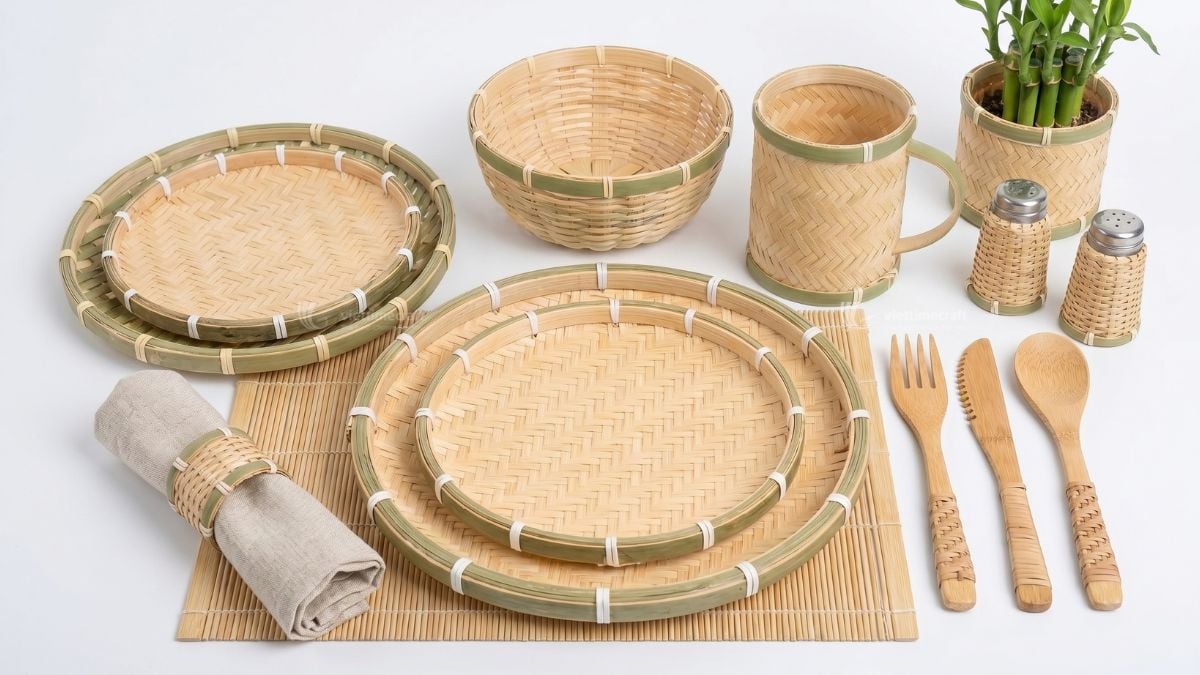
For the global brand, bamboo dinnerware isn’t a niche impulse buy; it’s a margin‑building SKU that shortens replenishment cycles and earns free PR from sustainability‑focused media.
Why Buyer Decisions Are Tilting Toward Bamboo
- 15‑30% lower unit cost vs ceramic, even after adding a food‑safe coating.
- 60‑80% lighter than equivalent ceramic ware, dramatically reducing ocean‑freight spend.
- Open‑pore natural antibacterial surface that appeals to health‑focused consumers.
- OEM/ODM flexibility – custom shapes, branded engravings, and private‑label packaging from a single Vietnamese partner.
- Stackable nestable designs increase container utilization by 25‑40% compared with bulk ceramic
How Does Bamboo Dinnerware Reduce Total Import Costs?
Bamboo starts with a cost advantage that compounds through the supply chain. The raw culms grow to maturity in three to five years, maturing far faster than the clay and silica used in ceramic production, which require energy‑intensive kiln firing.
| Cost Driver | Ceramic (per 20’ container) | Bamboo (per 20’ container) |
|---|---|---|
| Unit price (ex‑works) | $0.80 – $1.20 | $0.55 – $0.85 |
| Average weight (kg/piece) | 0.45 – 0.60 | 0.08 – 0.15 |
| Breakage rate in transit | 6 – 10% | 1 – 2% |
| Ocean freight (20’ container) | $1,800 – $2,400 | $1,000 – $1,400 |
| Approx. landed cost per piece | $1.15 – $1.85 | $0.65 – $1.00 |
Prove‑It detail: A standard 20‑foot container loaded with 5‑000 bamboo plates weighs roughly 900 kg less than the same container filled with ceramic, saving roughly $1‑200 in ocean freight at current rates
Operational fact: Viettime Craft uses 5‑ply corrugated export cartons that pass drop tests from 1.2 meters, and every carton includes a silica gel sachet to keep internal moisture below 8% during 30‑day sea journeys
When Freight Savings Multiply for Multi‑Container Orders
If a brand imports three 40‑foot high‑cube containers per year, the cumulative freight and breakage savings from switching to bamboo dinnerware can exceed $7‑000 annually, directly lifting net profit by more than 2% of landed cost
What Quality Standards and Certifications Do Bamboo Plates Meet?
Global buyers need to know that bamboo dinnerware is safe for consumers and compliant with destination‑market regulations. Viettime Craft’s bamboo collection meets FDA food‑contact standards (21 CFR) for the US market and EU‑specific migration limits under Regulation (EC) No 1935/2004{{
Because bamboo is hygroscopic, every batch undergoes a two‑stage drying cycle before finishing. Moisture content is measured with a digital wood meter and must not exceed 12% before the coating is applied. This extra step prevents warping or cracking after ocean transport.
Important note: Bamboo dinnerware is not microwave safe and should be marketed as such. Buyers who need microwave‑compatible tableware should complement their range with spun bamboo bowls or ceramic items; Viettime Craft also supplies wholesale bamboo products and spun bamboo bowls for mixed container shipments.
How Does Bamboo Tableware Compare with Ceramic and Melamine for Retail Margins?
The comparison below assumes a typical mid‑price retail placement in a home‑goods store.
| Feature | Bamboo | Ceramic | Melamine |
|---|---|---|---|
| Retail price (per plate) | $6.99 – $9.99 | $5.99 – $8.99 | $3.99 – $6.99 |
| Wholesale landed cost | $0.65 – $1.00 | $1.15 – $1.85 | $0.45 – $0.70 |
| Gross margin (approx.) | 75 – 85% | 50 – 65% | 70 – 80% |
| Eco‑story | Strong | Moderate (long kiln firing) | Weak (plastic‑based) |
Bamboo delivers a higher absolute dollar margin per unit than melamine while carrying a premium eco‑narrative that supports a higher retail price. Ceramic, by contrast, erodes margin through greater weight and higher breakage risk without offering a comparable sustainability angle.
Mistakes to Avoid When Sourcing Traditional Bamboo Dinnerware
- Skipping the anti‑mold step : unfinished or improperly dried bamboo will develop black spots within weeks. Always confirm the factory applies anti‑mold treatment before packaging.
- Ignoring food‑safe certification : a visually appealing plate that fails EU or FDA standards will be blocked at customs. Request batch‑level compliance documentation.
- Not checking dimensional uniformity : bamboo tableware produced by hand can vary by 2‑5 mm. Professional brands need consistent diameter and rim thickness; insist on a tolerance sheet.
- Over‑promising microwave safety: even if coated, bamboo cannot withstand microwave heat. Market the product for cold and warm foods only.
- Neglecting stacking factor: non‑nestable designs waste container space. Choose stackable plate profiles to increase load efficiency.
For a deeper look at bamboo’s versatility, browse our kitchen and dining product category.
A Break‑Even Analysis for a Hypothetical Retailer
We modeled a 3‑SKU bamboo dinnerware range (dinner plate, side plate, bowl) imported by a mid‑sized brand from Viettime Craft. The numbers assume:
- 5‑000 units per SKU (15‑000 total).
- 20‑foot container, 30‑day sea transit.
- Retail price $8.99 per plate, $6.99 per bowl.
- Landed cost $0.80/plate, $0.70/bowl.
Result: After accounting for freight, import duties, and logistics, the retailer achieves a gross margin of 82% on the plates and 78% on the bowls. Break‑even is reached at under 650 units sold per SKU, which a single EU retailer would clear in roughly five weeks of in‑store promotion{{
When Traditional Bamboo Dinnerware May Not Be the Right Choice for Your Brand
Honest scenarios where bamboo isn’t optimal:
- You need oven‑to‑table items. Bamboo cannot withstand temperatures above 70°C without degrading. If your customers expect bakeware‑to‑serve functionality, ceramic or stainless‑steel is necessary.
- Your audience demands dishwasher‑only care. Many natural lacquers and surface finishes break down after prolonged dishwasher cycles. Hand‑wash longevity is excellent, but the product isn’t designed for industrial dishwashers.
- You require ultra‑low cost per unit. If the brand narrative doesn’t depend on sustainability, melamine might beat bamboo on price. Bamboo’s value lives in the eco‑story and tactile warmth, not in rock‑bottom cost.
If any of these conditions describe your brand’s primary market, contact our sourcing team to discuss hybrid solutions that still leverage Vietnamese craftsmanship.
Frequently Asked Questions
Can bamboo plates handle hot food temperatures?
Yes, our plates are rated for foods up to 70°C, making them suitable for buffet service, warm starters, and room‑temperature plating. They are not intended for microwave or oven use.
What is the typical MOQ for private‑label bamboo dinnerware?
Our standard MOQ is 100 units per design and size, with an aggregate order of at least 500 pieces. For fully custom shapes or packaging, MOQ may start at 1‑000 units
How do I ensure the dinnerware meets EU food contact regulations?
We provide migration test certificates from ISO 17025‑accredited laboratories. Before shipment, every batch is tested for formaldehyde and melamine migration to comply with Regulation (EU) 10/2011
Does bamboo dinnerware stain easily?
Bamboo has a slightly porous surface that absorbs oils and pigments. We apply a natural lacquer seal that resists staining, but dark sauces (e.g., soy) should be rinsed soon after use to avoid discoloration.
Partner with Viettime Craft for Your Bamboo Dinnerware Collection
Viettime Craft is a leading Vietnamese manufacturer with over a decade of experience exporting home decor to the US, EU, and Australia. Our in‑house R&D team translates your concept into a ready‑to‑ship product, while our BSCI‑ and SMETA‑audited factories ensure responsible supply chains. Every order includes full OEM/ODM support, space‑saving nesting packaging, and clear lead‑time commitments.
Request your personalized bamboo dinnerware catalog today.
Contact our sales desk at viettimecraft.com/contact-us/ and start discussing shape, finish, and packaging details within one business day.