
 Home
Home
Understanding the true landed cost of rattan furniture means breaking down every input, raw material, direct labor, finishing, logistics, and often-overlooked overhead, so importers can compare supplier quotes on equal terms. This cost analysis draws on Vietnam-based manufacturing data from ViettimeCraft and cross-checks with regional benchmarks in Indonesia and China. We present per-component cost estimates, demonstrate how minimum order quantities (MOQ) reduce unit price, and flag common miscalculations that erode margin. Use these numbers to negotiate fair pricing and build a resilient sourcing strategy anchored in real production economics.
How Do Raw Material Prices Compare Across Rattan‑Producing Countries?
The base cost starts with the rattan cane itself. Raw rattan is traded by weight and grade; core‑grade (solid, flexible) cane typically costs $2.50–$3.80/kg in Vietnam, while Indonesia, the world’s largest exporter, quotes $2.80–$4.20/kg depending on seasonal harvesting restrictions. Chinese buyers often pay $3.00–$4.50/kg because domestic demand draws heavily on imported stock.
| Origin | Rattan core (USD/kg) | Typical export grade | Supply stability |
|---|---|---|---|
| Vietnam | 2.5–3.8 | Medium to high | High (well‑established collection networks) |
| Indonesia | 2.8–4.2 | High (largest volume) | Moderate (export quotas can tighten supply) |
| China | 3.0–4.5 | Mixed, often processed | Constrained by domestic demand |
Vietnam’s stable raw material pipeline, backed by decades of craft village infrastructure, often lowers per‑kilogram cost and reduces lead‑time uncertainty. For a mid‑weight indoor chair frame that consumes roughly 3.5 kg of rattan, a $0.50/kg difference translates to about $1.75 per frame, a meaningful amount when ordering thousands of pieces.
What Are Typical Labor Costs for Handwoven Rattan Furniture?
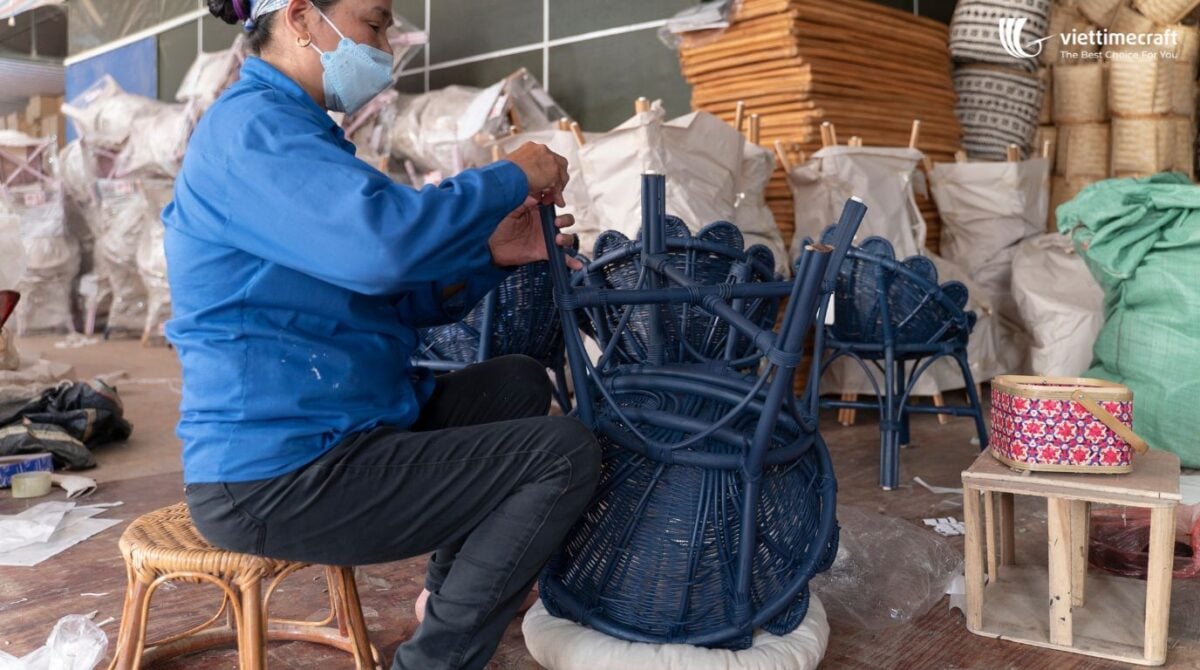
Handweaving is the largest single cost after material. In Vietnam, skilled weavers earn $1.20–$2.00 per hour on average; comparable Chinese artisans command $2.50–$4.00 per hour due to higher living costs and labor regulations. A typical dining chair frame needs 7–8 hours of weaving time, yielding a labor spend of $10–$16 in Vietnam versus $20–$32 in China.
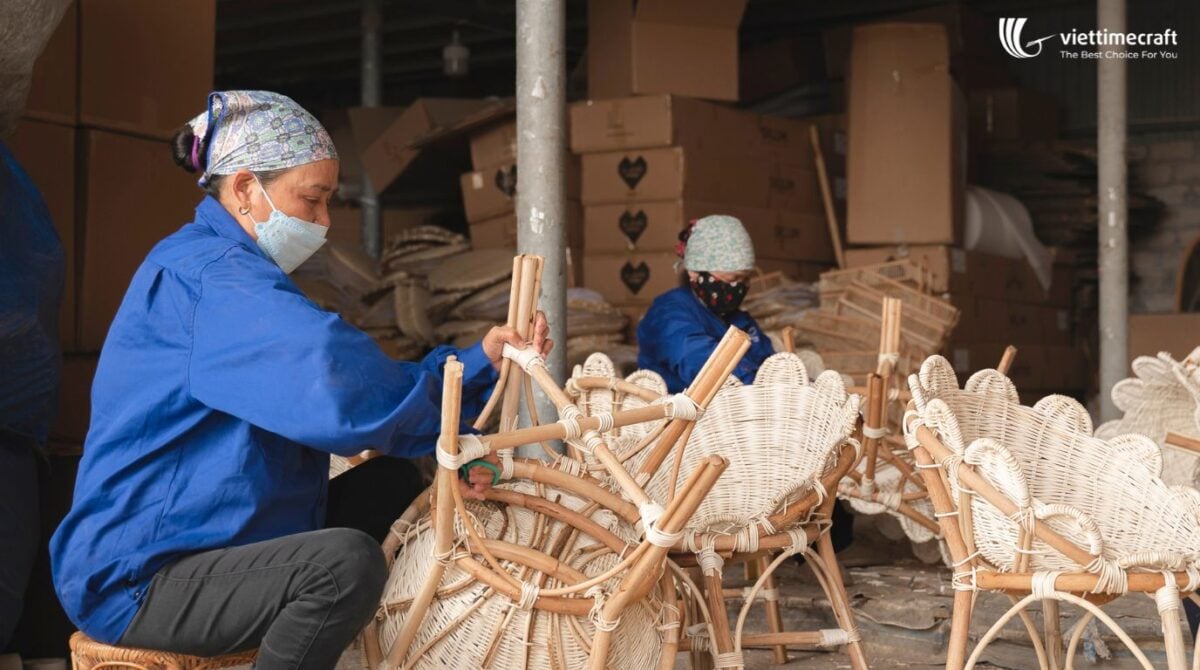
Frame assembly (bending, joining) adds another 30–45 minutes of semi‑skilled work, costing roughly $1.00–$1.50 per chair. Partnering with a factory that has an in‑house carpentry team and OEM/ODM capabilities (our manufacturing process) can shave 10–15% off assembly costs by eliminating subcontractor mark‑ups.
How Do MOQ and Production Scale Influence Unit Price?
Fixed costs, mold fabrication, worker training, and quality‑control setup, stay nearly constant whether you order 100 chairs or 1,000. Therefore, spreading them over a larger batch reduces per‑unit expense dramatically.
| Order quantity | Approx. unit price reduction vs. 100 pcs | Why |
|---|---|---|
| 200 pcs | 15–20% | Tooling amortization starts |
| 500 pcs | 30–40% | Dedicated line, purchasing bulk rattan |
| 1,000 pcs | 45–55% | Full production‑line commitment, pre‑negotiated freight rates |
When quoting, always request FOB pricing at two or three volume tiers. A supplier that refuses to share a 500‑unit price often lacks the production depth to deliver large programs, a useful screening signal.
Which Logistics and Freight Variables Add Hidden Cost?
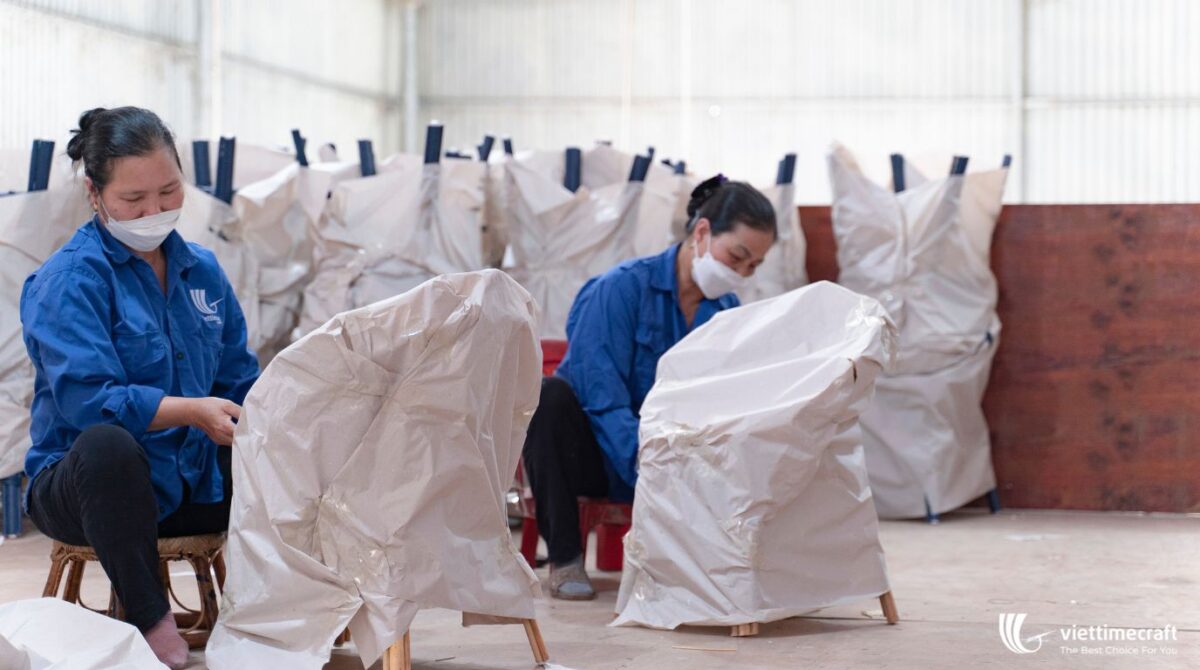
Freight can add $5–$12 per unit depending on packaging density, container type, and fuel surcharges. A 20‑ft container typically holds 400–500 nesting‑optimized rattan chairs; without nesting, that number drops to 300–350, pushing per‑unit sea freight from about $3.50 to $5.00. Always ask whether your supplier layers silica‑gel sachets inside cartons, moisture damage claims are otherwise common in hold‑based shipping.

FOB (Free On Board) places the cost risk on the seller until the goods pass the ship’s rail; CIF (Cost, Insurance, and Freight) see the supplier absorb some ocean‑freight volatility. For first‑time buyers, Viettime Craft recommends starting with FOB terms to compare clear ex‑works factory costs, then later negotiating volume‑based CIF once a trusted relationship exists. Request a custom logistics plan that includes container‑loading diagrams.
How Does Anti‑Mold Treatment Affect Per‑Unit Cost?
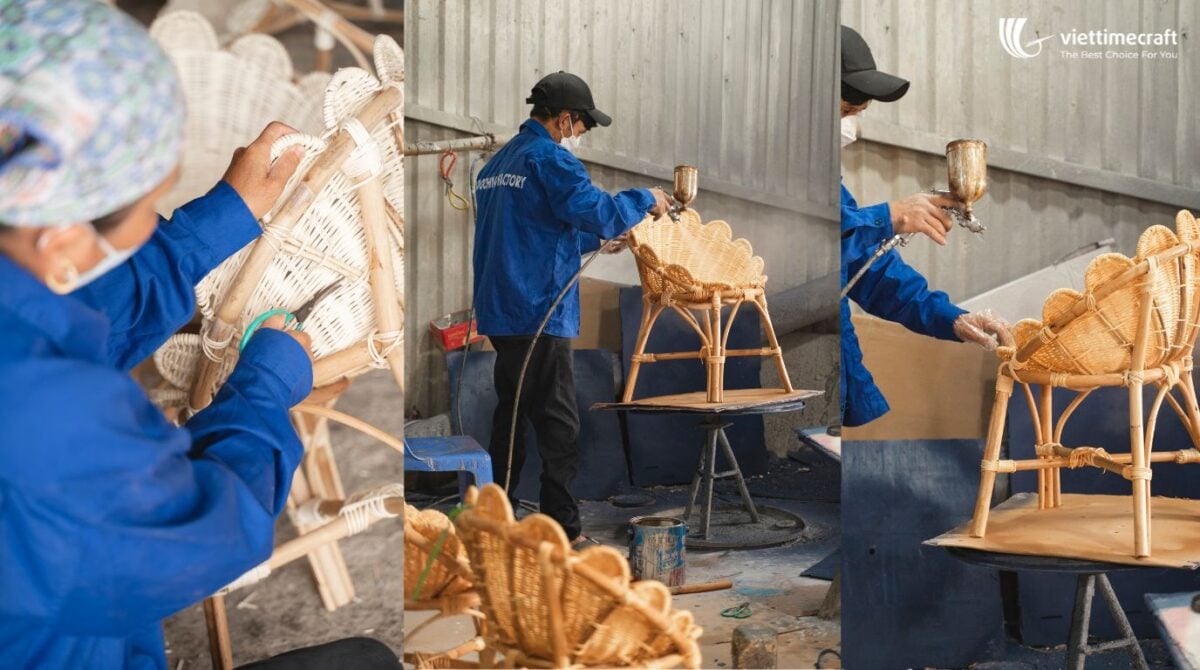
All natural rattan must be kiln‑dried and treated with anti‑mold agents before assembly. Factories that skip or under‑apply this step produce frames that arrive spotted with mildew, a leading cause of rejections in US and EU markets. The treatment process adds $1.20–$2.50 per chair, covering controlled‑humidity drying, commercial‑grade anti‑mold dips, and lab moisture‑content testing.
At ViettimeCraft, every batch undergoes strict drying and anti‑mold processing, with silica‑gel packs placed in every carton, which aligns with BSCI‑verified social compliance standards. Read about our BSCI certification to understand how quality control integrates into every production run.
Mistakes to Avoid When Calculating Landed Cost
- Ignoring fumigation: Solid‑rattan furniture is usually exempt from fumigation, but if any supplementary wooden parts (e.g., dowels or plywood backs) are used, fumigation certificates add $150–$300 per container.
- Forgetting currency hedging: A 3% swing in VND‑USD can wipe out the margin on a $30,000 order. Work with your bank to fix or cap exchange risk.
- Overlooking sample freight: First‑run air‑express samples can cost $200–$400; build this into your sourcing budget.
- Not valuing nesting design: A chair that nests cuts container cost by 18–22%, equivalent to saving $0.80–$1.20 per chair on sea freight.
- Assuming one‑size‑fits‑all MOQ: Ask for MOQ figures based on the exact product design, intricate weaves often require larger minimum batches to cover training time.
Frequently Asked Questions
How much does it cost to import rattan furniture from Vietnam?
A typical FOB chair frame lands between $28 and $38; sea freight, customs duties, and inland delivery add $5–$12 per unit depending on volume and destination port. Work with a freight forwarder to get a precise door‑to‑door cost breakdown.
What is the typical MOQ for rattan furniture manufacturers?
Most Vietnamese factories start MOQs at 50-100 pieces per design; however, complex designs may require 200-300 units to justify setup. Request volume‑tiered pricing to understand where the real breakpoints lie.
Does rattan furniture require fumigation?
Rattan itself is normally exempt from fumigation under ISPM 15, but any attached wooden components or plywood packaging must be heat‑treated and stamped accordingly. Always confirm composition with the supplier.
How can I reduce the landed cost of rattan furniture?
1) Commit to 500+ piece orders to lower setup and material costs.
2) Choose nesting‑optimized designs to save on container space.
3) Lock in FOB pricing during low‑demand seasons (usually November–February) when factory capacity eases.
4) Negotiate yearly raw‑material contracts rather than spot‑price buying.
Contact ViettimeCraft for a factory‑direct quotation and to discuss your product concept.