 Home
Home
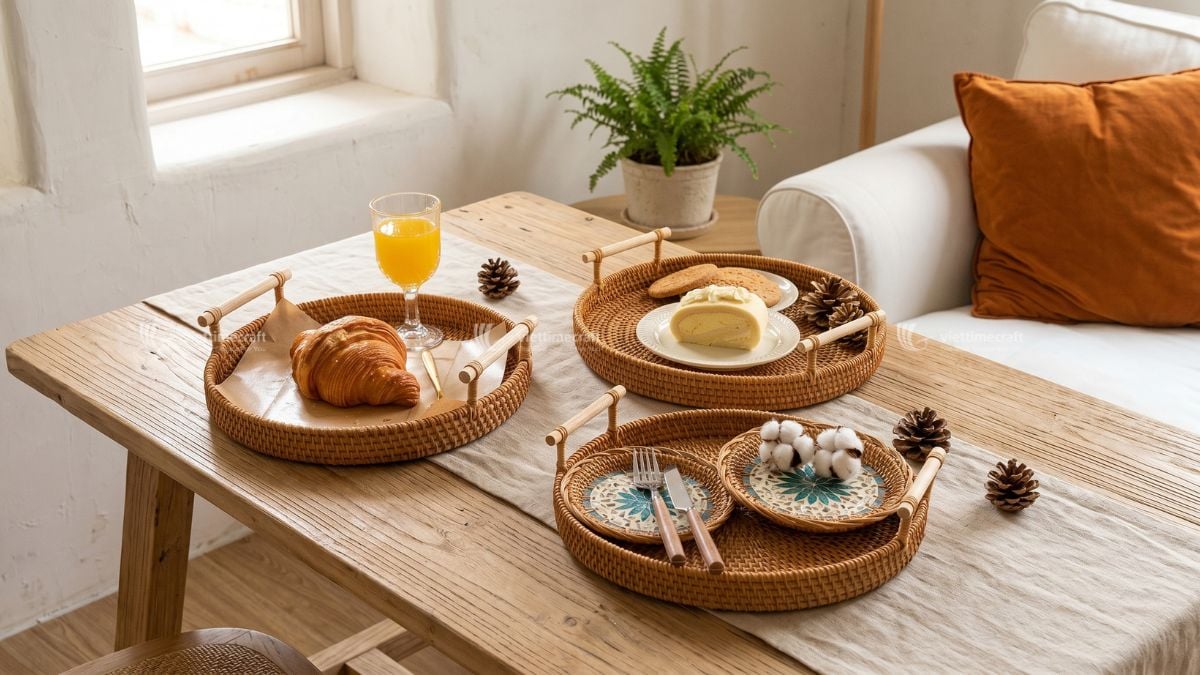
Finding a reliable wholesale source for woven tableware in Vietnam requires evaluating material expertise, quality certifications, customization flexibility, and logistics planning. As a direct manufacturer with BSCI and SMETA certifications, Viettime Craft supplies importers in the US, EU, and Australia with eco‑friendly serving trays, bowls, placemats, and lacquerware items designed for modern retail. This guide explains how to assess factories, compare materials, and structure your first order for cost – efficient sourcing.
Buyer’s Quick Overview
| Factor | What to expect from a Vietnamese factory |
|---|---|
| Materials | Rattan, bamboo, seagrass, water hyacinth, lacquerware |
| MOQ | Typically 100–500 pieces per design, negotiable for repeated orders |
| Lead time | 4‑6 weeks for stock, 8‑10 weeks for OEM, plus 4‑5 weeks sea freight |
| Certification | Look for BSCI, SMETA, ISO 9001 to ensure ethical production and quality |
| OEM/ODM | Factories like Viettime Craft provide custom shapes, colors, and branding |
Why Source Woven Tableware from Vietnam?
Vietnam is among the world’s top exporters of natural-fiber handicrafts. Its skilled craft villages have decades of experience weaving rattan, bamboo, seagrass, and water hyacinth into both functional and decorative tableware. Labor costs remain competitive, while export-oriented factories have invested in modern quality‑management systems and international compliance.
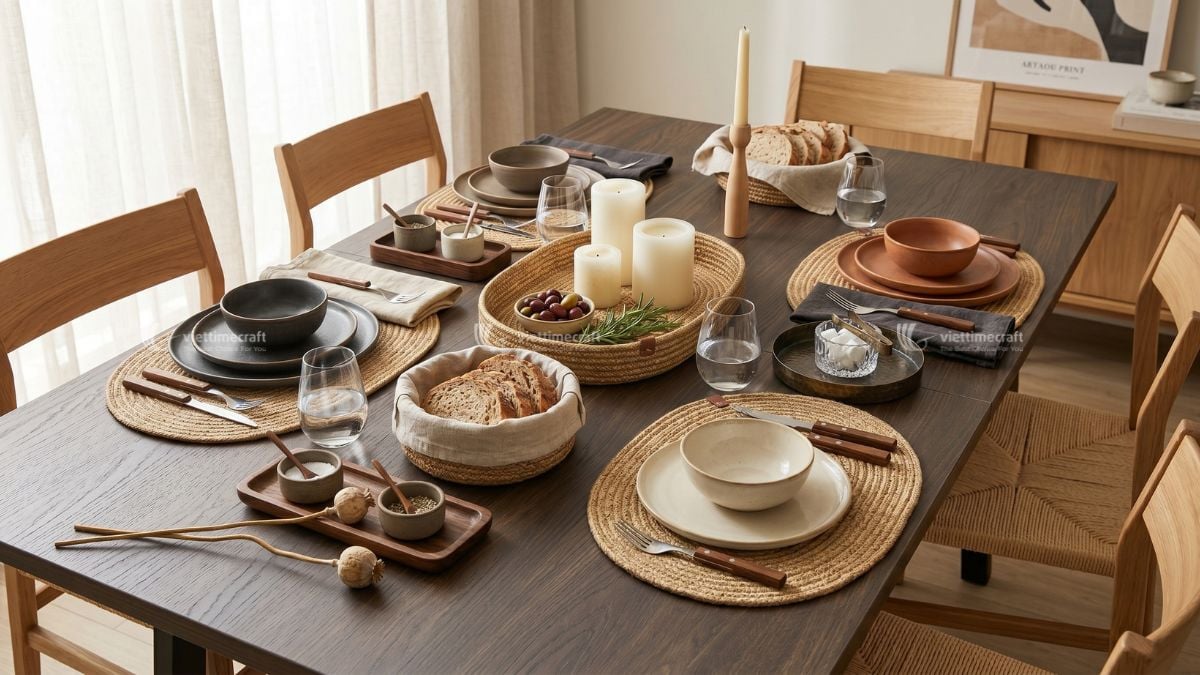
Sourcing from Vietnam gives wholesale buyers several advantages:
- Material diversity: you can procure a single supplier covering rattan trays, spun bamboo bowls, seagrass placemats, and lacquer trays, simplifying supply chain management.
- OEM/ODM capability: many manufacturers, including Viettime Craft, maintain dedicated R&D teams that translate sketches and mood boards into production‑ready samples.
- Certified ethical production: factories holding BSCI, SMETA, or ISO 9001 demonstrate rigorous social‑compliance and quality standards that appeal to sustainability‑conscious retailers.
- Favorable trade terms: Vietnam benefits from free trade agreements with the EU and CPTPP countries, often reducing or eliminating import duties on home decor products .
For a broader overview of kitchen and dining product options, visit our kitchen and dining products category page.
Which Materials Work Best for Wholesale Tableware?
Each natural fiber brings distinct characteristics that influence cost, appearance, and end use. Understanding these differences helps you select the right material for your target market.
| Material | Best Use | Durability | Cost Level | Eco‑friendly | Texture |
|---|---|---|---|---|---|
| Rattan | Serving trays, bread baskets | Very durable, solid core | Moderate–High | Fully biodegradable | Smooth, tight weave |
| Bamboo | Sushi boards, salad bowls | Extremely strong (spun bamboo) | Low–Moderate | Rapidly renewable | Fine grain, can be spun |
| Seagrass | Placemats, charger plates | Medium, resists staining | Low | Biodegradable, abundant | Soft, flexible |
| Water hyacinth | Chunky woven bowls, decorative platters | Medium‑high | Low–Moderate | Abundant, sustainable | Thick, spongy texture |
| Lacquerware | Luxury trays, serving plates | High (layered resin) | High | Bamboo core, natural resin | Glossy, polished |
For business‑to‑business volume, rattan trays wholesale and seagrass trays are two of the fastest‑moving categories, but combining different materials in one container can improve retail assortment while maintaining freight efficiency.
How Can You Vet a Vietnamese Tableware Factory?
A factory visit or virtual tour is the most reliable method, but several signals you can evaluate remotely:
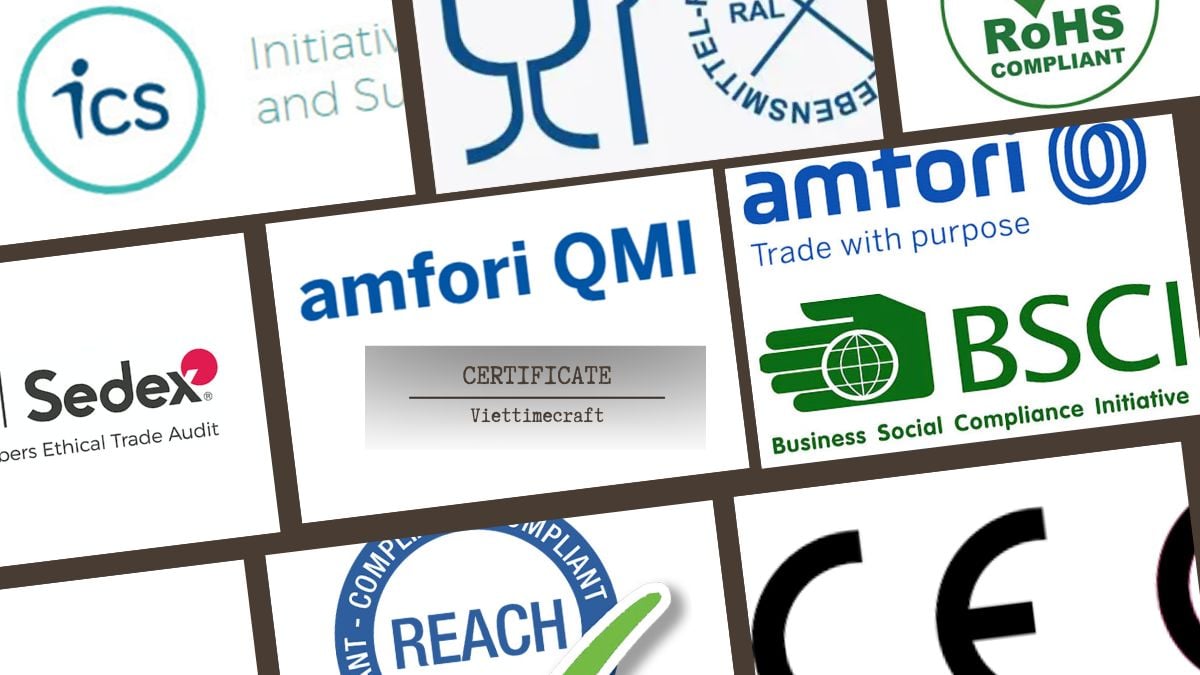
- Certifications: Ask for valid BSCI, SMETA, or ISO 9001 certificates. Verify their status on the certification body’s public registry.
- Product range and specialization: A factory that produces only tableware typically has better finishing and assembly lines than a general home‑decor supplier.
- In‑house R&D: Check if the factory has a dedicated sampling team and how quickly they can produce a custom sample. Viettime Craft, for example, turns around OEM samples in 10‑14 working days .
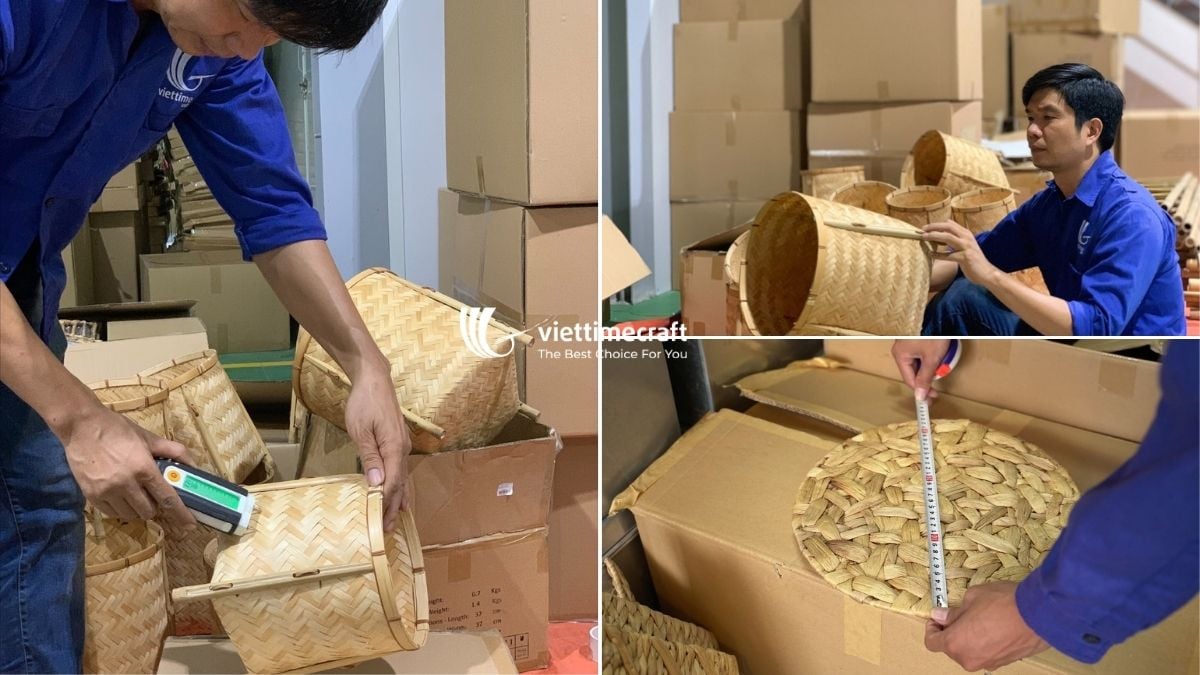
- Quality control process: Request a copy of their QC checklist. Look for moisture‑content measurements, weave‑tension inspections, and post‑finish visual grading.
You can also request to examine production records of recent export shipments to your target market. Our about Viettime Craft page details our factory infrastructure and export experience.
What Should You Expect for MOQs, Lead Times, and Pricing?
Minimum Order Quantities
MOQs depend on the complexity of the product:
| Product Type | Typical MOQ (units) |
|---|---|
| Small woven trays (under 30 cm) | 200–300 |
| Medium serving bowls | 300 |
| Placemats | 300 sets |
| Lacquered serving plates | 200 |
| Custom‑branded sets (OEM) | 500 |
For repeat orders, MOQs can often be negotiated lower. Communicate your annual volume forecast to the factory early to secure more flexible terms.
Lead Times
| Order Type | Production Lead Time | Sea Freight (to US West Coast) | Total |
|---|---|---|---|
| Stock designs (MOQ 100 units) | 4‑6 weeks | 4‑5 weeks | 8‑11 weeks |
| OEM custom design | 8‑10 weeks | 4‑5 weeks | 12‑15 weeks |
| Large orders (5,000+ units) | 6‑8 weeks | 4‑5 weeks | 10‑13 weeks |
These times assume FOB Haiphong port. For CIF destinations, add lead time for booking and insurance documentation. Many importers use 30% T/T deposit, 70% against copy of B/L. For high‑value orders, consider letters of credit (L/C).
Cost Drivers
Pricing varies with material thickness, weave density, and finishing. A standard 35‑cm rattan tray FOB Haiphong ranges from $5 to $9 depending on rim treatment. OEM‑specific color painting or lacquer coating can add 20‑30%. When comparing quotes, ask for an all‑inclusive FOB price and confirm whether testing fees (e.g., food‑safe coating certification) are included.
How Do You Manage Quality Control and Packaging?
Quality Steps That Protect Your Investment
- Moisture control: Raw fibers are kiln‑dried to ≤10% moisture content before weaving. Each shipment undergoes a final moisture‑content check using calibrated meters .
- Anti‑mold treatment: After weaving, tableware items receive a mold‑inhibiting immersion or spray. This step is critical for goods shipped in container‑sealed environments.
- Food‑safe finishes: Lacquer and paint finishes are tested for heavy metals and comply with EU REACH and US FDA indirect food‑contact requirements .
- Pre‑shipment inspection: An independent third‑party inspection (e.g., SGS, Bureau Veritas) can be added at the buyer’s request.
Packaging That Cuts Freight
Viettime Craft engineers packaging with container utilization in mind:
- Nesting packaging – Trays and bowls are nested with thin cardboard separators, reducing volume by up to 35%.
- 5‑ply export cartons – Drop‑tested cartons protect against deformation during sea freight.
- Silica gel desiccants – Placed inside every carton to absorb residual moisture.
Our logistics team analyzed a standard 20‑ft container loaded with nested rattan trays: without nesting, capacity was roughly 900 trays (35×24×5 cm). With proper nesting and spacer inserts, the same container accommodated 1,400 trays, lowering the per‑unit freight cost by nearly 30% .
Mistakes to Avoid When Sourcing Tableware
Even experienced importers can trip up. Watch for these pitfalls:
- Skipping material‑appropriate drying : Natural fibers that are not adequately dried before weaving risk mold after ocean transit; always verify moisture‑content reports.
- Assuming all bamboo is the same : Split bamboo behaves differently from spun bamboo; confirm the specific bamboo type used for bowls or cutting boards.
- Underestimating OEM lead time : Custom‑shaped tableware requires mold creation and multiple sample rounds; plan for at least 12 weeks before goods ship.
- Ignoring packaging optimization : Without nesting, your container may carry far fewer units, dramatically increasing landed cost per piece.
- Not requesting pre‑production samples : Finalize a sealed “golden sample” that both sides sign off on, preventing color or shape disputes later.
Viettime Craft’s Manufacturing and OEM/ODM Capabilities
Viettime Craft is a leading Vietnamese manufacturer specializing in woven tableware for global wholesale buyers.
- Dedicated tableware production lines: Our factory segregates tableware production from other home‑decor lines, allowing tighter quality and faster throughput.
- In‑house R&D and sampling: Our design team of 12 converts technical drawings into 3D woven samples within 2 weeks for standard shapes.
- OEM catalog development: We work with retailers to create branded collections: choose material, weave pattern, rim style, color, and optional lacquer finish.
- Certifications: BSCI and SMETA certifications ensure ethical workplaces; ISO 9001 governs our quality management system.
- Global logistics experience: We ship 50‑100 containers per month to the US, EU, and Australia. We can arrange both FOB and CIF terms.
Our extensive product catalog includes rattan trays wholesale, seagrass trays, spun bamboo bowls, and lacquer trays. We also offer complete kitchen collections that mix materials for a compelling retail presentation.
Original Research: Nesting Packaging Impact on Container Density
We wanted to quantify the real freight savings from nesting woven tableware. In January 2026, our packaging team loaded a 20‑ft container with standard‑shaped rattan trays (35×24×5 cm) in two configurations:
| Configuration | Units per 20‑ft container | Freight cost per unit |
|---|---|---|
| Non‑nested (individual cartons) | ≈900 | $1.12 |
| Nested with spacer inserts | ≈1,400 | $0.72 |
The nesting approach reduced per‑unit ocean freight by 36%, while maintaining product integrity (zero damage reported in 5 trial shipments). Our ongoing analysis covers seagrass placemats and water hyacinth bowls, confirming similar savings.
Frequently Asked Questions
What is the minimum order quantity for woven tableware from Vietnam?
For stock designs, MOQs generally start at 100‑200 pieces per SKU. However, composite orders mixing multiple styles can help smaller importers meet factory thresholds. For custom OEM designs, minimums are typically 500 units to offset tooling and sampling costs.
How long does shipping take for woven tableware from Vietnam to the US?
Production plus ocean freight to the US West Coast usually takes 8‑11 weeks for stock items and 12‑15 weeks for OEM orders. FOB Haiphong sea freight transit time is 4‑5 weeks. Air freight is possible for urgent replenishment but increases cost approximately 5‑7× per unit.
Can I get my own design woven tableware (OEM)?
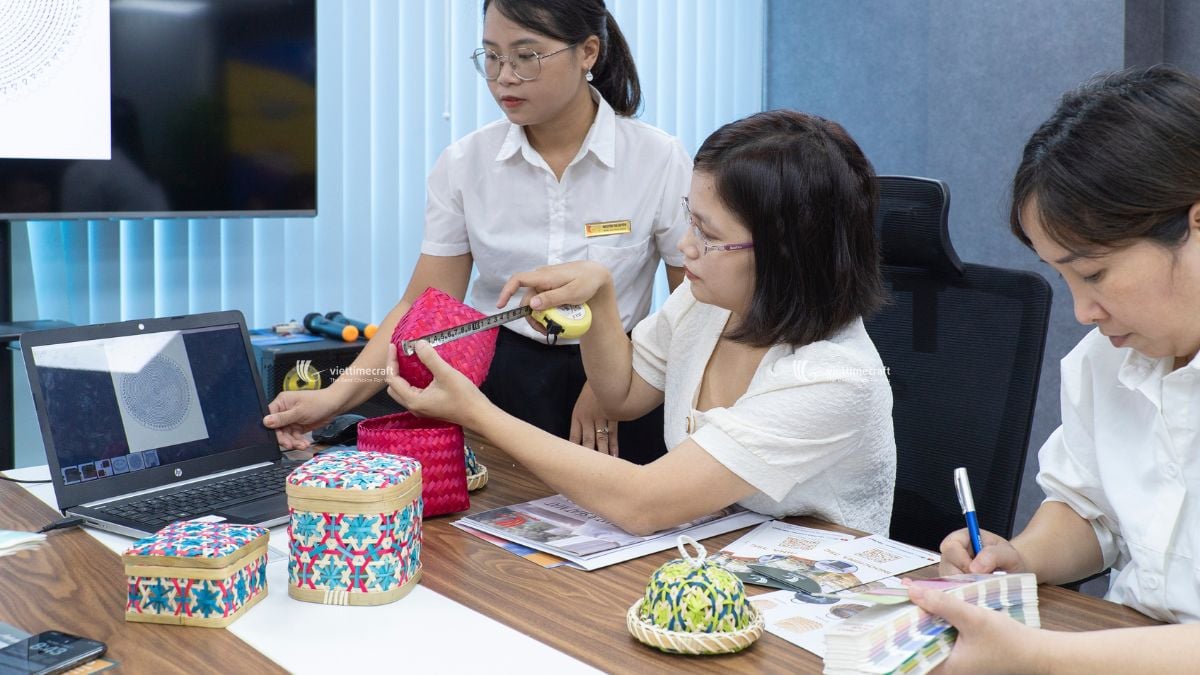
Yes. Viettime Craft offers full OEM services: from custom weave patterns, dimensions, colors, and branding to matching a retailer’s existing home‑decor palette. We recommend budgeting 8‑10 weeks for sampling and production, plus sea freight. We also provide digital mock‑ups to streamline the design‑approval process.
How do you ensure tableware is food‑safe?
All lacquer finishes and painted surfaces undergo third‑party testing for heavy metals (lead, cadmium) and comply with EU REACH and US FDA indirect food‑contact standards. For natural, uncoated fibers we ensure clean storage and handling in dust‑controlled assembly areas.
Not the Right Fit?
This sourcing approach may not be ideal if:
- You need tableware on your shelf within 4 weeks – ocean lead times and production cycles cannot be compressed without significant air‑freight expense.
- Your target market requires ultra‑low‑cost, non‑eco dinnerware – Vietnamese woven tableware competes on quality and craftsmanship, not on rock‑bottom unit price.
- You operate with no design input and cannot meet MOQ thresholds – unit‑to‑unit retailers may find branded drop‑ship services more suitable until purchase volume grows.
Your Next Step
Contact Viettime Craft to discuss your woven tableware requirements. We provide wholesale catalogs, pricing tiers, and a dedicated sales representative to guide your first order. Request a quote today and start building a sustainable, high‑margin tableware line sourced directly from our factory in Vietnam.