
 Home
Home
Spun bamboo is one of Vietnam’s most unique and eco-friendly traditional crafts, known for its lightweight strength, natural beauty, and smooth, polished finish. But behind each elegant bowl or tray is a labor-intensive process that transforms raw bamboo into finely crafted homeware. In this article, we’ll walk you through the step-by-step journey of how to made spun bamboo products from selecting the right bamboo to spinning, shaping, and finishing every piece by hand.
SPUN BAMBOO PRODUCTION PROCESS
1) Material
Bamboo is the fastest growing plant and now one of the most eco-friendly materials. In Vietnam, bamboo both grows naturally and is cultivated in highlands and delta areas which is harvested every 3-5 years.

We make spun bamboo exclusively from the Nua variety (Neohouzeaua dullooa), which grows abundantly in northern provinces of Vietnam such as Thanh Hoa, Ninh Binh, Son La, Yen Bai, and Tuyen Quang. This type of bamboo is soft and highly flexible, making it ideal for crafting products with smooth, rounded shapes.
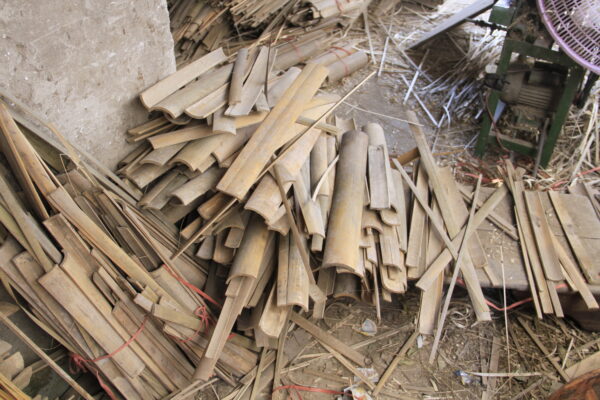
Qualified suppliers cut the bamboo at the nodes and chop it into bars about 70–80 cm long for easier transportation. They then load the bamboo onto trucks and deliver it directly to our workshop.
Bamboo then goes into soaking process in water (mud) for at least 90 days to remove the sugar inside bamboo in order to prevent mold and insects and make it softer as well. After soaking, artisans remove the bamboo from the water and leave it to dry naturally under the sun. Once fully dried, the treated bamboo is stored carefully and used throughout the year. This is to ensures that all buyers are provided the most professional and quality products in South East Asia.
2) Bamboo processing
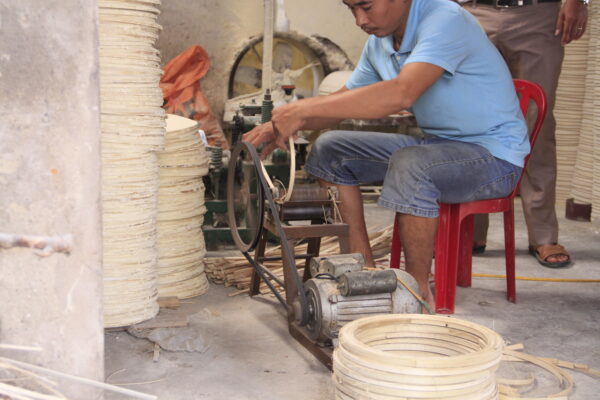
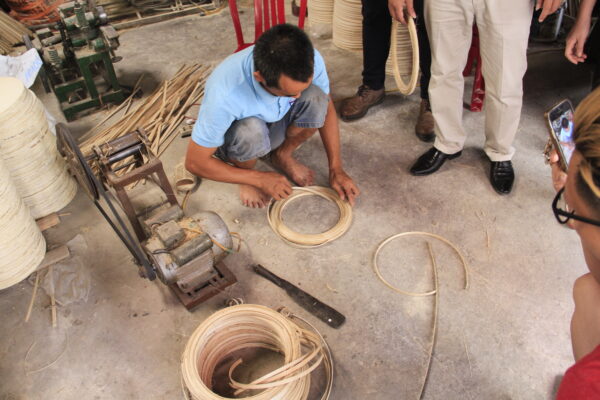
In family workshops, artisans hand-chop the soaked bamboo bars into smaller slats, typically 1–2 cm wide, depending on the product. They then skin and bend these slats into curved rings using simple machines that carve deep grooves into the bamboo. These grooves help the glue penetrate better, creating a stronger, more durable bond for the finished product.
3) Molding/ Shape making
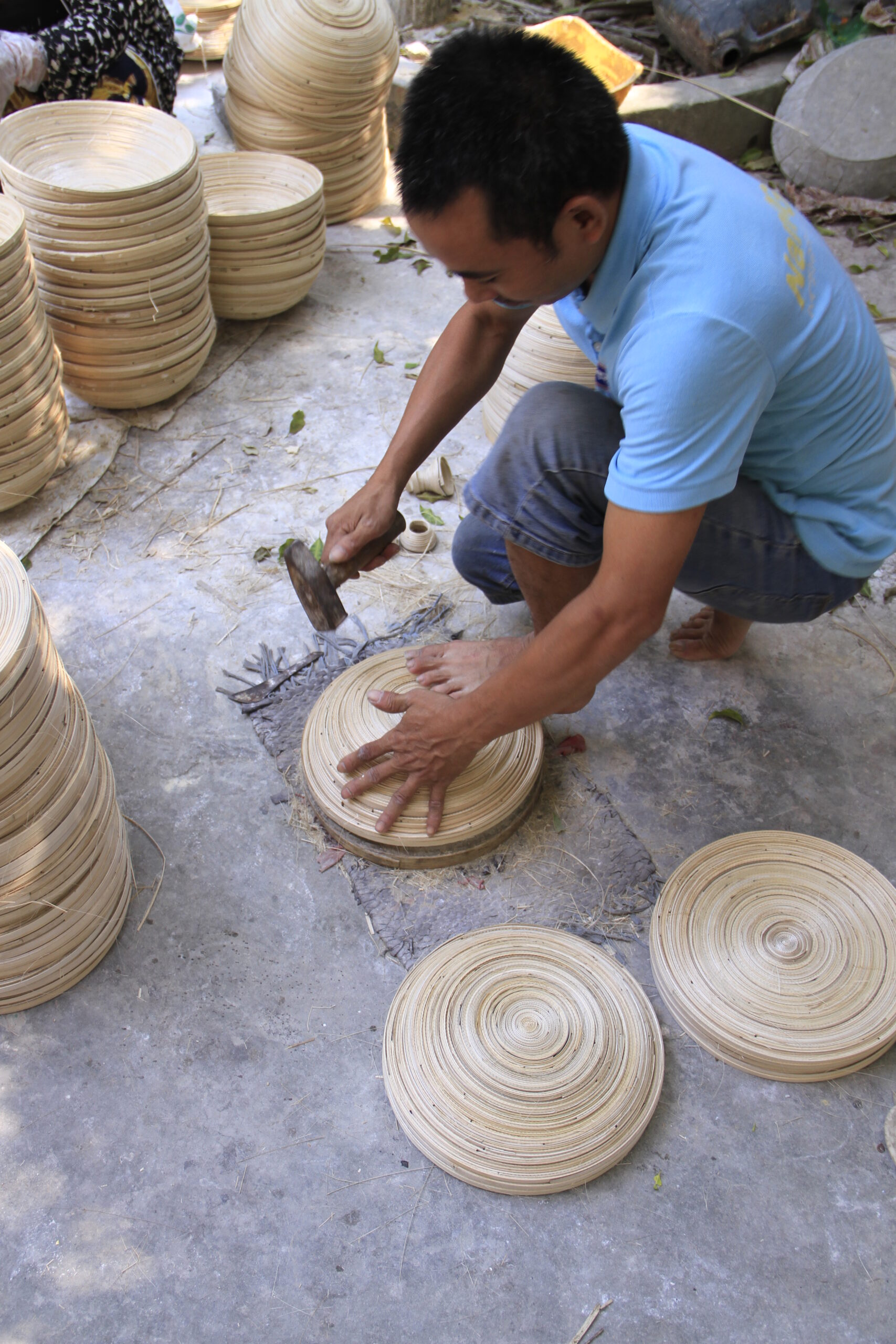
Artisans dip different bamboo slats into PVA glue, then skillfully spin and coil them by hand into flat, mat-like forms. They secure these mats with steel outer rings to maintain the shape. Once partially dried, artisans bend the mats over wooden or cement molds to form curved, bowl-like shapes. Finally, they place the molded pieces under sunlight to dry completely.
4) Planning
The surface of dried molds is very rough so these molds go through planning process to make it smoother. Skilled workers carefully sand each mold to achieve a smooth surface. Once finished, the molds are stored in family-run workshops, ready for delivery.
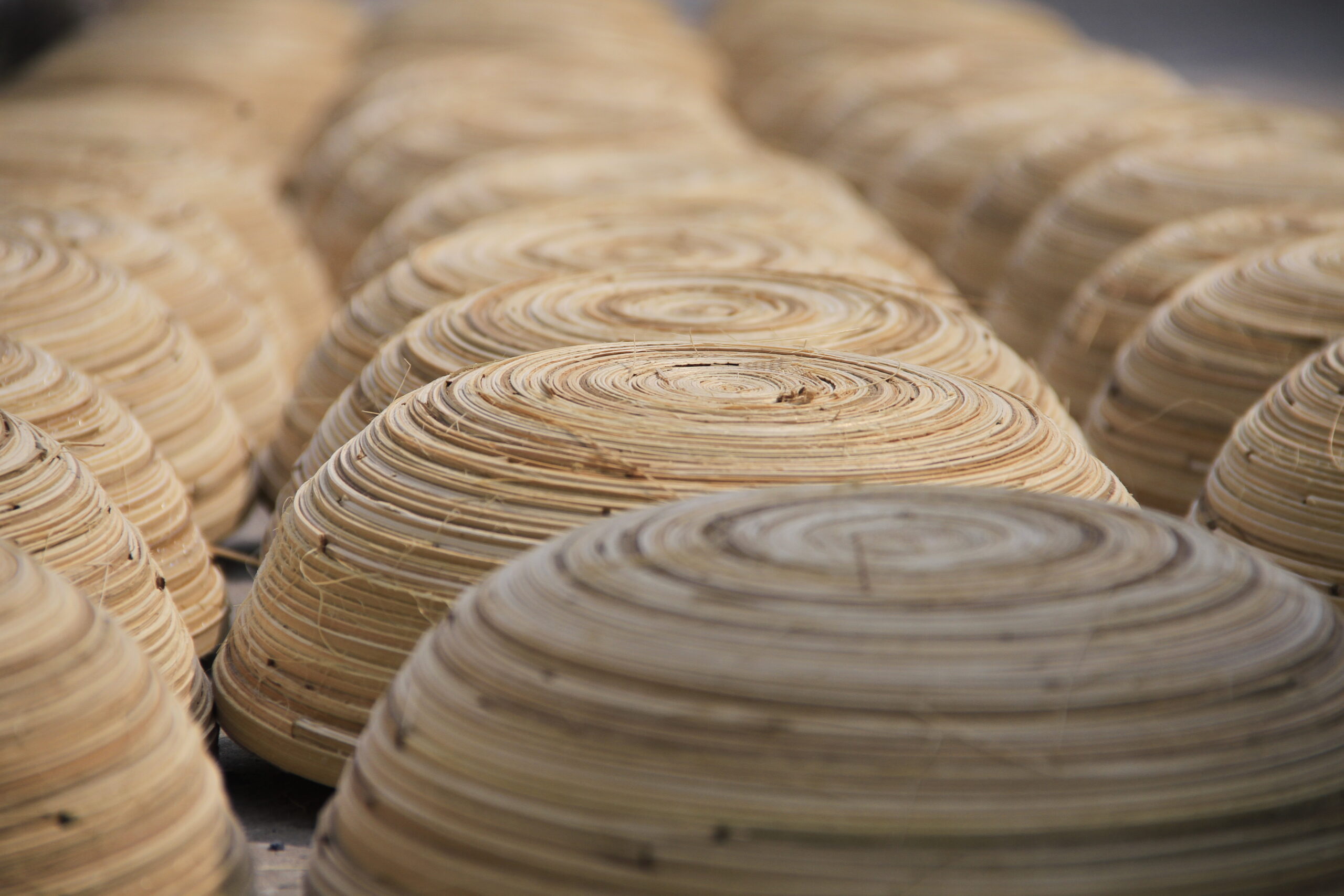
5) Mold gluing and drying spun bamboo prosuct
The first step of finishing molds is gluing. Artisans dip the bamboo molds into water-resistant glue to enhance their strength and durability. Afterward, they place the molds into drying chambers for 4 to 6 hours, aiming for a final moisture level of 6–8%. At this stage, the molds are fully dried. If the structure is weak or the bamboo is still too moist, cracks may develop.
Artisans carefully inspect each piece, sorting out any cracked molds for repair. They fill the damaged areas with a durable mixture of PVA glue and stone powder to restore the mold’s strength and shape. This is an important process to make sure that products will not emit humidity and crack again when they come to difficult markets with cold and dry climate.
6) Filling
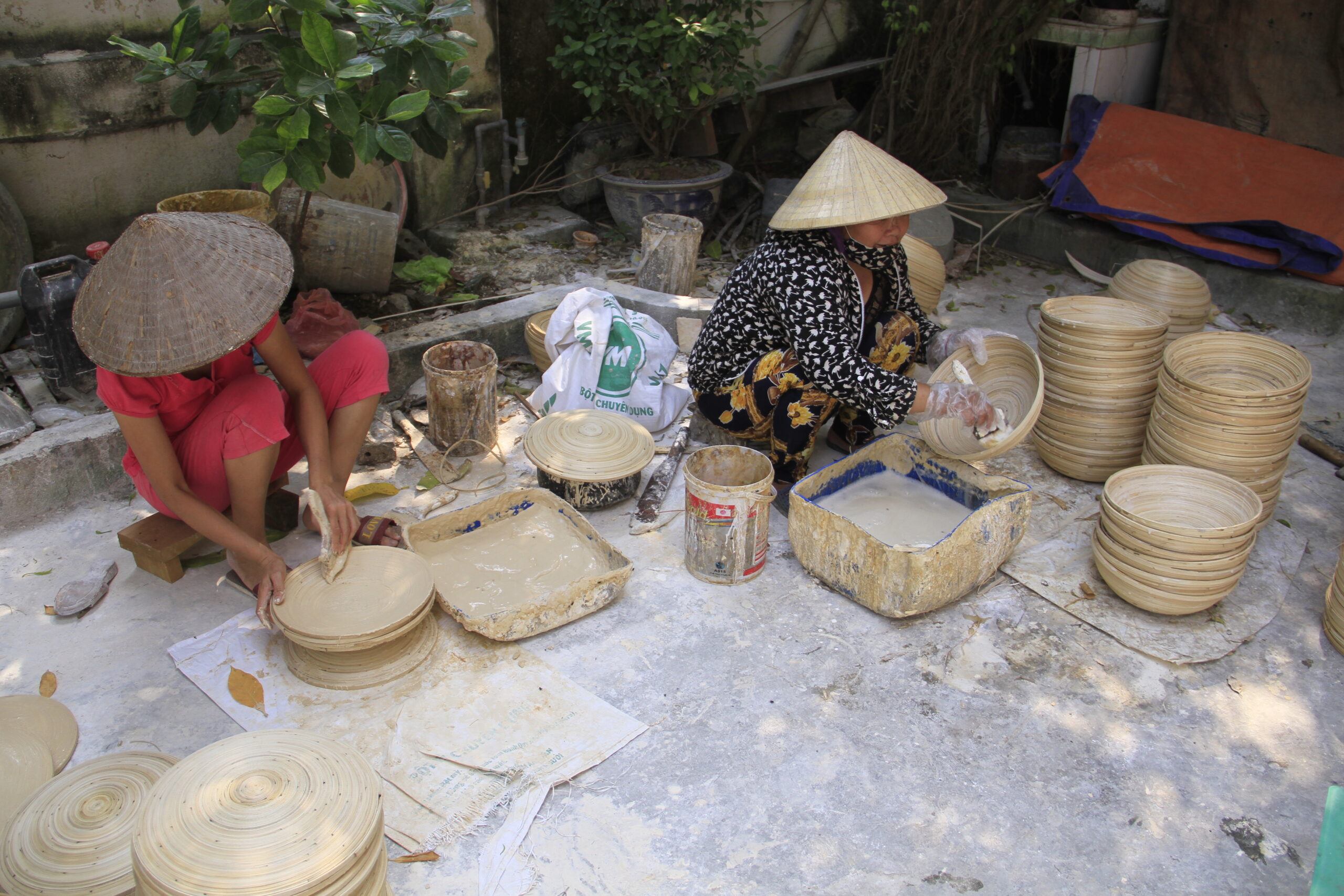
At this stage, the surface of molds is still rough and there are many small gaps or holes because bamboo slats dry and condense. We will use filler, a mixture of stone powder and water-resistant glue, to cover the surface of molds and let molds dry again.
7) Sanding
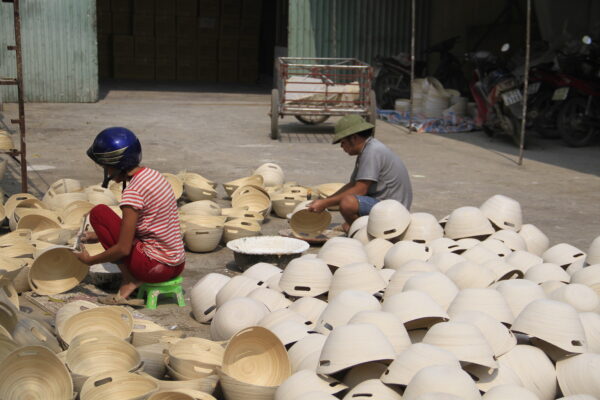
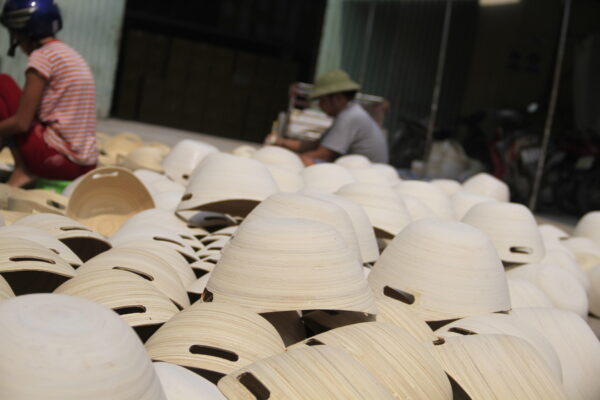
After the spun bamboo products are filled, they will be sanded by simple machines to make smooth surface and ready for paint application.
8) Painting
Painting is the most important process for making spun bamboo products. Defects are often found at this stage.
Only skillful and trained workers, who have studied and practiced for 2-3 years, are selected to paint products.. We are using painting rooms with running water to extract and absorb the smell of paint and thus protect workers’ health.
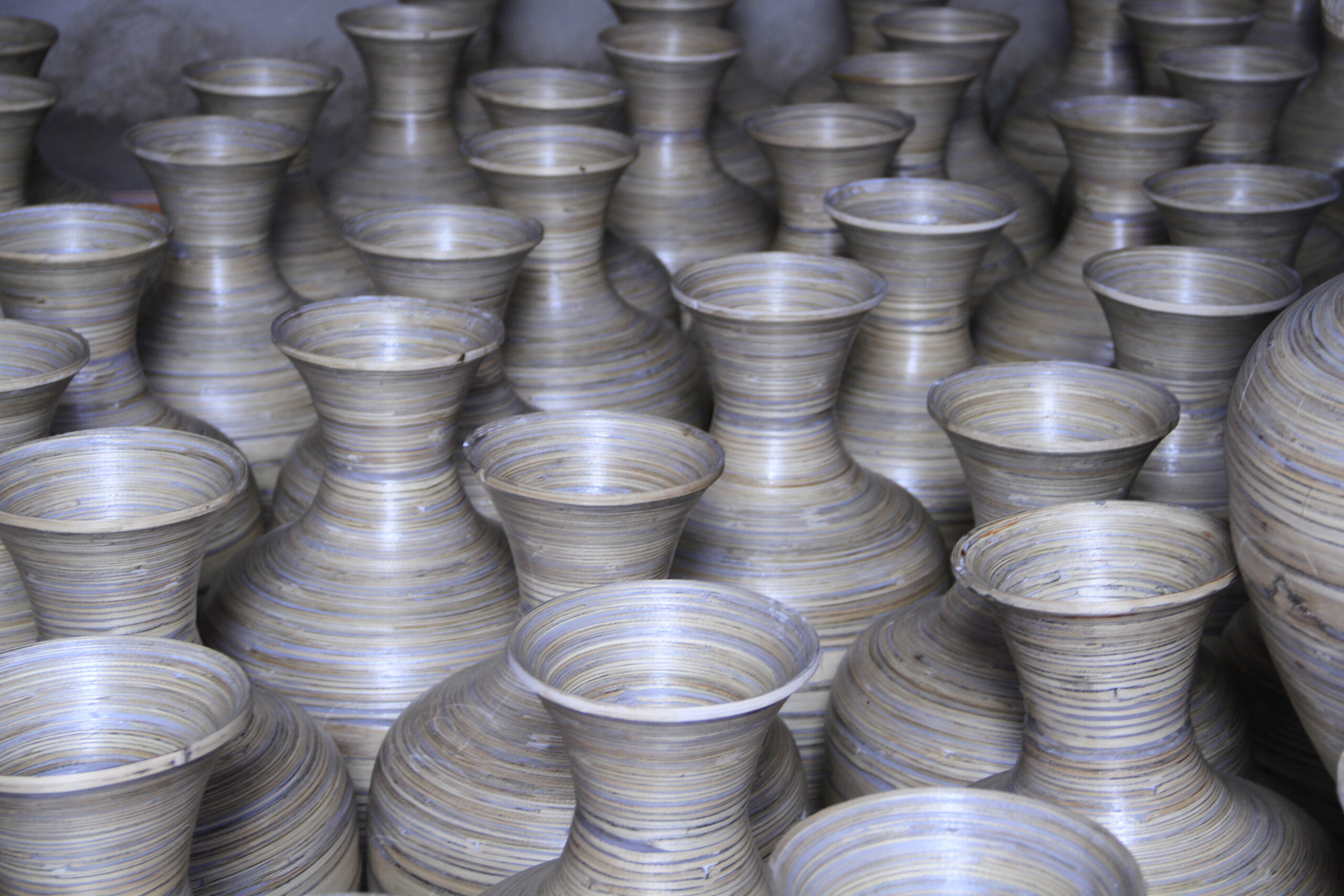
Artisans paint both sides of spun bamboo bowls with care and precision. They apply special PU paints and pigments to the exterior to protect the surface from scratches and match the buyer’s requested colors. The interior, typically left in its natural tone, is coated with a water-based, food-safe paint to ensure safety for serving and contact with food.
There are 3 common kinds of finishing:
- Transparent or grainy color where bamboo grain exposes and you can see.
- Solid matte is the color which covers or hides bamboo grain.
- Solid glossy is like lacquer, delivering a shiny surface while covering bamboo grain.
Creating spun bamboo products is a true reflection of craftsmanship, patience, and tradition. From raw bamboo slats to beautifully finished bowls, every step in the process carries the imprint of skilled hands and cultural heritage.
If you’re looking to bring natural elegance and artisanal beauty into your space, spun bamboo is more than just a material – it’s a story
Explore our handcrafted bamboo collections today and experience the art behind every curve: https://viettimecraft.com/product-category/spun-bamboo/
Contact us:
+84 24 6266 2630
Facebook: Viettimecraft
 Spun Bamboo
 Weaving Bamboo
 Seagrass
 Rattan
 Water Hyacinth
 Lacquer Products
 Coconut & Wood
 Plastic Products
 Other Products
Thanks for the good writeup. It actually was once a amusement account it.
Look advanced to far brought agreeable from you!
By the way, how could we keep in touch?
Thank you for your support!
You can contact us via our email account: [email protected] or [email protected]
Love watching Sun !