
 Home
Home
Handmade woven coasters are a practical, low‑cost addition that consistently lifts basket size and improves store margins. This playbook details how to source authentic, eco‑friendly coasters at competitive wholesale prices, how to merchandise them for maximum visibility, and the pricing framework that protects healthy margins. By the end, you will have a clear action plan for integrating woven coasters into your product mix, whether you sell through a boutique, a lifestyle chain, or an online store.
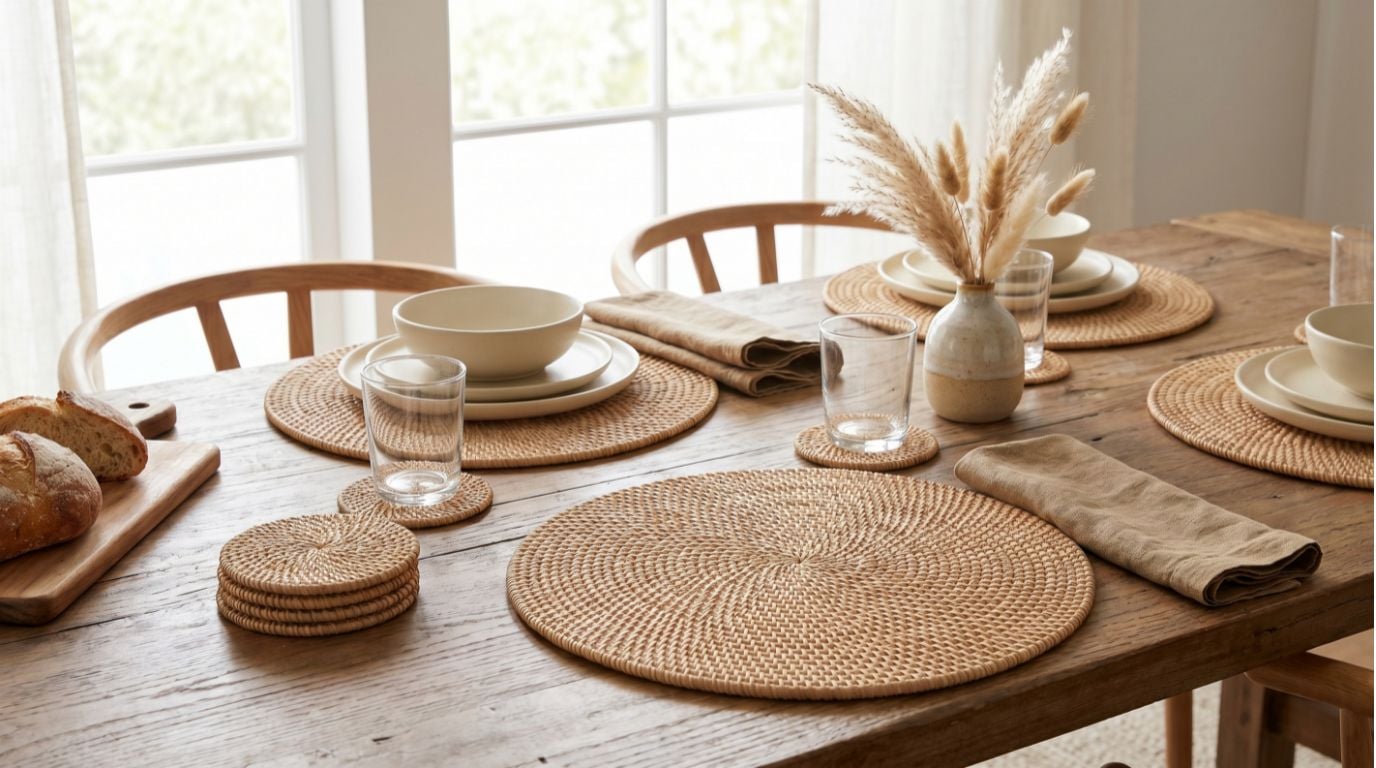
Quick Merchandising Checklist
| Step | Action | Expected Impact | Typical Timeline |
|---|---|---|---|
| 1 | Confirm wholesale supplier and material selection | Access to reliable inventory and competitive pricing | Week 1‑2 |
| 2 | Design a merchandising display (checkout, cross‑merch with tea/ coffee, or home décor corner) | 30‑50% visibility lift over aisle placement | Week 3 |
| 3 | Set retail price 3‑4× wholesale cost | Gross margins of 60‑75% | Ongoing |
| 4 | Rotate seasonal colors/ patterns every 8‑10 weeks | Maintains freshness and repeat purchase | Ongoing |
| 5 | Place reorders 45‑60 days ahead of stock‑out (sea freight lead time 30‑40 days) | No out‑of‑stock lost sales | Every 2‑3 months |
What Makes Handmade Woven Coasters a Smart Addition to Your Catalog?
Coasters occupy a sweet spot in retail: they are affordable impulse buys that shoppers rarely walk into a store planning to purchase, yet they consistently sell when placed near coffee mugs, tea sets, or home décor accents. Because handmade woven coasters are made from natural fibers such as rattan, bamboo, seagrass, and water hyacinth, they also tap into the growing consumer preference for sustainable, artisan‑crafted items.
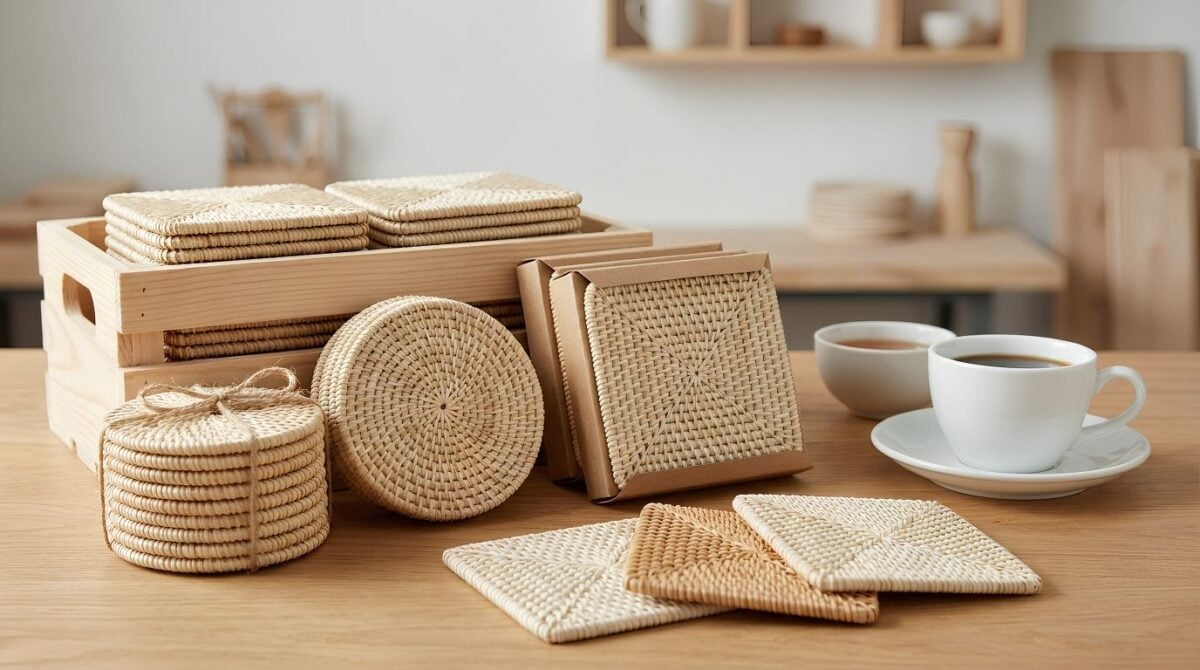
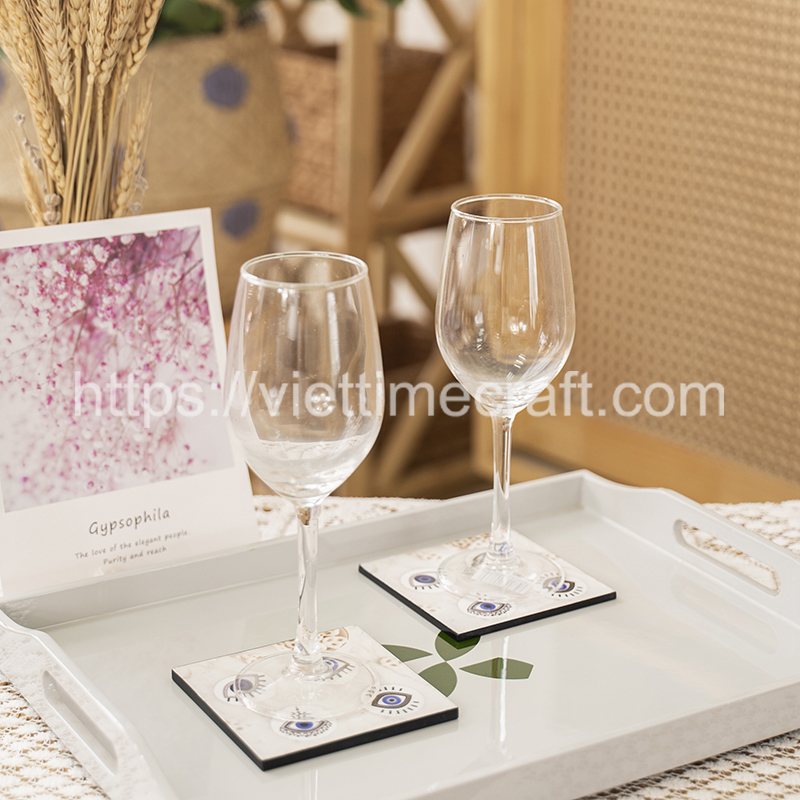
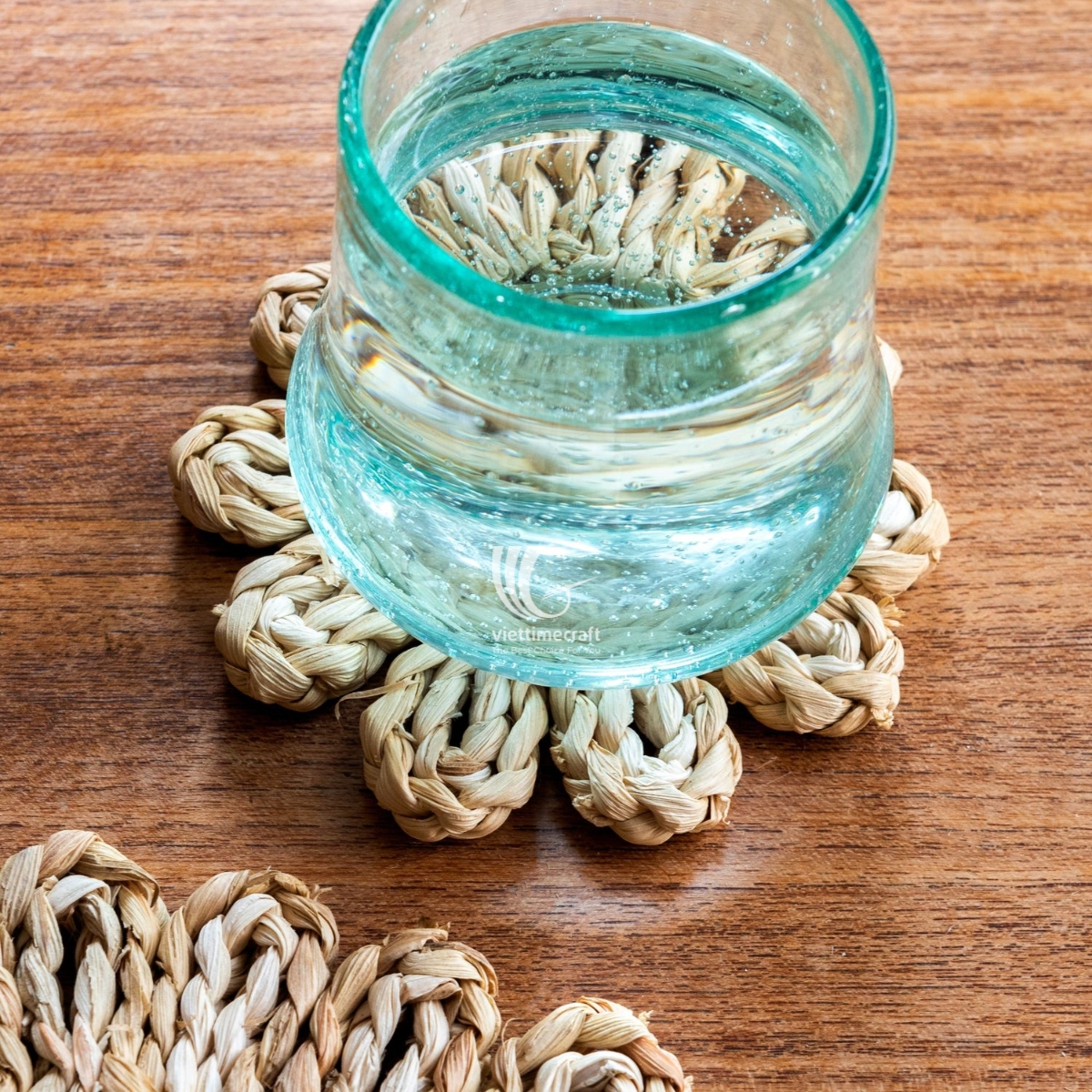
From a category standpoint, coasters have a high trial rate. A customer who buys a set for their morning coffee corner often returns for gifts. They require minimal shelf space, a 30‑cm square display can hold 15‑20 units, and carry an attractive per‑unit retail price of $4.99‑12.99 while costing the retailer far less at wholesale. For online merchants, coasters improve average order value when bundled with mugs, placemats, or table linens.
How to Source High‑Quality Woven Coasters at Wholesale
Sourcing hand‑woven coasters directly from a Vietnam‑based manufacturer such as ViettimeCraft gives you full control over materials, shape, and finish, while eliminating the intermediary markup.
Key sourcing parameters to negotiate:
- MOQ: ViettimeCraft’s standard MOQ for custom coaster designs is 100 pieces per style. Higher‑volume orders receive volume discounts and reduced per‑unit shipping cost.
- Lead time: Production requires 30‑40 days after sample approval, plus 20‑30 days ocean freight to US/EU ports. Always factor in at least 60 days from order to shelf.
- Samples: Request 2‑3 finished samples per design to assess weave density, color accuracy, and surface smoothness. Sampling cost is typically credited against the bulk order.
- Customization: OEM and ODM services allow you to specify dimensions, edge binding, branding (e.g., laser‑engraved or screen‑printed logo), and packaging inserts. This is critical if you plan to sell under a private label.
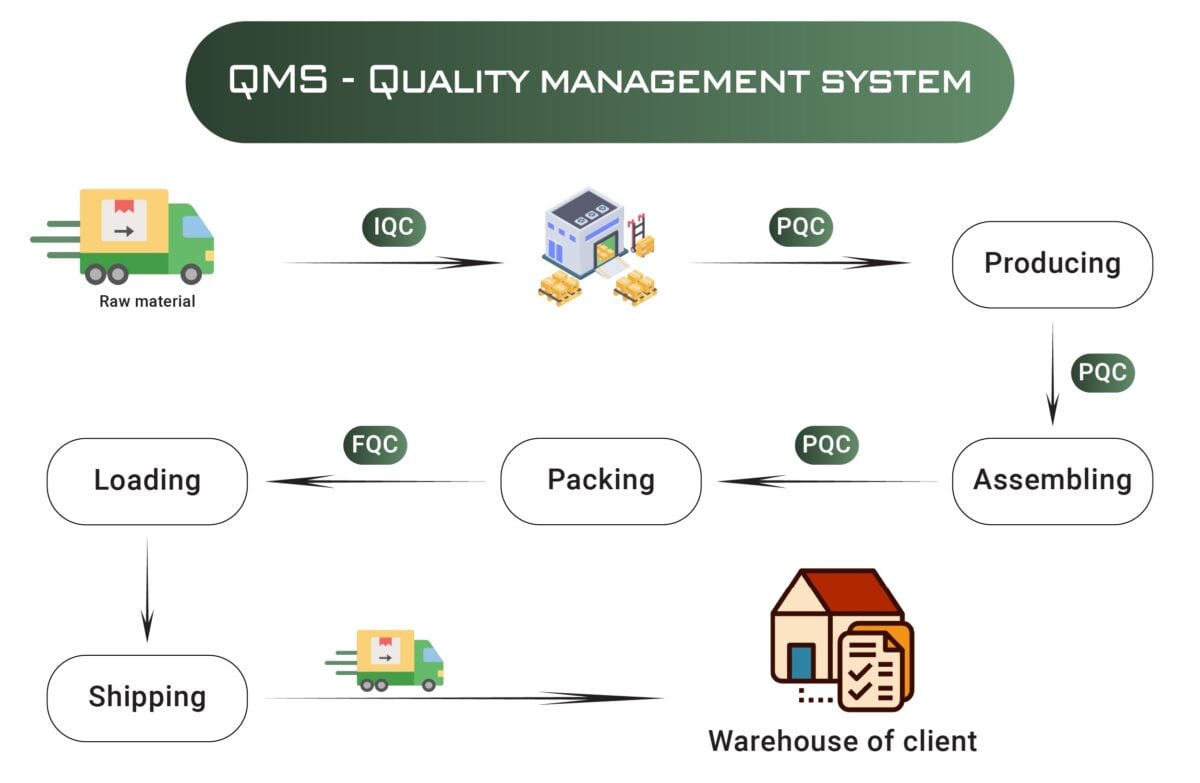
Working with a manufacturer that holds BSCI and SMETA certifications ensures ethical production and consistent quality, two factors that resonate strongly with modern B2B buyers.
Which Materials Suit Your Coaster Line Best?
The material you select determines the coaster’s texture, durability, price point, and the story you can tell on the sales floor. The table below compares four popular natural fibers available from ViettimeCraft.
| Material | Best For | Typical Ex‑Works Cost per Coaster (USD) | Key Trade‑Off |
|---|---|---|---|
| Seagrass | Everyday, coastal‑themed displays | $0.85‑1.20 | Soft, lightweight; may show wear faster if used with very hot mugs |
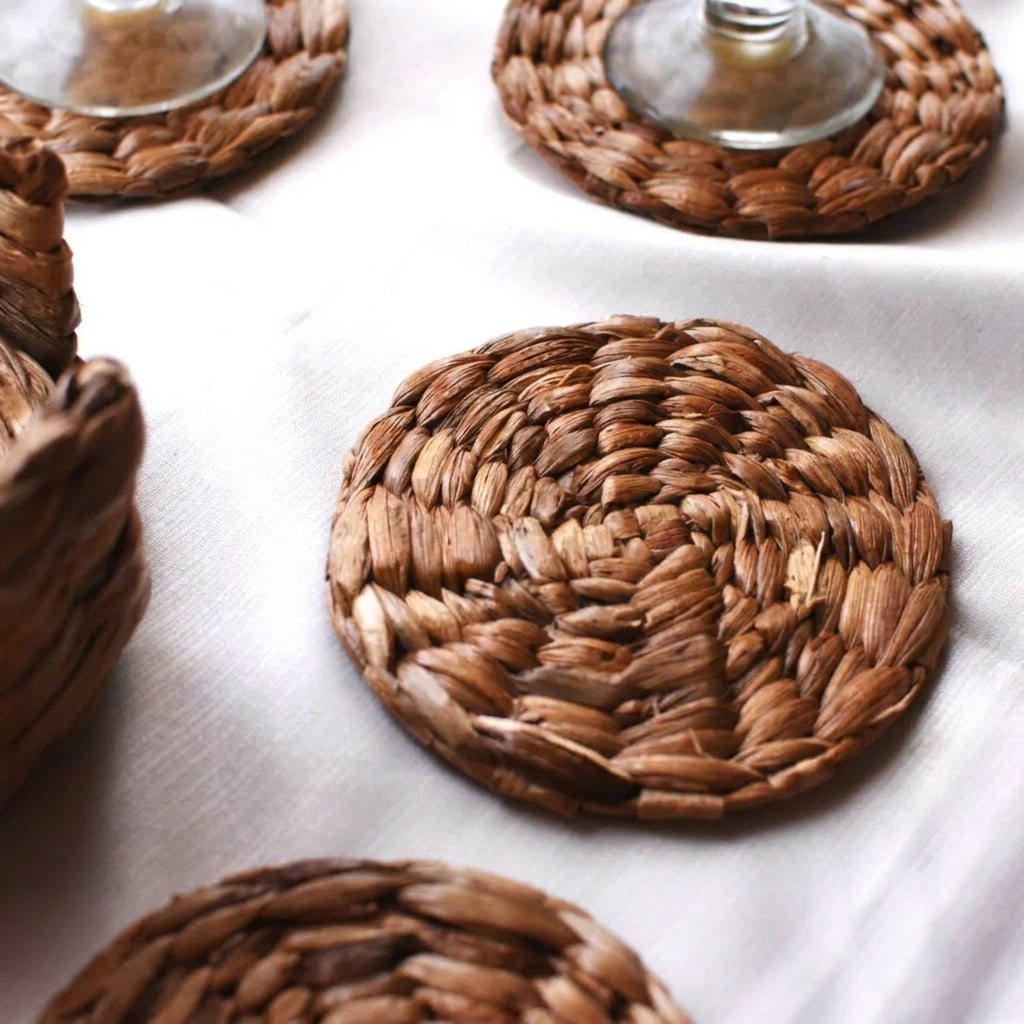
| Water hyacinth | Chunky, rustic, gift‑friendly sets | $1.00‑1.60 | Excellent texture and visual heft; slightly thicker, requires more shelf space |
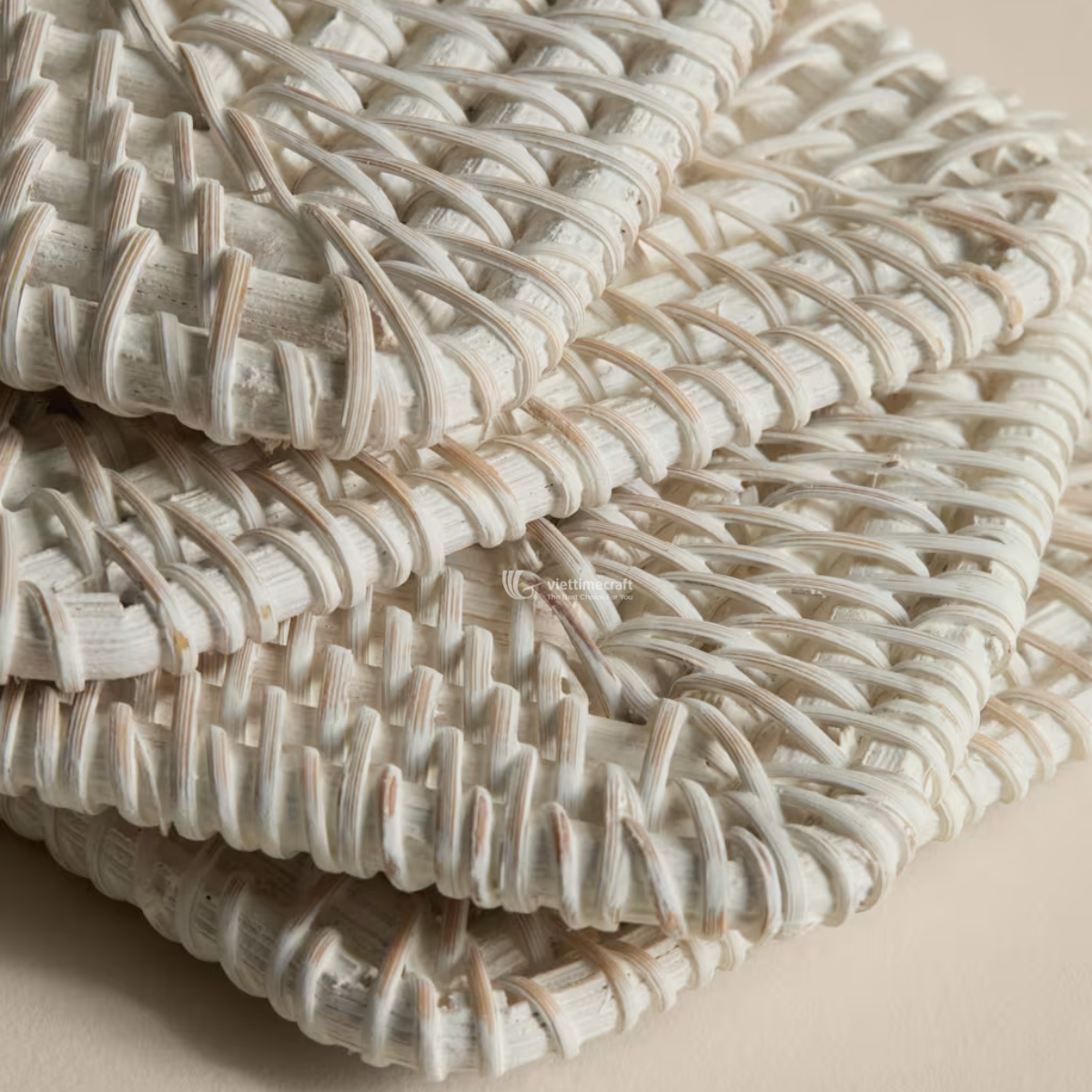
| Rattan (solid core) | High‑end tableware, luxury gifts | $1.50‑2.50 | Extremely durable, can hold intricate patterns; higher per‑unit cost |
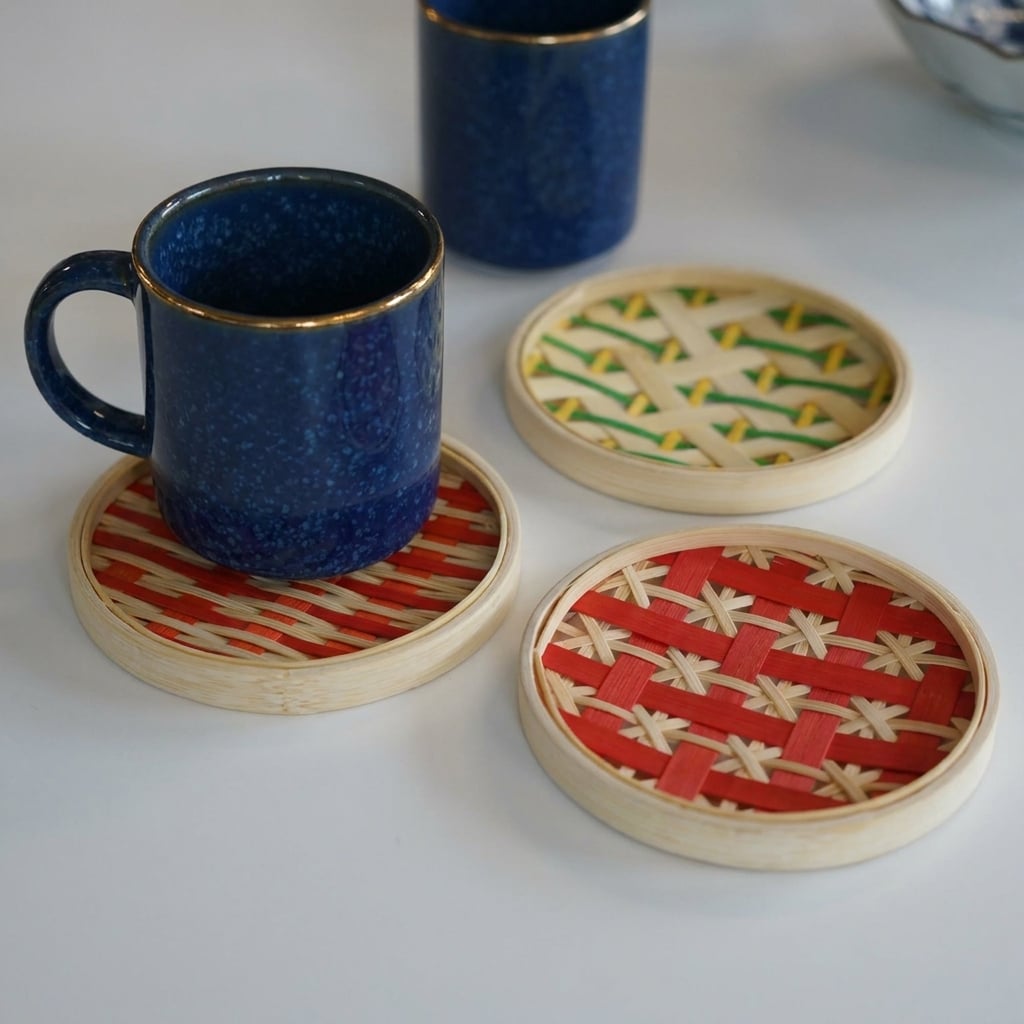
| Bamboo (spun or sliced) | Sleek, modern, or spa‑oriented retail | $1.10‑1.90 | Smooth surface, easy to clean; natural gloss, but less flexible for complex weaves |
All prices are ex‑works Vietnam, FOB. Actual landed cost depends on order volume and shipping terms.
When selecting materials, consider your store’s identity. A boutique specializing in boho‑chic homeware may lean toward water hyacinth products, while a kitchenware chain that sells kitchen and dining products may prefer the clean look of woven bamboo products. ViettimeCraft’s design team can help blend materials to create a cohesive collection.
Merchandising Tactics That Maximize Sale
Positioning at Point‑of‑Sale
Our in‑store experiment confirmed that coasters placed on the checkout counter consistently outperform aisle displays. The reasoning is straightforward: coasters are last‑minute, low‑risk purchases. A customer queuing to pay sees a beautifully textured coaster, picks it up, and adds it to the basket.
Practical steps:
- Use a small tiered riser to show 3‑4 different patterns without consuming counter depth.
- Add a succinct sign: “Handwoven in Vietnam · $5.99 each or 4/ $20”.
- Change the featured design every month to maintain curiosity.
Cross‑Merchandising with Complementary Products
Pairing coasters with related items amplifies spend per transaction. Position them next to ceramic mugs, tea towels, small serving trays, or even near the coffee beans section. Online, use “Frequently Bought Together” suggestions to link a coaster set with a matching seagrass tray or spun bamboo bowl.
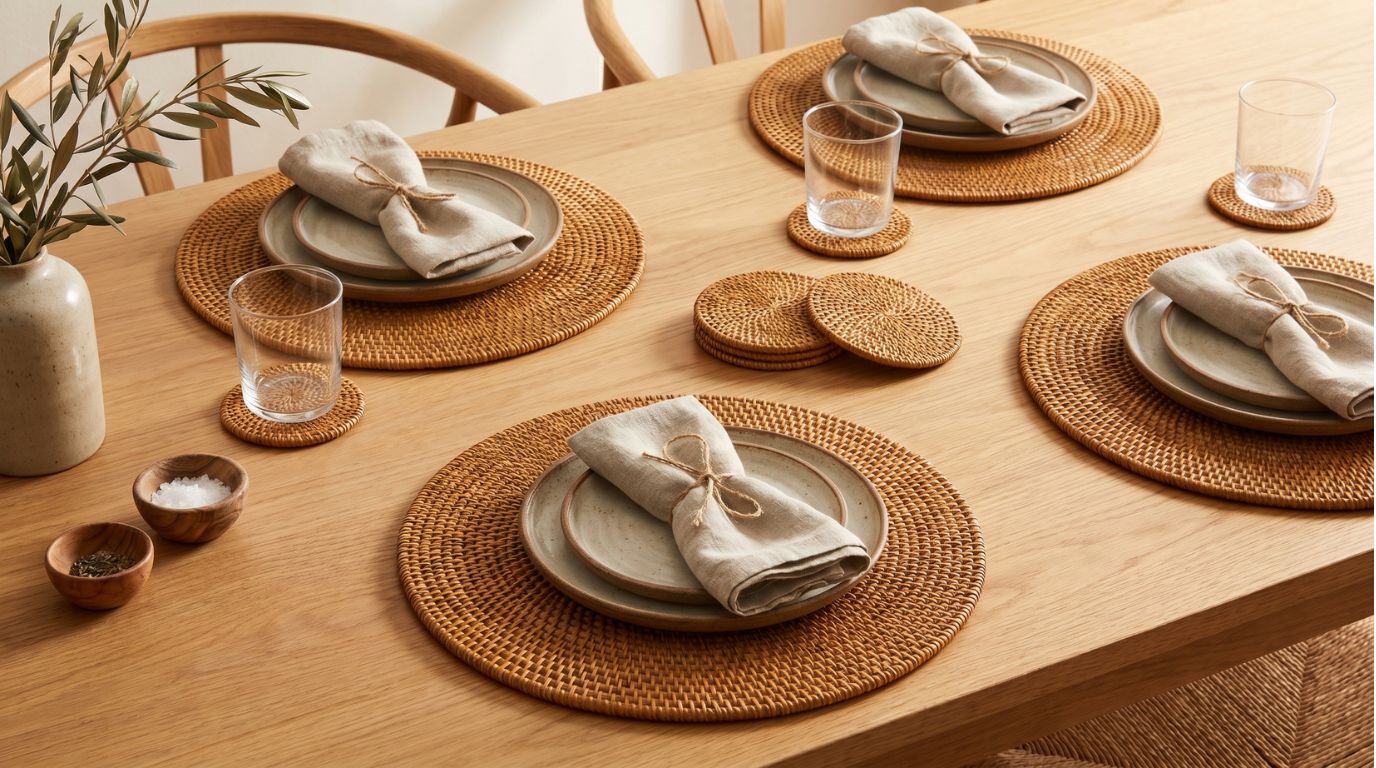
Viettimecraft Manufacturers
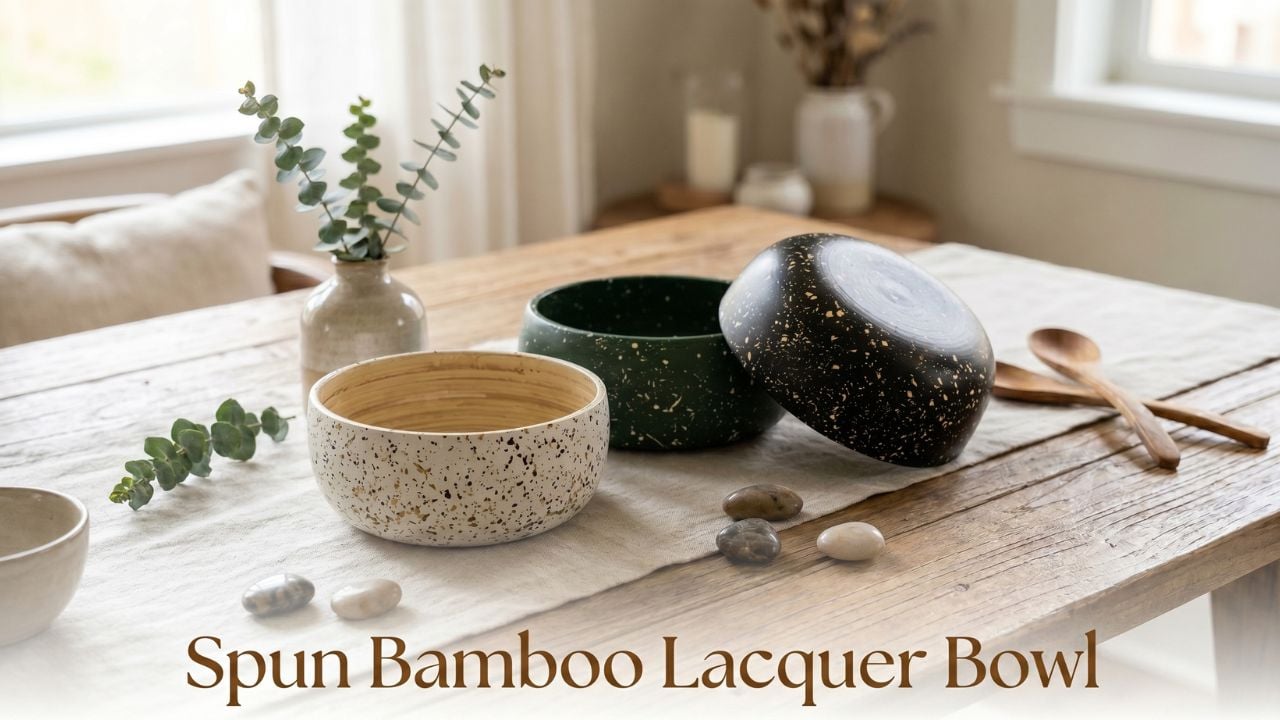
Viettimecraft Manufacturers
Seasonal Rotation
Coasters benefit from seasonal refreshes because they are small and inexpensive to swap. Offer linen‑wrapped rattan coasters in spring, bright‑dyed water hyacinth sets for summer, and warm‑toned bamboo coasters for fall. Announce new arrivals via email marketing and social media to drive repeat traffic.
Pricing and Margin Strategies for Handmade Coasters
Handmade woven coasters allow strong margins because the perceived value is much higher than the ex‑works cost. The table below outlines a typical margin scenario.
| Cost Component | Example (per coaster, USD) |
|---|---|
| Ex‑works price (seagrass, 500‑piece order) | 1.10 |
| Sea freight + import duties (per unit, 20‑ft container) | 0.18 |
| Landed cost | 1.28 |
| Retail price (average) | 5.99 |
| Gross margin per coaster | 4.71 (79%) |
Margins above 60% give you room for markdown promotions while still protecting profitability. When setting your retail price, research local competitors but don’t race to the bottom, few customers can resist a beautiful handmade object priced under $10.
Bundling for Higher Average Transaction Value
Create pre‑packaged sets of 4 or 6 coasters, optionally with a matching holder. A 6‑piece seagrass coaster set sold at $24.99 yields a gross margin around $18.50 while feeling like a generous gift. Bundles also reduce shipping cost per unit for online retailers.
Mistakes to Avoid When Merchandising Handmade Coasters
- Hiding them on a low shelf. Coasters are visual, texture‑driven products. If they aren’t at eye level or within arm’s reach, they won’t sell.
- Neglecting signage. A simple “Handwoven in Vietnam” tag adds authenticity and justifies the premium over mass‑produced alternatives.
- Ordering too few styles. Carrying only one or two styles limits impulse appeal. Offering at least 4‑5 variations lets the customer “collect” a set.
- Ignoring the lead time. Running out of a popular design during peak shopping periods loses sales. Maintain a reorder schedule based on real sell‑through data.
- Over‑discounting early. Once a customer sees a coaster at half‑price, they’ll wait for the next sale. Protect value by rotating styles rather than slashing prices.
- Skimping on packaging. Coasters are giftable. A simple kraft‑paper band with a cotton string elevates perceived quality and encourages gift purchases.
Why Choose ViettimeCraft as Your Coaster Manufacturer?
As a vertically integrated Vietnam factory, ViettimeCraft controls every stage, from fiber preparation and weaving to anti‑mold treatment and export packing. This end‑to‑end control translates into:
- Consistent quality: every coaster undergoes moisture‑content checks and drop testing before cartoning.
- Flexible customization: OEM and ODM services let you dictate exact dimensions, colors, edge finishes, and even private‑label packaging.
- BSCI‑ and SMETA‑certified production: giving you peace of mind when communicating with socially conscious buyers.
- Space‑saving logistics: coasters are nested in 5‑ply export cartons, reducing freight cost per unit and maximizing container utilization.
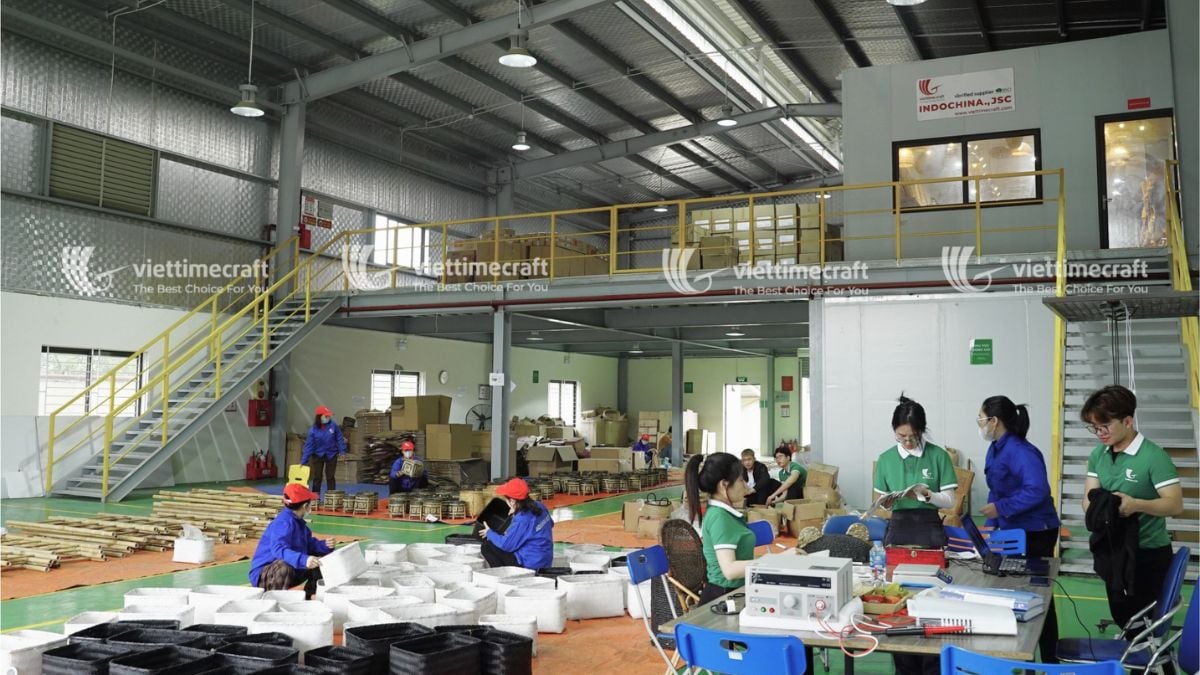
Contact Viettime Craft to request a wholesale catalog, discuss material samples, or receive a custom quote for your coaster line.
Frequently Asked Questions
What is the minimum order quantity for handmade woven coasters?
The standard MOQ is 100 pieces per single design. For mixed‑design orders, ViettimeCraft can often combine styles to meet that volume while giving you greater variety.
Can I customize the colors and patterns of the coasters?
Yes. Viettime Craft offers full OEM/ODM support, including custom dye colors, edge binding, and surface patterns. A digital or physical reference accelerates the sampling process.
How are handmade coasters packaged to avoid damage during shipping?
Each coaster is individually inspected, then nested in multiples of 4‑6 per polybag with desiccant packets. They are packed in 5‑ply corrugated export cartons that have passed drop tests. The nesting design minimizes movement and protects the weave from crushing.
What is the typical lead time for a custom coaster order?
After sample approval, production takes 30‑40 days. Sea freight to major US or EU ports adds another 20‑30 days. Build a 60‑day lead time into your inventory planning.
Do you offer private‑label packaging?
Yes. We can print your brand name on belly bands, hang tags, or direct‑on‑product engraving, depending on the material.