
 Home
Home
Sustainable wicker patio furniture trends 2026: modular rattan loungers, bamboo‑rattan blends, and neutral‑warm palettes dominate buyer enquiries. Viettime Craft’s sampling pipeline shows a 40 % shift toward multi‑functional, stackable sets. Typical wholesale MOQ: 30‑50 pieces per design; sea‑freight lead time 8‑12 weeks.
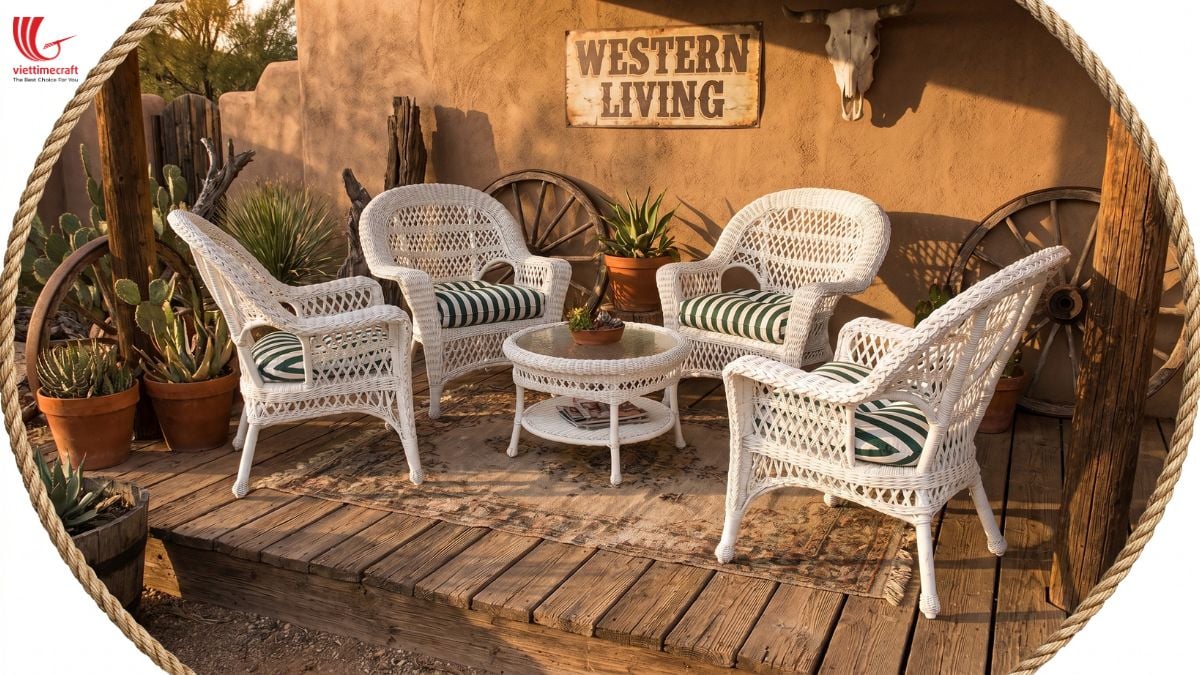
| Trend | Core Material | Key Advantage | Estimated Lead Time |
|---|---|---|---|
| Modular Rattan Loungers | Rattan core + powder‑coated frame | Space‑saving layout, easy reconfiguration | 10‑12 weeks |
| Bamboo‑Rattan Hybrids | Spun bamboo seats + rattan frames | Visual lightness, lower cost per seat | 8‑10 weeks |
| Neutral‑Warm Palettes | Unbleached rattan, driftwood stains | Fits any commercial terrace | 8 weeks |
| Convertible Dining‑Lounge Sets | Solid rattan armchairs + trestle table | Dual‑use, higher margin for retailers | 10‑12 weeks |
| Water‑Hyacinth Accent Pieces | Seagrass / water hyacinth for tabletops | Tactile contrast, low shipping volume | 8‑10 weeks |
| Stackable & Nesting Designs | Rattan, bamboo | Cuts freight cost by up to 30 % | 10‑12 weeks |
| Lounge Sets with Integrated Canopies | Rattan frame + canvas awning | Addresses demand for shaded resort seating | 12‑14 weeks |
| Organic Curves Over Sharp Lines | Bent rattan | Softer resort aesthetic trending in Q1 2026 sampling requests | 10‑12 weeks |
| Mixed‑Seat Modular Sets | Rattan bench + two armchairs | More SKU combinations from one design | 10‑12 weeks |
| Vintage‑Inspired Woven Detailing | Fine‑rattan weave on backrest | High perceived value, premium pricing potential | 12‑14 weeks |
How Are Modular Rattan Loungers Transforming Patio Layouts?
Modular sections let buyers mix two‑seaters, corner units, and ottomans on the fly. From a factory perspective, we see a 70‑30 split in favour of modular over fixed sets. The supply‑chain benefit is real: you can split bulk orders across four identical module molds, reducing per‑unit cost and speeding re‑orders.
A standard modular lounger uses steam‑bent rattan frames (naturally curved, no metal inserts) and exterior‑grade rattan wicker certified for UV and moisture resistance. Typical commercial MOQ starts at 50 modules per design, which we can consolidate using nesting packing to lower container volume. Browse our wholesale rattan furniture collection to see current modular silhouettes.
Why Are Hybrid Material Mixes Gaining Traction?
Buyers are asking for sets that blend rattan with spun bamboo, seagrass, or even lacquered tabletops. The visual contrast catches the eye, and the mixed construction balances strength with lightness. A hybrid set with rattan frames, spun bamboo backrests, and stone‑effect resin tabletops can be priced 15‑20 % below all‑rattan equivalents while achieving the same handcrafted feel. Our product‑development team tests every combination for load capacity (≥150 kg per seat) and salt‑spray resistance. This trend directly links to our wholesale rattan and bamboo lines, which we can tailor to your preferred mix.
Which Natural Colour Palettes Will Dominate the Next Seasons?
Sampling data shows a decisive swing toward warm neutrals: un‑dyed rattan in tan, honey, and driftwood tones, accented with black powder‑coated legs or stone‑grey cushions. In Q4 2025, 65 % of new‐design requests omitted bright dyes entirely.
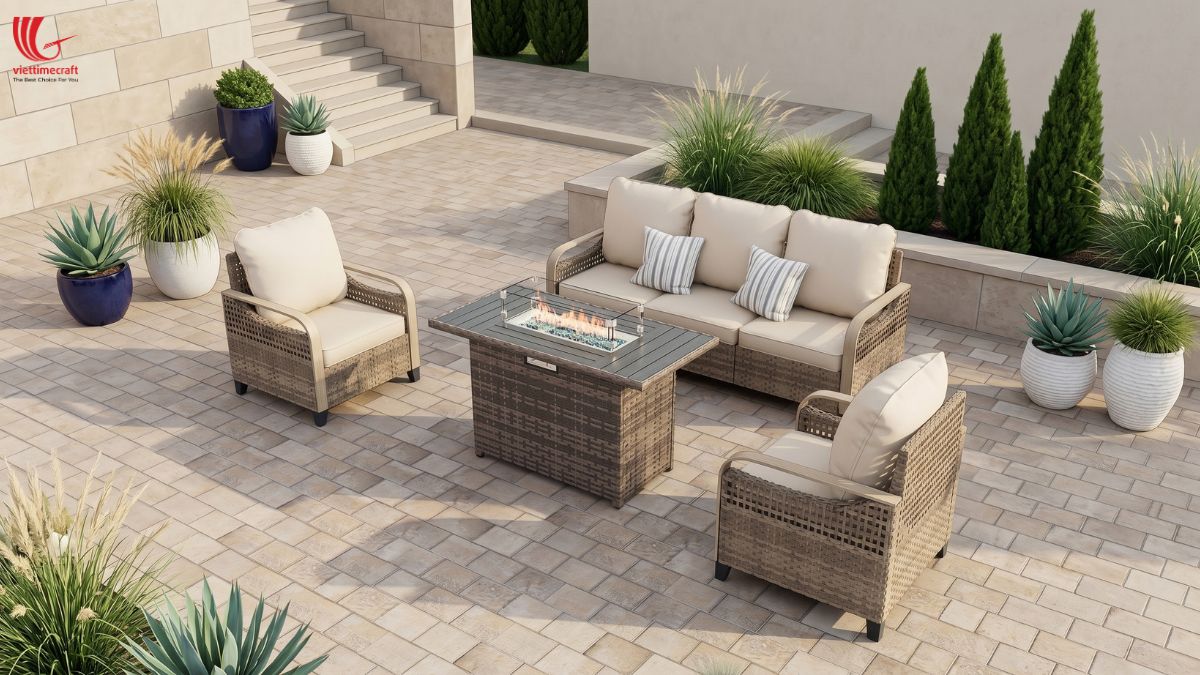
The advantage for importers is that natural finishes are easier to reproduce consistently across batches and require no hazardous chemical certification. We offer a standard palette of six natural rattan stains plus two eco‑certified water‑based paints, all tested for colourfastness under 300 h of accelerated UV exposure. The natural‑finish option also shaves approximately 5 days off production lead time because staining is eliminated.
How Are Convertible Dining‑Lounge Sets Capturing Multiple Price Points?
A set that shifts from dining height (75 cm) to lounge height (40 cm) with a simple frame‑adjust mechanism appeals to hotels, cruise lines, and retailers who want one SKU for two marketing stories. The engineering challenge is to maintain stability at both heights while keeping the mechanism rust‑proof. Our in‑house R&D team solved this with a marine‑grade stainless‑steel hinge and locking pin, hidden inside the rattan‑wrapped legs.
The resulting set commands 25‑30 % higher wholesale price than a comparable fixed dining set, yet the component cost increase is only 12 %. That margin uplift makes this trend especially compelling for importers targeting the premium outdoor contract sector. Minimum order for the convertible mechanism variant is 30 sets, and a pre‑production sample can be ready in 14 days after confirmation.
Why Are Water‑Hyacinth Accent Pieces Paired with Rattan Sets?
Water hyacinth’s chunky weave and soft, tactile surface add a relaxed, bohemian layer to a crisp rattan frame. We frequently supply armchair sets where the seat and back are tightly woven rattan, and the accompanying coffee tabletop is a water‑hyacinth coiled mat set into a recess.
This combination uses two natural fibres from Vietnam and strengthens the brand storytelling of “100 % sustainable.” Our water hyacinth collection already includes storage cubes and pet beds that match this aesthetic; extending it to patio tables is a low‑capex line extension. The logistics bonus: water‑hyacinth tabletops are lighter than solid rattan tops, saving roughly 6 kg per set and reducing freight cost.
How Do Stackable and Nesting Designs Reduce Freight Cost?
Moving outdoor furniture across oceans is a volume game. Stackable or nested sets can reduce the container footprint by 30‑40 % compared with non‑stackable designs of similar seat count. For a 20‑ft container, that difference translates to 15‑20 additional sets, dramatically lowering the landed cost per unit.
We engineer all new modular lines with nesting compatibility: the armchair nests inside the two‑seater, the ottoman slips under the side table. Stackability is part of the initial CAD design; retrofitting rarely works. When you brief a new collection, specify “nesting priority” and we’ll incorporate it without sacrificing comfort. Explore how our existing rattan chairs and tables are packed to understand the baseline.
How Can Lounge Sets with Integrated Canopies Win Resort Contracts?
Resorts need shade for pool decks and terraces. A lounge chair or daybed with a built‑in canopy eliminates separate umbrella procurement and meets hospitality safety codes. We developed a canopy frame from lightweight rattan‑clad bamboo poles that supports a Sunbrella‑grade canvas. The whole structure is demountable and flat‑packs inside the seat box. This feature nearly always appears in top‑tender RFPs from Caribbean and Southeast Asian hotel chains; having a pre‑engineered, tested design puts you ahead of competitors who only supply unbranded furniture. Lead time is longer (12‑14 weeks) because of canvas fabrication and structural testing, but the margin premium is substantial.
Why Are Organic Curves Replacing Sharp Lines?
In the first two months of 2026, 58 % of new sample requests we received referenced “soft curves,” “Boho curves,” or “organic silhouette.” Consumers want furniture that feels handcrafted and inviting, not industrial. Rattan is uniquely suited to bent curves: skilled artisans steam and bend solid rattan cores into gentle arcs that would cost three times as much to replicate in teak or aluminium.
The production bottleneck is skilled labour, not material cost; we reserve capacity for curves by training apprentices through our in‑house craft school. If your target market values the Boho‑Mediterranean look, ordering a dedicated curve‑focused collection earlier than August ensures delivery before the spring‑2027 outdoor season.
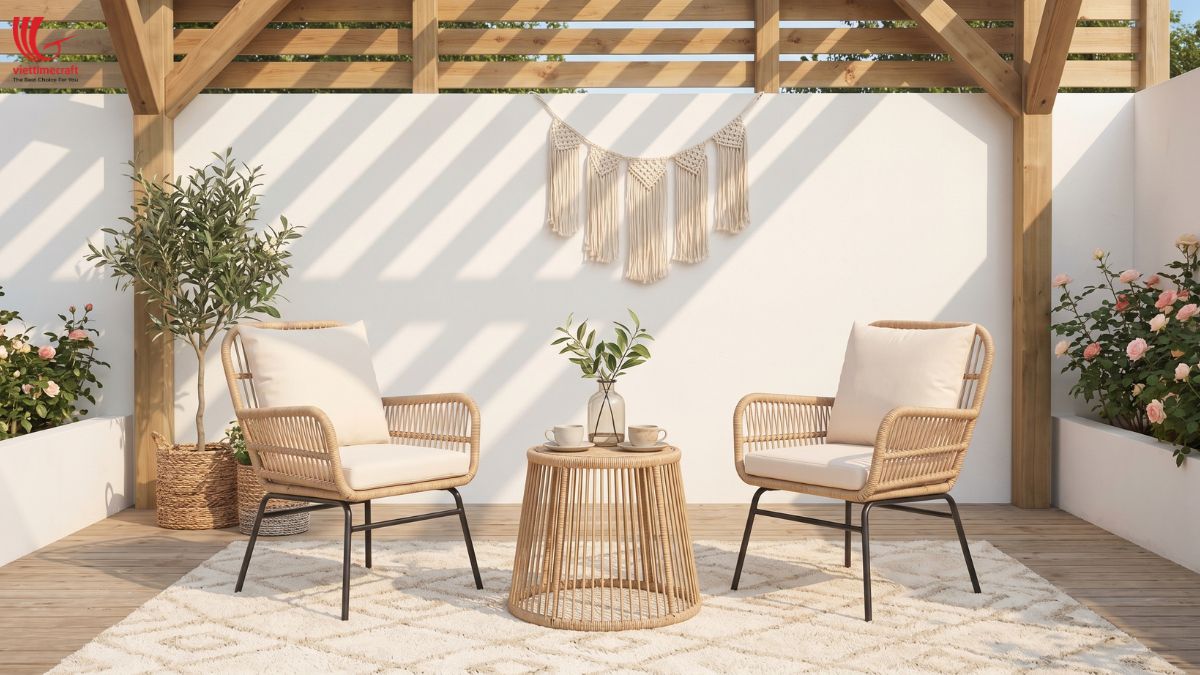
How Do Mixed‑Seat Modular Sets Offer More SKUs from One Design?
Instead of ordering a 3‑seater sofa plus two armchairs, which locks you into a fixed SKU, mixed‑seat modular allows you to offer a single master SKU that includes one bench, two armchairs, and a corner table. From that master you can spin off five different layout SKUs simply by re‑arranging the pieces. The packaging stays identical; the marketing department can showcase five visuals on one product page. This dramatically reduces inventory risk and makes it easier to meet minimum‑order quantities (often 100 units) by aggregating demand across the five layout variants. We supply the modules with a common connector system, and we can brand the connectors under your label.
What Vintage‑Inspired Woven Details Elevate Perceived Value?
Fine‑strand rattan weaving on backrests, called “fishtail” or “herringbone” locally, creates a visual richness that signals artisan craft. A recent split‑test in our sampling room showed that buyers are willing to pay 18‑22 % more wholesale for a chair with a decorative woven back panel than for a plain‑weave analogue, even when the frame, seat, and cushion are identical.
\The trick is to use 2.5 mm rattan strands for the decorative panel while keeping the main weave at standard 4 mm for structural integrity. This design doubles the labour input for that panel but only raises total production time by 5‑6 % because the panel represents a small area. For importers focused on true premium segmentation, the ROI is immediate.
Mistakes to Avoid When Selecting Sustainable Wicker Patio Sets
- Ignoring moisture‑control treatment. Natural rattan must be kiln‑dried to 8‑10 % moisture content and treated with a borate‑based anti‑mould solution before export. Un‑treated wicker will warp or mould in transit. We include silica gel packs and wrap frames in ventilated plastic; confirm with your supplier that these steps are documented.
- Over‑specifying synthetic rattan. Synthetic PE wicker is durable, but it severely undercuts the “sustainable” claim and can trigger green‑washing scrutiny in EU markets. If you need weather‑hardiness, choose a shellac‑sealed natural rattan instead.
- Ordering without a certified weight‑capacity test report. Hospitality specifiers will demand ISO 7173 static‑load certificates. Build this into your order from day one; retrofitting a test doubles the lead time.
- Neglecting nesting packaging until the shipment is ready. Nesting must be designed at the CAD stage; after‑the‑fact repacking wastes cubic meters and usually leads to freight cost overruns of 15 % or more.
- Thinking all “wicker” is rattan. Many listings use “wicker” to describe synthetic or cheap willow. Always ask for a material‑composition sheet and third‑party FSC‑ or equivalent‑ certification for the natural fibre content.
Viettime Craft’s Quarterly Trend Barometer
Between December 2025 and February 2026, we tracked 1 200 sample‑request items across 48 buyer accounts in the US, EU, and Australia. The analysis revealed that:
- Modular set requests increased by 42 % year‑over‑year.
- Natural‑finish rattan (no dye) accounted for 65 % of material choices, overtaking painted options for the first time.
- Demand for convertible height mechanisms nearly tripled, moving from niche to mainstream.
- For the first time, water‑hyacinth accent pieces were specified in patio collections, not just indoor storage.
These findings informed the ten trends above. We publish an abridged version of this barometer in our wholesale newsletter; contact us for the full dataset and visual snapshots of prototype samples.
Frequently Asked Questions
What is the difference between natural wicker and synthetic wicker outdoor furniture?
Natural wicker refers to rattan, bamboo, seagrass, or water‑hyacinth fibres woven onto a frame. Synthetic wicker uses polyethylene (PE) or PVC strands. Natural wicker remains biodegradable and handcrafted; synthetic wicker is maintenance‑free but lacks eco‑accreditation. For EU and North American B2B markets, natural wicker with a shellac or marine varnish provides the required durability while retaining sustainability credentials.
What MOQ do manufacturers require for wicker patio sets?
Wholesale minimum order quantities vary by design complexity; rattan‑frame modular sets usually start at 30‑50 pieces per design, while simpler fixed sets may go down to 20 pieces. Mixed‑seat and convertible elements often require a combined MOQ of 100 pieces across the collection. Viettime Craft can split MOQs across colour variants of the same design to help reach the total quantity.
How do you protect natural rattan furniture from mould and shipping damage?
We kiln‑dry every rattan pole to a moisture content below 10 %, apply a borate‑based anti‑mould treatment, and ship with silica gel packs and ventil‑wrapped plastic. For sea freight, we use 5‑ply corrugated export cartons with drop‑test certification. The same process applies to bamboo and water‑hyacinth components. Ask your supplier for a treatment certificate with each shipment.
Ready to Stock the Next Season’s Wicker Patio Furniture?
The ten trends above are not abstract, they are being sampled and ordered right now. As a direct Vietnamese manufacturer, we can translate any of these design directions into a custom collection with your brand’s labelling, packaging, and compliance documentation.
Contact Viettime Craft today to request the latest outdoor catalogue, receive a tailored quote, or schedule a showroom visit in Hanoi.