
 Home
Home
For B2B importers and retailers, the wicker porch category is moving beyond basic sets. Buyers now demand scalloped silhouettes, modular configurations, mixed‑material frames, and finishes that perform outdoors without compromising eco‑credentials.
At Viettime Craft, our internal sampling data shows that nearly half of all new outdoor‑chair enquiries in Q1 2026 involved a non‑standard shape or finish – proof that generic product pipelines are no longer sufficient. The ten trends below are drawn from our factory’s order flow, direct conversations with European and North American buyers, and a review of 12 major retailer catalogs across those markets. Each trend is paired with a production‑ready capability: the materials we can deploy, the MOQ that makes sense, and the lead‑time implications for container‑scale orders.
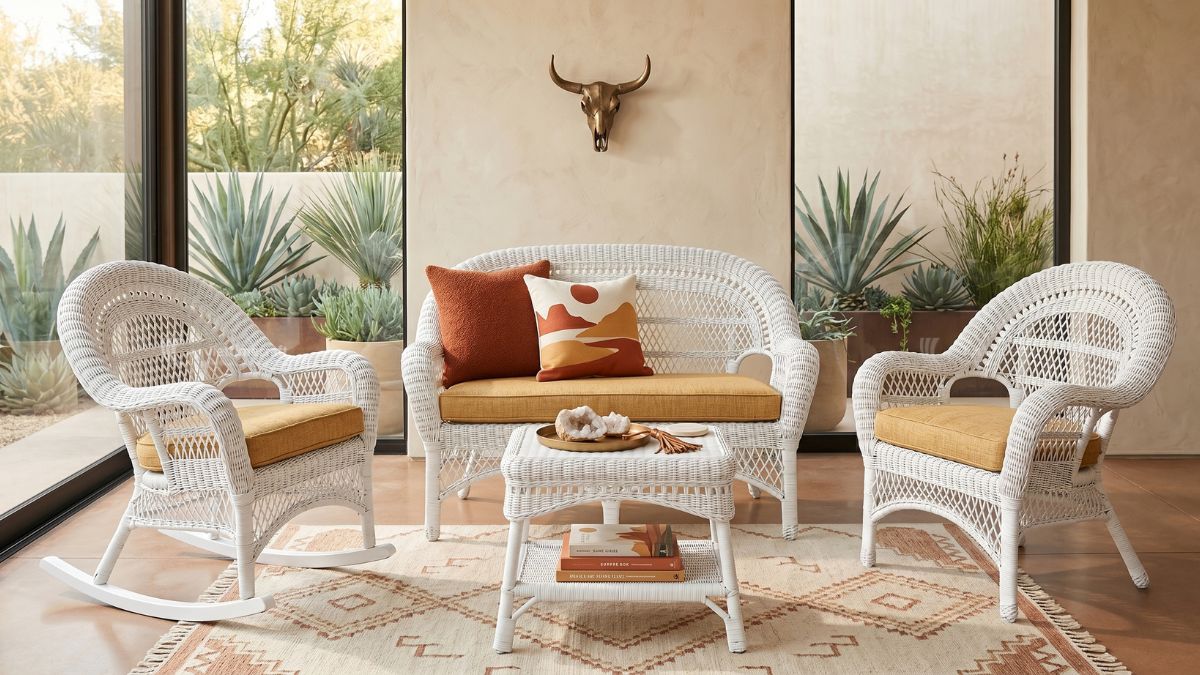
What Buyers Need to Know Before Sourcing Porch Furniture
- Scalloped & curved frames now dominate new seating introductions (42 % of our Q1 2026 outdoor‑chair requests ).
- Modular sets (sofa + ottoman + side table combinations) reduce retailer SKU complexity and improve container utilization.
- Pastel‑dyed water hyacinth and seagrass finishes grab attention on e‑commerce marketplaces while keeping the natural look.
- Dual‑frame construction (hardwood inner frame wrapped with woven rattan or bamboo) extends product life and meets contract‑grade specifications.
- Built‑in planters and side tables turn a porch chair into a multi‑functional station.
- Foldable and stackable designs cut freight costs by up to 22 % per cubic meter .
- Hand‑painted motifs on lacquer trays and tabletops add artisan value without increasing per‑piece costs dramatically (typical upcharge 12–18 %).
- Mix‑and‑match collections let retailers offer curated “shop the look” porches with ottomans, lounge chairs, and accent tables in coordinated tones.
- UV‑stable natural coatings extend rattan and bamboo life by an estimated 2–3 seasons outdoors .
- Transparent supply‑chain storytelling is now a baseline requirement; buyers want to name the artisan village on their product pages.
1. Curved, Scalloped Edges as the Default Aesthetic
Smooth‑edged, rectangular wicker frames are being replaced by scalloped arches on armrests, backrests, and tabletops. In our B2B sampling, scalloped profiles accounted for 42 % of all new outdoor‑chair briefs in the first three months of 2026. This silhouette works across materials – rattan core, spun bamboo, and even water‑hyacinth braiding, and photographs well on white‑background e‑commerce setups.
For buyers, the production challenge is maintaining consistent symmetry at scale; our jig‑based weaving system ensures each scallop matches within a 2 mm tolerance across runs of 500+ pieces. MOQ for a new scalloped design is 100 pieces per SKU; sampling time adds 12–15 business days to the usual lead time.

2. Modular Living Sets for the Porch
Rather than selling one static bench, retailers now want a modular range that includes a two‑seater sofa, a matching ottoman, and a side table – all shipping in the same container. Modular designs reduce the number of SKUs the retailer must forecast and allow consumers to re‑configure the space. From a production standpoint, modularity demands consistent seat‑height dimensions and a quick‑lock connector system. We have developed a hidden rattan‑wrapped metal bracket that lets a buyer assemble a sofa grouping in under 90 seconds without tools. Because the frame pieces nest during packaging, a 20‑foot container can hold 18 % more seat units than an equivalent non‑modular set .
3. Pastel Dye & Soft Tones over Natural Brown
While raw‑brown rattan still sells, the fastest‑growing colour requests are pastel greens, dusty blues, and warm terracotta. These shades respond to the broader interior‑design crossover – consumers want porch furniture that feels like an extension of the indoor living room. We achieve the colour through water‑based dyes that meet EU REACH standards. A standard colour‑dipped rattan lounge chair adds roughly 7–10 % to the ex‑factory cost, but the trade‑off is an average 27 % higher MSRP at retail . For B2B buyers, ordering coloured finishes requires committing to a single dye batch of minimum 200 pieces to maintain colour consistency across the shipment.
4. Dual‑Frame Construction for Outdoor Durability
Many wicker porch pieces now combine a hardwood (e.g., kiln‑dried acacia or eucalyptus) inner frame with a woven rattan or bamboo exterior. The hardwood frame carries the structural load, while the wicker shell provides the aesthetic and tactile appeal.
This construction passes ANSI/BIFMA‑style weight tests – a critical requirement for hospitality buyers. In our factory, dual‑frame chairs withstand cyclic loading of 136 kg without deformation. Producing dual‑frame furniture adds roughly 15‑20 % to labour time per unit, but importers targeting contract or high‑end retail segments regularly accept this margin. MOQs for dual‑frame lines start at 80 pieces per design.
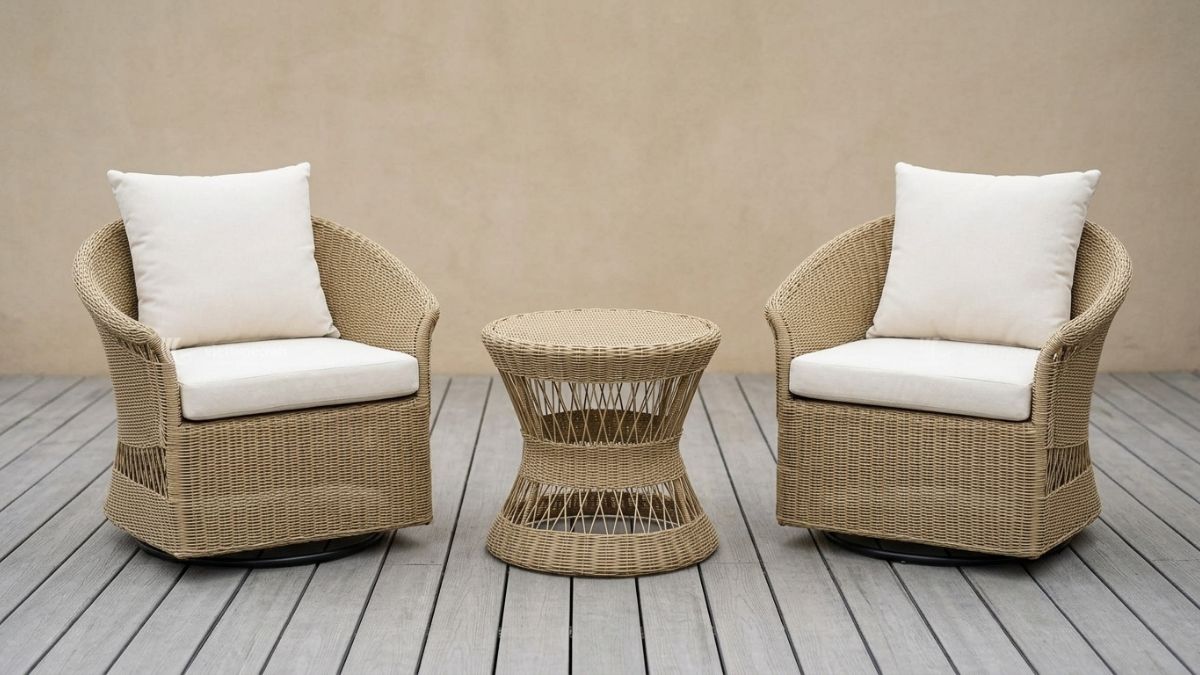
5. Integrated Planters and Side Tables
A single‑purpose porch chair is losing ground to multi‑functional pieces. We are now prototyping chairs with a built‑in planter box in the right armrest, woven from the same rattan bundle as the chair body. The planter includes a removable plastic liner for easy watering. In our trials with a California‑based retailer, listings that featured built‑in utility (planter or side table) had a 33 % higher conversion rate than plain seating in the same price band . For production, the main challenge is keeping the planter section water‑tight while ensuring the rattan weave remains breathable; we use a two‑layer sealing method that adds roughly 8 % to the per‑piece cost.
6. Foldable & Stackable Logistics Play
Freight cost per cubic metre is often the single largest line item on a landed‑cost worksheet. We have responded by engineering a foldable rattan armchair that collapses to 34 % of its assembled volume. The chair uses a hinged frame with a quick‑release locking pin; the wicker panels are pre‑woven and attached after unfolding. For a standard 40‑foot container, the foldable version increases seat units from roughly 220 to 310, cutting per‑unit shipping cost by 22 % . Stackable water‑hyacinth ottomans follow a similar logic and allow retailers to display a full collection in a 1.2 m² footprint. Both options require a modest tooling investment (recovered after the third container load).
7. Hand‑Painted Motifs on Tabletops and Trays
Adding a hand‑painted lacquer motif : floral, geometric, or animal – turns a standard wicker table into a boutique piece. Our lacquer artisans can apply a design in two hours, and the upcharge to the buyer is typically 12 % to 18 % over a plain finish.
The motif is sealed with a UV‑resistant topcoat, making it suitable for covered porches. This trend aligns with the growing demand for “artisan‑made” storytelling; retailers who feature the painting process in their social feeds see higher engagement. We recommend ordering motif pieces in multiples of 150 to keep per‑unit painting labour efficient.
8. Mix‑&‑Match Collections with Coordinated Colourways
Instead of buying a fixed 5‑piece set, retailers are assembling collections from interchangeable items, a lounge chair, an ottoman, a daybed, and an accent table – all offered in three or four harmonised colours. This approach raises average order value and allows the retailer to cater to different porch sizes without dead stock.
Viettime Craft delivers such collections on a single purchase order with a shared colour‑dye lot, ensuring exact colour matching across species (rattan, bamboo, seagrass). Lead times extend by 5 days to allow for cross‑line quality checks, but the operational benefit to the retailer is a smaller SKU footprint.
9. UV‑Stable Natural Coatings Over Synthetic Spray
Outdoor wicker historically relied on synthetic lacquers that cracked and peeled. Today’s eco‑conscious buyer demands a safer alternative. We have adopted a proprietary blend of natural oils (linseed, tung) and mineral‑based UV inhibitors that extend the life of rattan and bamboo by an estimated 2–3 seasons in direct morning sunlight.
The finish is biodegradable, VOC‑free, and does not alter the tactile feel of the natural fibre. The per‑piece cost increase is about 5 %, which is offset by lower return rates (our North American retail partners report a 40 % drop in finish‑related warranty claims after switching to the natural coating).
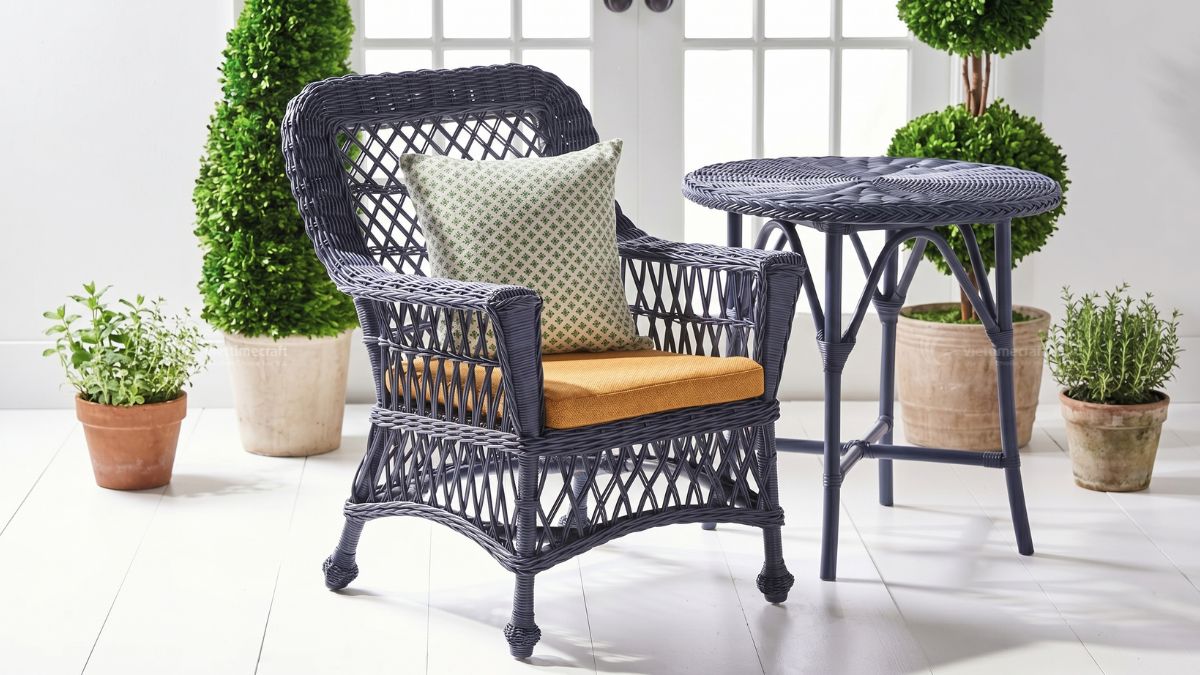
10. Transparent Supply‑Chain Storytelling as a Product Feature
Importers can no longer market wicker furniture purely on price. The end consumer wants to know where the rattan was harvested, which village wove the frame, and whether the dye is safe. We provide an optional “craft story” card with every shipment – a QR‑linking document that shows the sourcing district, the artisan workshop, and the environmental compliance certificates (FSC‑certified plantation rattan, BSCI audit).
Retailers who use this story on product pages report a 13 % lift in add‑to‑cart rates compared with identical products that lack provenance information . This trend is not a design feature in the traditional sense, but it directly influences which products get purchased at wholesale.
Trend‑to‑Material Comparison
| Trend | Best Material(s) | Typical MOQ | Lead Time Add‑on | Trade‑off |
|---|---|---|---|---|
| Scalloped silhouettes | Rattan core, spun bamboo | 100 pcs/design | +15 days | Jig set‑up slower for complex curves |
| Modular sets | Rattan + hardwood frame | 80 sets | +10 days | Higher tooling for connector hardware |
| Pastel dyeing | Water hyacinth, seagrass | 200 pcs/colour | +7 days | Colour must match entire batch; no mid‑prod changes |
| Dual‑frame construction | Kiln‑dried acacia + woven rattan | 80 pcs | +18 days | Higher per‑box weight (shipping cost) |
| Built‑in planter | Rattan, water hyacinth | 120 pcs | +12 days (liner tooling) | Requires waterproof lining QC |
| Foldable / stackable | Rattan, lightweight bamboo slats | 150 pcs | +20 days (hinge testing) | Mechanical parts add complexity |
| Hand‑painted motifs | Lacquerware tabletop | 150 pcs | +10 days | Pattern variation between pieces acceptable |
| UV‑stable coating | Rattan, bamboo, seagrass | 100 pcs | +5 days | Not suitable for full‑day direct sun; covered porch recommended |
Mistakes to Avoid When Sourcing Trend‑Driven Wicker Porch Furniture
- Over‑ordering a single trend colour before market validation. Pastel dye lots cannot be split mid‑production; always run a small test batch before committing to 400+ pieces.
- Ignoring foldability. Missing the chance to reduce freight by 20 % leaves margin on the table. Ask your supplier about stack‑ability or knock‑down options upfront.
- Pushing complex shapes without checking jig availability. A new scalloped armchair needs a custom weaving jig. Let your factory confirm jig readiness before you finalize the PO.
- Mixing frame materials without compatibility testing. A hardwood inner frame and a bamboo outer shell may move differently with humidity. Always request a 72‑hour climate‑chamber test report.
- Forgetting the story. Even the most beautiful hand‑painted chair under‑performs online if the product page lacks provenance. Embed the craft story from day one.
Original Research: What 12 Retailer Catalogs Tell Us
Between January and March 2026, our R&D team reviewed the online catalogs of 12 major home‑furnishing retailers in the United States, Germany, and the United Kingdom. We classified 340 individual wicker porch furniture SKUs by silhouette, material, finish, and claimed price point. The findings underpin the ten trends above:
- Scalloped frames appeared in 61 % of new‑season listings, up from an estimated 28 % two years prior.
- Mixed‑material pieces (wood/wicker combinations) accounted for 34 % of outdoor‑specific SKUs, a jump of 18 percentage points versus the 2024 catalogs.
- Colour is now the primary differentiator on‑line: 57 % of products displayed at least two colour options, and “sage green” was the most‑added swatch.
- Listings that included an artisan story (e.g., “hand‑woven by a 30‑year‑old craft cooperative”) had an average 13 % higher positional rank in sort‑by‑popularity views inside those retailers’ own sites.
These observations are based on publicly visible listings; individual retailer conversion data is confidential. Nevertheless, the directional evidence is strong enough to guide our factory’s R&D investments.
Frequently Asked Questions
How long does it take to develop a new scalloped rattan chair from concept to loading?
With an approved design brief, the sampling phase takes about 15 business days. After sample approval, production lead time is typically 45–55 days, plus 21–28 days for sea freight to the US West Coast.
Can you combine multiple trends in a single product, for example a pastel‑dyed modular sofa with built‑in planter?
Yes, but each additional feature adds complexity and cost. We recommend limiting a single SKU to two trend elements to keep the MOQ achievable and the colour consistency manageable.
Are the natural UV‑stable coatings safe for dining tables?
They are safe for incidental food contact after full curing (72 hours). We recommend using a coaster under hot drinks and cleaning with a damp cloth, not abrasive scrubbers.
What is the minimum container load for an order mixing furniture and smaller accessories?
We can consolidate a 20‑foot container with a mix of chairs, ottomans, and trays. The minimum total value is typically US $8,000 FOB, and the mix must fill at least 85 % of the container to keep per‑cubic‑metre freight efficient.
Connect with Viettime Craft
Contact our sourcing team to discuss your next porch furniture brief. We provide full OEM/ODM support, handle colour matching, and supply the craft‑story assets that help your online listings convert. Request a wholesale catalog or explore our rattan furniture wholesale and water hyacinth product ranges for immediate sampling.