
 Home
Home
Wicker placemats are moving toward earthy neutrals, scalloped edges, and mixed-material accents for B2B dining collections. Retailers planning 2026 – 2027 bulk orders should source early to leverage nesting designs that cut freight costs and anti‑mold packaging to protect seagrass and water hyacinth. MOQs start around 100 units per design with 8 – 12 week lead times; ocean‑freight timing requires ordering well before peak seasons.
The way global buyers stock tabletop products is changing. Wicker placemats – once a simple base layer – are now a strategic category that communicates sustainability, artisan authenticity, and brand identity. For retail chains, hospitality purchasers, and import distributors, understanding the design shifts that will dominate the next two selling seasons is the difference between inventory that moves fast and stock that gathers dust.
This guide breaks down three concrete movements in bulk wicker placemats, shows how material choice impacts landed cost, and maps out a realistic sourcing timeline so you can capture demand without missing shipping windows.
Why Trending Placemats Belong in Your Wholesale Catalog
Natural fibers are no longer a niche interest. Major home‑decor retailers and restaurant groups are investing in woven tabletop products because they support eco‑conscious brand positioning without sacrificing durability. Wicker placemats – whether made from rattan, seagrass, water hyacinth, or bamboo – offer a texture‑rich upgrade over plastic or paper that consumers are willing to pay for.
From a B2B perspective, placemats also provide high margin‑per‑unit with relatively simple manufacturing. Customization options (dye color, edge shape, monogram space) make them ideal for private‑label programs, while nesting designs keep container utilization high – a critical lever when freight costs matter.
Trend 1: Earth-toned natural weaves dominate 2026 – 2027 table settings
The overarching look for wicker placemats in the coming seasons is grounded, warm, and unbleached. Designers are moving away from stark white and neon accent weaves, favoring oat, sand, mushroom, and raw rattan tones that read as “authentic” and pair effortlessly with neutral stoneware and wooden chargers.
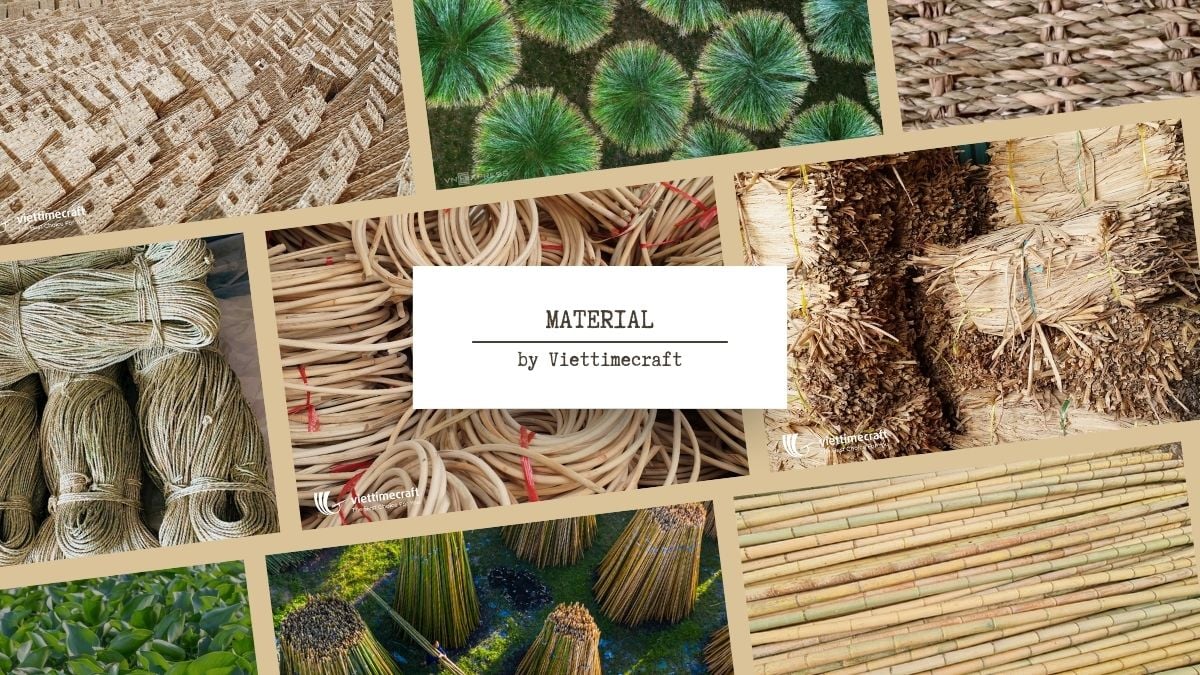
For importers, this trend is a supply‑chain win. Natural, undyed fibers require fewer processing steps, which shortens lead time and reduces chemical input. The most requested materials for these earthy placemats are seagrass (soft, green‑tinged when new) and water hyacinth (thick, spongy texture), both available from Vietnam at competitive factory‑direct pricing. Rattan also features in higher‑end sets where a tighter, glossy weave is required.
Bullet‑point takeaways:
- Oat and mushroom tones account for an estimated 60% of new placemat designs sampled at trade shows .
- Unbleached seagrass placemats can reduce per‑unit dye cost by roughly 15‑20% .
- Pair with wholesale seagrass products to build full tabletop bundles.
Trend 2: Scalloped edges and artisan silhouettes
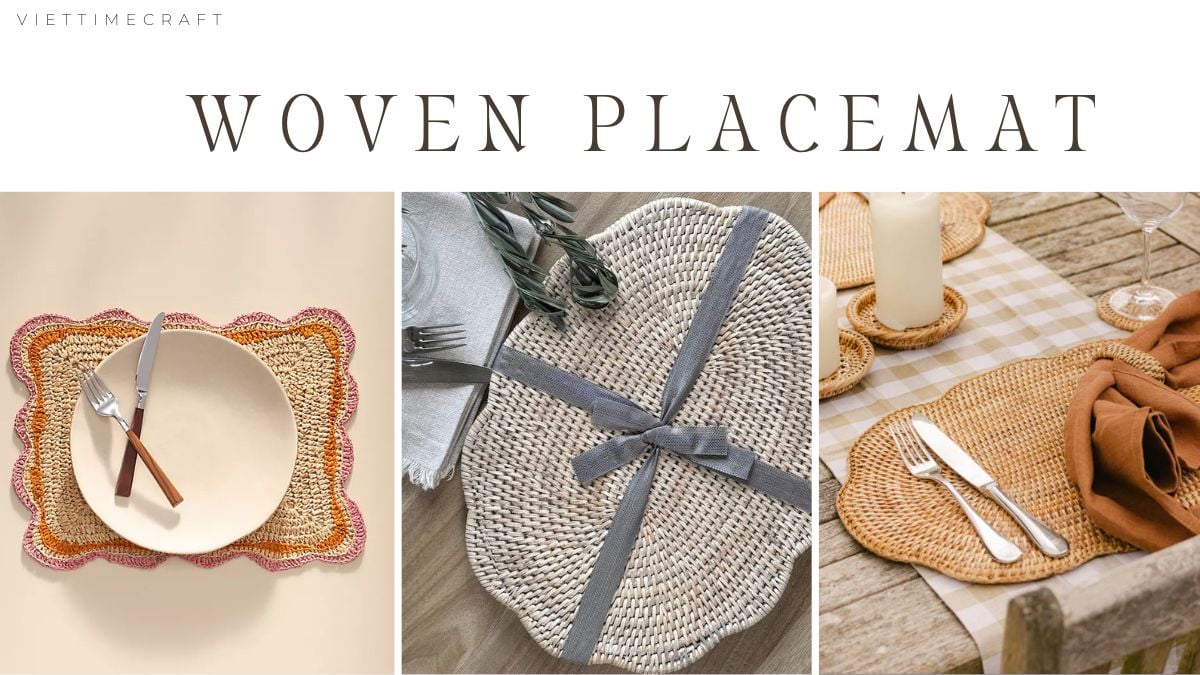
Straight‑cut rectangles and simple ovals are giving ground to scalloped, wavy, and irregular contour edges. The appeal is twofold: a handcrafted, Boho‑chic aesthetic that tells a story, and a functional differentiator that makes a dinner table feel curated rather than mass‑produced.
In manufacturing terms, scalloped rims add modest labor (an extra weaving step) but generate higher perceived value, allowing wholesalers to position these placemats in a premium tier. At Viettime Craft, we produce scalloped variants across seagrass, rattan, and even lacquer‑rimmed hybrids, with OEM flexibility to adjust scallop depth and wave frequency.
For retailers, the key is to avoid overcomplicating the shape: a subtle wave that still stacks flat is far more container‑efficient than a deeply contoured form that wastes cube space. We routinely advise buyers to test a prototype’s stackability before locking the final design.
Trend 3: Mixed materials and minimalist lines for modern dining
The third trend divides into two sub‑streams that coexist under the “modern artisan” umbrella.
- Mixed‑material accents: A woven body gets a lacquer rim, mother‑of‑pearl inlay, or a thin bamboo slat border. These details elevate the product for luxury boutiques and hospitality accounts. They also create a point of difference that online retailers can showcase in close‑up photography.
- Minimalist slim profiles: For contract dining (corporate cafeterias, hotel buffets) where easy cleaning and uniform appearance matter, buyers are requesting slim, flat‑weave placemats with no raised edges. Spun bamboo and fine rattan flat‑weaves excel here because they are smooth, hard‑wearing, and easy to wipe down.
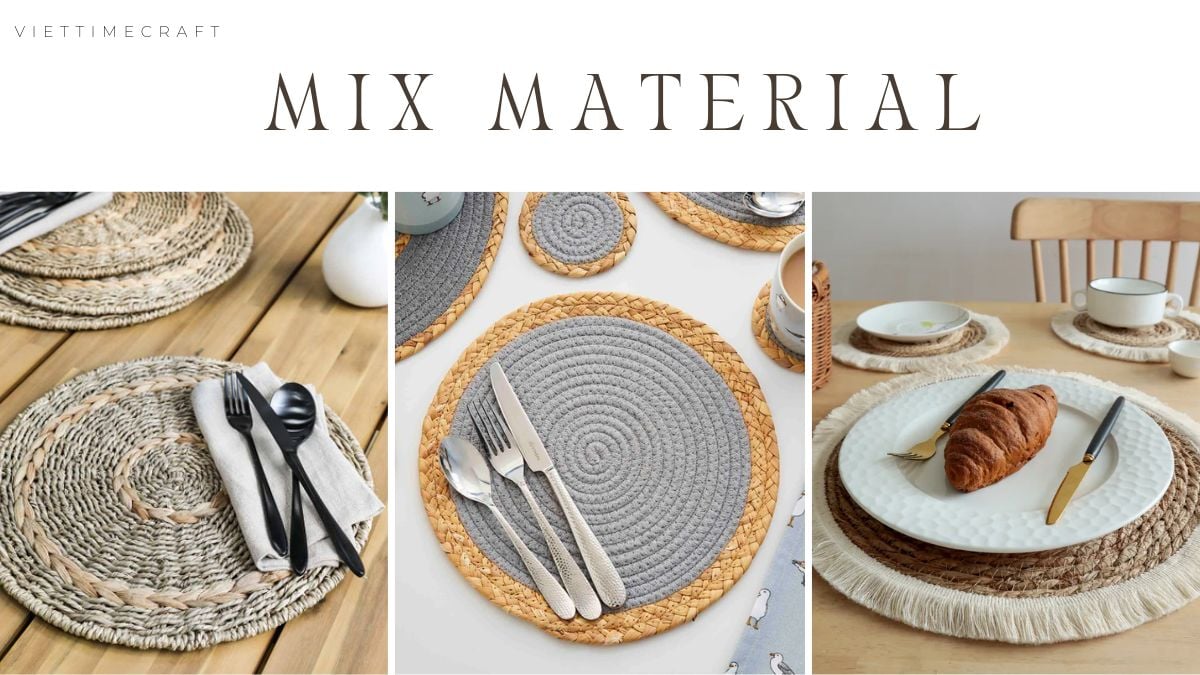
Combining these two directions in a single collection allows a wholesaler to serve both the high‑end boutique and the volume – driven contract market from one supplier.
Internal resource: explore rattan placemats for slim‑profile options and lacquer and mother‑of‑pearl for mixed‑material accents.
Materials That Shape Wicker Placemat Durability and Cost
Material choice isn’t just a design decision — it directly affects MOQ, production time, shelf life, and shipping volume. The table below compares the four most common natural fibers used for bulk wicker placemats.
| Material | Durability | Eco‑Friendliness | Best Use | Typical MOQ (per design) | Cost Rank (1 = lowest) |
|---|---|---|---|---|---|
| Rattan (solid core) | Very high; bends without breaking | Harvested from managed forests | High‑end sets, tight weaves | 300‑500 | 3 |
| Seagrass | Medium; soft, may show wear over time | Rapidly renewable, low water usage | Casual placemats, earthy color palettes | 200‑400 | 1 |
| Water Hyacinth | Medium‑high; thick, spongy, holds shape | Considered invasive in some regions; harvesting improves waterways | Chunky textured designs, very durable for daily use | 200‑400 | 2 |
| Bamboo (spun / split) | High; smooth surface, moisture resistant | Fast‑growing grass, widely available | Minimalist flat‑weave placemats, high‑use contract settings | 300‑500 | 2‑3 (depends on weaving technique) |
All MOQ ranges assume a single design and colorway. Multi‑design orders typically allow blending across colors to reach total container volume.
From Sample to Shipment: Timeline for Seasonal Placemat Orders
Time is the biggest blind spot for trend‑driven importers. The table below maps the typical lead‑time chain for an OEM wicker placemat order, from concept to delivery at a US or EU port.
| Stage | Typical Duration | Notes |
|---|---|---|
| Sample & prototyping | 4‑6 weeks | Multiple iterations if custom dye or shape |
| Bulk production | 6‑8 weeks | Depends on order volume and complexity |
| Quality inspection & packing | 1‑2 weeks | Includes anti‑mold treatment and stacking |
| Ocean freight (Asia‑US East Coast) | 4‑5 weeks | Via FCL; LCL adds approximately 1 week |
| Customs clearance & inland trucking | 1‑2 weeks | Varies by port and importer of record |
| Total from concept to warehouse | 16‑23 weeks |
Key takeaway: if you want scalloped, earth‑toned placemats on shelves for the spring/summer 2027 season, your concept brief should be locked by late summer 2026. Waiting until November means missing the window entirely – and paying premium air freight is rarely justified for low‑density items like placemats.
Custom Placemat Design and OEM/ODM with Viettime Craft
Viettime Craft operates multiple manufacturing facilities in Vietnam, specializing in natural‑fiber home decor. Our OEM/ODM process for wicker placemats covers every detail:
- Material advising: We recommend the best fiber for your target price point and use case.
- Shape and edge design: From simple scallops to interlocking puzzle edges, we prototype to your specification.
- Custom dye and color matching: Pantone matching for dyed seagrass and water hyacinth.
- Anti‑mold treatment: All fibers go through kiln drying and moisture‑control packaging before export.
- Nesting packaging design: We engineer stackable shapes and use 5‑ply corrugated export cartons to maximize container utilization.
A typical logo‑embossed or branded placemat program requires 200‑500 units per design, with sampling included in the development fee (refunded on first production order). Contact our sourcing team for current pricing and a free design review.
Request our latest wholesale catalog to see placemat samples, color swatches, and packaging options.
Procurement Pitfalls When Sourcing Trend‑Driven Placemats
Even experienced importers make mistakes when chasing seasonal decor. Based on hundreds of shipped containers, here are the three most costly ones, and how to avoid them.
- Ordering too late. See the timeline above. Natural‑fiber placemats can’t be rushed by air freight without erasing margin, because they are low‑density and air‑cargo‑priced by volume, not weight. Lead‑time surprises are the top reason retailers miss seasonal demand.
- Ignoring moisture protection. Placemats shipped without silica gel or kiln‑drying can arrive spotted with mold after 4 weeks at sea. This single oversight can torpedo a full container load.
- Choosing a shape that doesn’t nest. A visually stunning, deeply scalloped design that cannot stack upright will waste 15‑30% of container cube, raising landed cost per unit beyond competitive levels. Always request a stacking trial before finalizing the mold.
FAQ: Quick Answers for Wholesale Wicker Placemat Buyers
What is the minimum order quantity for wholesale wicker placemats?
Typical MOQ is 100 pieces per design, depending on material and complexity . Smaller trial orders can sometimes be accommodated with a collaboration fee.
How do I ensure placemats arrive without mold or damage?
Our standard export procedure includes kiln drying, anti‑mold treatment, silica gel packs, and 5‑ply corrugated cartons. We also recommend specifying moisture‑resistant liners for long‑haul sea freight .
Can I mix different materials (e.g., seagrass and rattan) in a single order?
Yes. We encourage blending designs and materials across an order to reach full container volume, which reduces per‑unit logistics costs.
What is the typical lead time for a new custom placemat design?
From concept approval to FOB Vietnam, plan 10‑14 weeks for an OEM project. Add ocean freight and inland delivery time to calculate your in‑warehouse date (see the timeline table).
Ready to Stock the Next Generation of Wicker Placemats?
Trends move fast, but production and shipping move at factory speed. Lock in your designs now so your shelves are ready when consumer demand peaks. Whether you need earth‑toned seagrass basics, scalloped rattan statement pieces, or mixed‑material accent placemats, our OEM/ODM team can build exactly what your market requires.
Contact Viettime Craft today to request a free design consultation, current pricing, and our 2026 ‑ 2027 placemat lookbook.