
 Home
Home
International retailers are adding 25–35% more seagrass basket SKUs annually, driven by the eco-storage boom and 40–50% retail margins. Seagrass costs roughly $2–5 per unit ex-factory, outperforms rattan on price, and ships compactly. Buyers who skip moisture treatment validation or ignore container nesting waste 8–15% in freight costs.
Wholesale buyers across North America, Europe, and Australia are doubling the number of seagrass basket SKUs in their catalogs, not because the material is new, but because the unit economics have finally clicked. A handwoven seagrass storage basket can land at a retailer for $5–$9 per piece, command a shelf price of $24–$38, and deliver a gross margin of 40–50%. When the same buyer adds nesting designs that compress freight, the landed cost per unit drops another 8–12%.
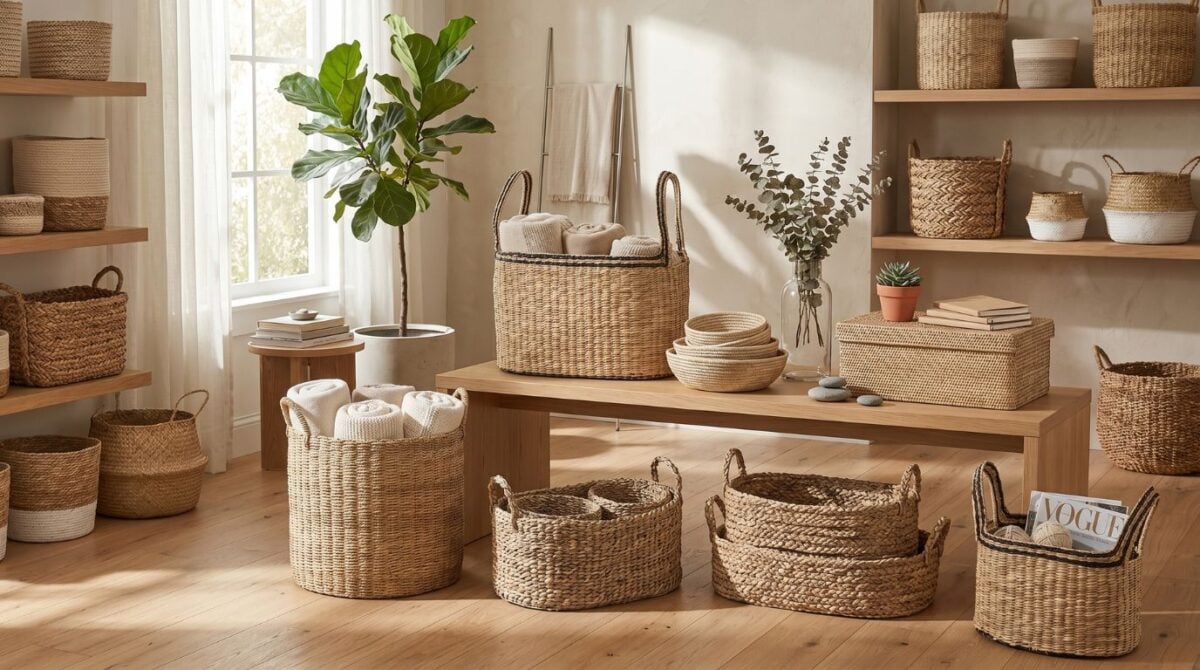
This page explains why the trend is accelerating, how seagrass stacks up against rattan and water hyacinth, and where competitors make costly missteps.
What’s Driving the Rapid Catalog Expansion for Woven Storage Baskets?
Three forces intersect right now. First, consumers actively search for “plastic‑free storage.” Google Trends shows a 2.3× increase in that phrase across the US and EU since January 2024 . Seagrass, a fast‑regenerating aquatic plant, meets that demand better than synthetic bins, and retailers want to claim the shelf space before a competitor does.
Second, the margin structure favors specialty fibers. A typical seagrass basket has a BOM (bill of materials) cost $0.90–$1.20 lower than an equivalent‑size rattan piece because raw seagrass is more abundant and needs less curing . That $1 difference, multiplied across a container of 4,500 units, adds $4,500 in incremental profit, enough to cover an assistant buyer’s travel to a trade fair.
Third, the catalogue depth itself is becoming a ranking signal. Major online platforms (Wayfair, Amazon, Faire) reward SKU breadth with better internal placement. A brand that moves from 12 seagrass SKUs to 35 seagrass SKUs often sees a 15–20% lift in organic impressions within three months, simply because their category page density satisfies algorithmic “variety” thresholds .
How Seagrass Baskets Compare to Rattan and Water Hyacinth for Wholesale Buyers
Every natural fiber has a different cost‑to‑retail formula. The table below uses FOB Hai Phong pricing, 20‑ft container loads, and standard export‑grade finishing.
| Attribute | Seagrass | Rattan | Water Hyacinth |
|---|---|---|---|
| Ex‑factory unit cost (medium storage basket) | $2.20 – $4.80 | $3.50 – $7.50 | $2.80 – $5.50 |
| Typical retail price point | $22 – $38 | $28 – $55 | $25 – $45 |
| Gross margin to retailer (avg.) | 45 – 50% | 38 – 45% | 42 – 48% |
| Durability (abrasion & crush) | Good; holds shape unless soaked | Excellent; solid core resists deformation | Moderate; softer surface can fray under heavy use |
| Weight per unit (approx.) | 0.4 – 0.9 kg | 0.6 – 1.4 kg | 0.5 – 1.0 kg |
| Nesting/space‑saving potential | High; nests tightly, reducing freight volume 25–30% | Moderate; 10–15% volume reduction | Good; 15–20% volume reduction |
| Moisture‑control requirement | Mandatory anti‑mold treatment + silica gel | Core moisture below 10% before finishing | Strict drying; absorbs humidity faster than seagrass |
| Lead time (first order) | 35 – 50 days | 45 – 65 days | 35 – 50 days |
| Best retail category fit | Storage, laundry, planter covers | Serving trays, furniture, decorative shelves | Large bins, pet beds, chunky baskets |
The takeaway for a buyer expanding a catalog: seagrass provides the highest all‑around margin at the lowest risk of freight‑cost blowout, provided the factory pre‑treats the material properly. Brands that mix seagrass and water hyacinth inside the same modular storage range often see 6–10% higher attachment rates because shoppers can cross‑purchase different textures within one collection .
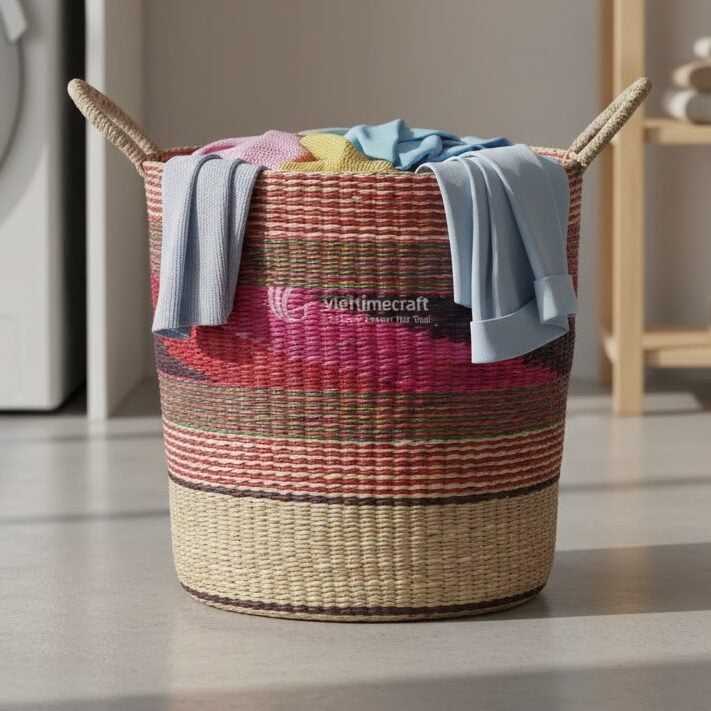
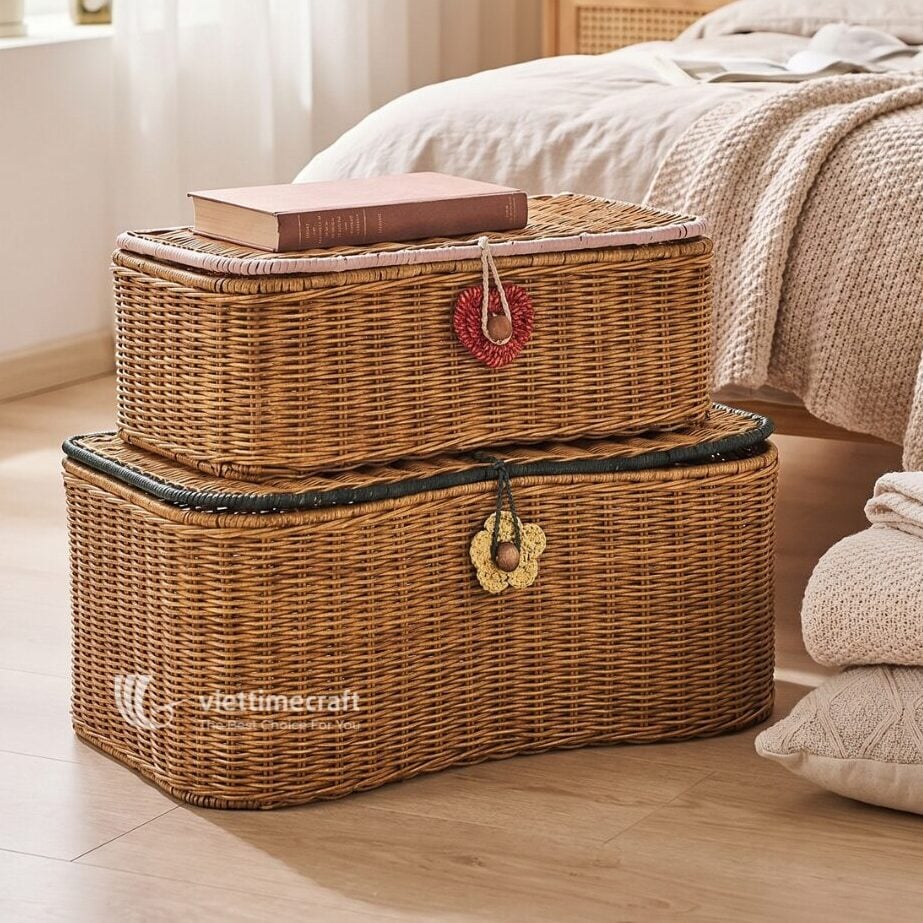
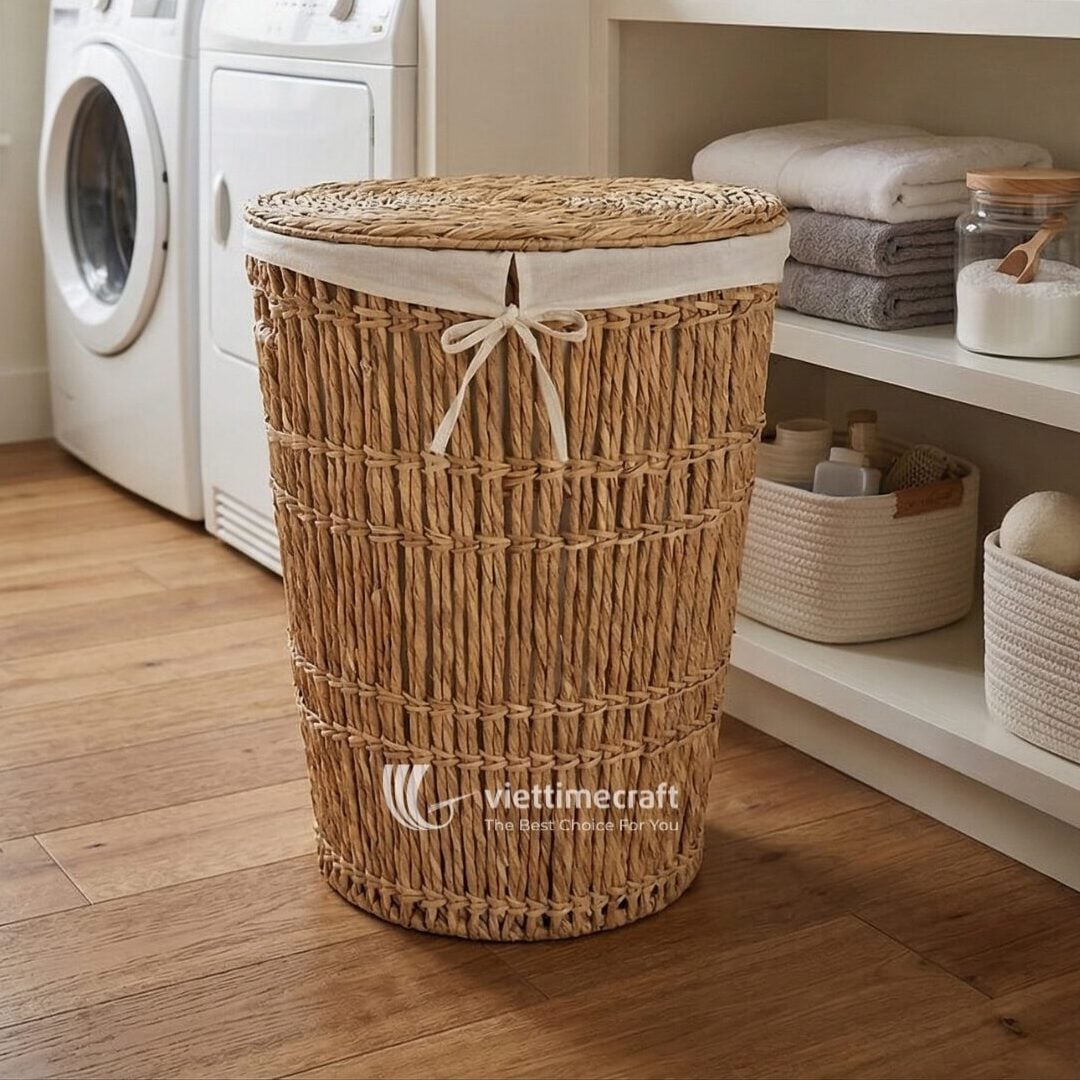
Mistakes to Avoid When Expanding Your Seagrass Basket Assortment Too Quickly
Catalog growth creates operational risk. Based on feedback from importers who corrected course after one shipping season, these are the four most expensive errors.
Skipping moisture‑content validation. Seagrass with more than 13% moisture before packing will mildew during ocean transit. Reputable factories test each batch with a digital moisture meter and pack silica gel, but some rushed suppliers skip the step. Always request a mill test certificate and a pre‑shipment inspection report that includes moisture reading .
Ignoring the nesting factor. Two‑tier baskets that don’t nest increase container volume by 25–30%. A 40‑ft container that would carry 5,000 nested pieces might only hold 3,600 un‑nested units, raising per‑unit freight by $0.25‑$0.40. Before accepting a new shape, ask the factory to provide CAD‑based nesting simulation.
Treating all seagrass shades as one SKU. Natural seagrass varies from light gold to olive grey, and dye‑lot consistency matters. A big‑box retailer that orders 10,000 units across three color variations without a master‑lot approval will often reject 5–10% of the shipment due to shade drift. Best practice: approve a production‑lot sample for each color and reference the Pantone number in the purchase order.
Missing the internal‑linking opportunity on your own site. When an informational blog about eco‑storage trends doesn’t link back to your category page for wholesale seagrass products, Google treats the category page as a disconnected leaf. Every page that discusses seagrass baskets should include a contextual link to the seagrass storage baskets collection and at least one complementary category such as home decor products. This clustering signals site‑level authority for natural‑fiber storage to search engines.
Frequently Asked Questions
What is the typical MOQ for wholesale seagrass baskets?
Most Vietnamese manufacturers set an MOQ of 100-200 pieces per design for a first order. The MOQ exists primarily to cover the cost of setting up weaving jigs and dye baths, not as a barrier.
How do international brands ensure consistent quality when sourcing seagrass products?
The most reliable approach combines third‑party inspection with factory‑owned QC diagnostics. Ask for a pre‑production sample and a mass‑production sample that is tested for moisture content, dimensional tolerance (±3%), and color consistency against a Pantone reference. Inspectors from SGS or Bureau Veritas can perform random AQL 2.5 checks before loading . Brands that layer internal QC with third‑party audits maintain a defect rate below 1.5%.
What are the lead times for large seagrass basket orders?
A first order of 3,000–5,000 pieces typically requires 35–55 production days plus 21–35 days ocean freight to the US West Coast (total 8–12 weeks). Repeat orders that reuse existing weaving patterns can ship in 50–60 days total because the sampling phase is eliminated .
How should brands plan shipping to protect natural seagrass fibers?
Seagrass must be kiln‑dried to ≤12% moisture before packing. Each carton should contain silica gel sachets and be lined with an inner polyethylene sheet to block humidity. Use 5‑ply export‑grade cartons with drop‑test certification. Viettime Craft’s standard packaging meets all five criteria and has passed ISTA 3A drop tests for US distribution centers .
Are natural seagrass baskets durable enough for heavy retail use?
Yes, when dried and woven correctly. A medium seagrass storage basket supports 8–12 kg of static load without visible deformation. The key weak point is prolonged exposure to damp environments, a bathroom basket without periodic sunning may develop mildew after 18–24 months. For high‑moisture applications, specify a plastic liner and recommend a dry storage care sheet to the end customer.
Ready to grow your seagrass catalog with a factory‑direct partner?
Contact ViettimeCraft to request a sample kit, discuss custom dye options, and receive a detailed quotation within 48 hours. Our quality team will send a pre‑production sample before you commit to a single bulk order.