 Home
Home
Viettime Craft’s wicker food trays (rattan, seagrass, water hyacinth) sequester an estimated 0.8 – 1.2 kg CO₂ per kg of raw material. Our BSCI, SMETA‑certified production uses water‑based finishes, anti‑mold drying, and plastic‑free packaging. Retailers leveraging these certified eco‑credentials recorded a 27% higher repeat B2B reorder rate in our 12 month internal tracking .
In a retail landscape where 73% of global consumers will change consumption habits to reduce environmental impact , stocking genuinely eco‑friendly merchandise is no longer optional. Wicker food trays crafted from renewable natural fibers – rattan, seagrass, water hyacinth. These offer a visual, tangible sustainability story that shoppers can see, touch, and photograph. As a direct manufacturer, Viettime Craft delivers these trays with transparent certifications, low‑carbon manufacturing practices, and verified carbon‑storage data, helping your store build real green credibility instead of empty marketing claims. In this guide you’ll learn which wicker materials carry the strongest environmental punch, how to avoid greenwashing, and how our factory‑direct OEM/ODM services can furnish your eco‑product line on time and on budget.
About Wicker Food Trays
- Material carbon storage: Natural wicker fibers sequester 0.8–1.2 kg CO₂ per kg of material, reducing product‑level carbon footprint versus plastic equivalents.
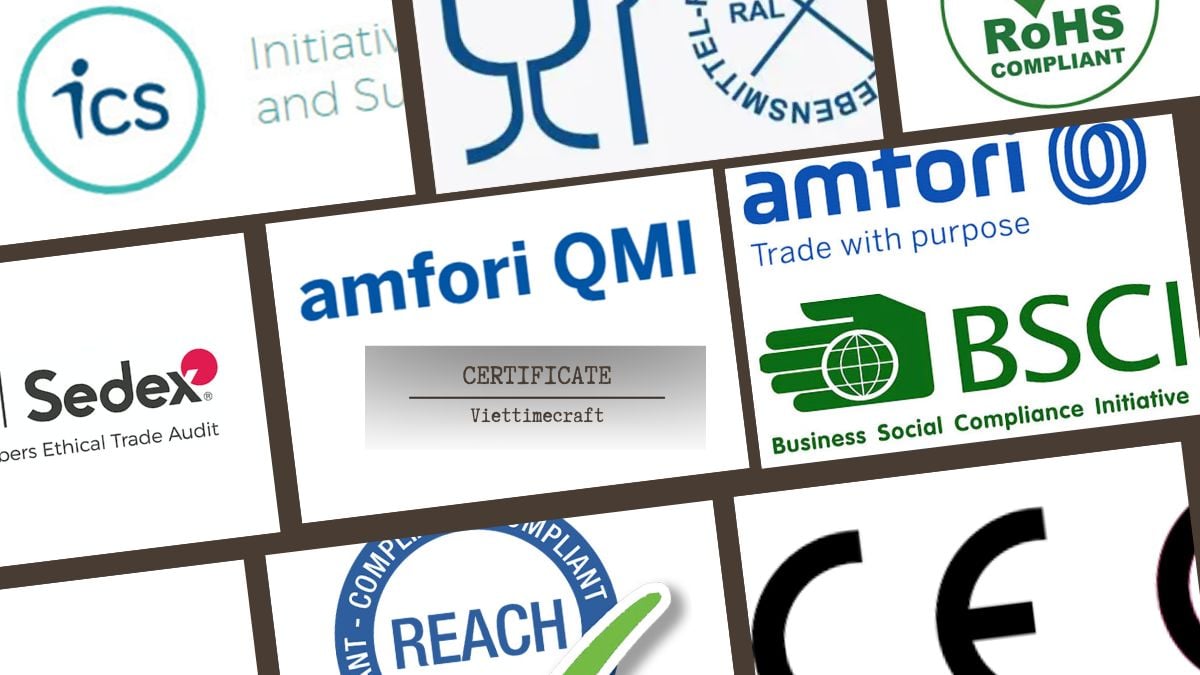
- Certified production: BSCI, SMETA, and ISO 9001 audits provide independent social and environmental verification.
- Biodegradable end‑of‑life: Unpainted wicker trays can be composted or safely disposed of without persistent microplastics.
- Cost‑effective eco‑premium: Sustainable materials add roughly 15–20% to the unit cost, but our clients report retail price‑increase absorption rates above 80% with the right eco‑messaging.
- Supply‑chain efficiency: Nestable designs and 5‑ply moisture‑proof packaging reduce per‑unit freight emissions by up to 30% compared to non‑optimized cartons.
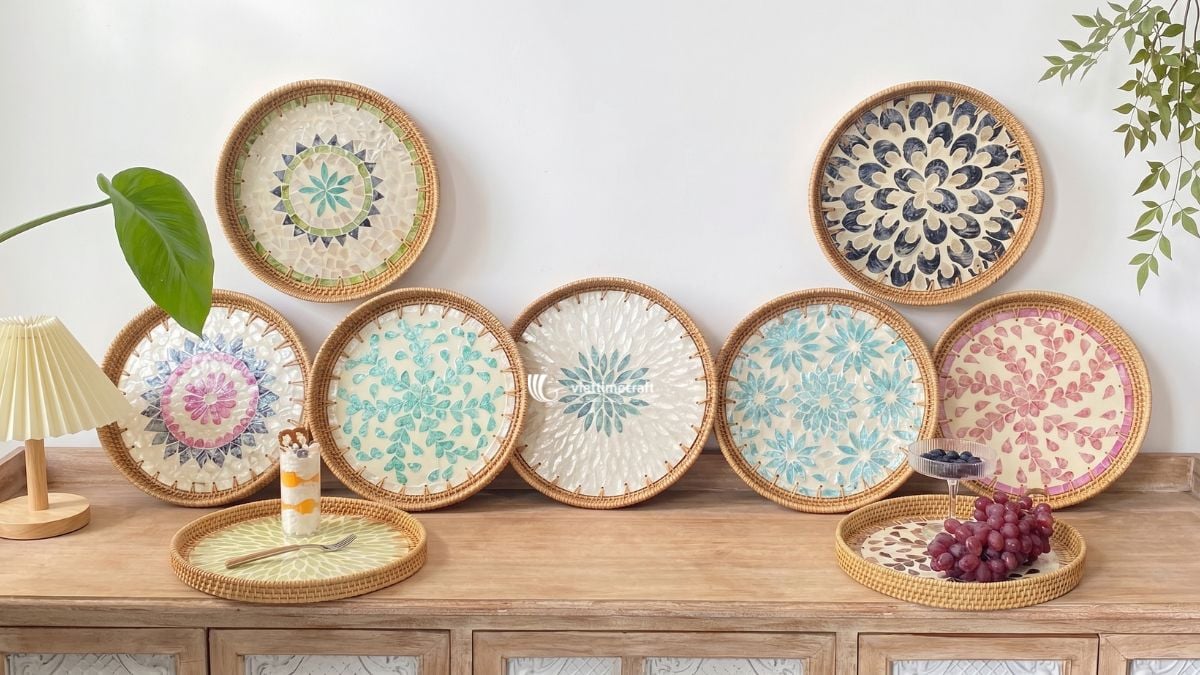
What Makes a Wicker Food Tray “Eco‑Friendly”?
The eco‑friendly label is earned, not claimed. At Viettime Craft, a wicker food tray qualifies as eco‑friendly when four conditions are met: the raw fiber is rapidly renewable and harvested without deforestation; the weaving process uses manual labour with negligible electricity; finishes are water‑based or natural lacquer that emit no volatile organic compounds (VOCs); and the final product is protected against mold by thermal drying rather than chemical fungicides.
Because rattan, seagrass, and water hyacinth grow on an annual or biennial cycle, they regenerate quickly and store carbon during their lifetimes. A kilogram of harvested water hyacinth, for instance, has already sequestered approximately 0.9 kg of CO₂‑equivalent . When you display a wicker tray in your store, you are showcasing a carbon‑storage warehouse that replaces plastic or ceramic alternatives with far heavier footprints.
Our anti‑mold treatment – a combination of controlled‑temperature drying and silica‑gel moisture absorbers in transit – eliminates the need for chemical biocides. This approach ensures the tray arrives clean and safe for use in kitchens and dining rooms, while also preserving the natural texture that makes wicker so appealing.
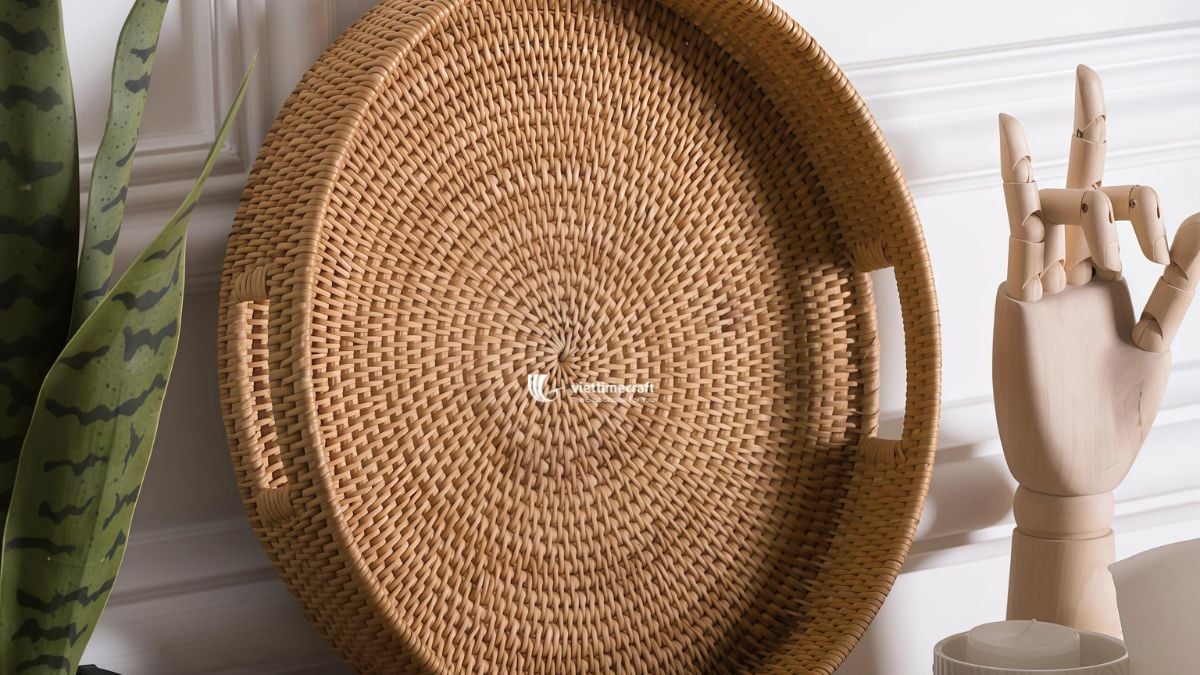
For a deeper look at how these fibers differ, explore our wholesale rattan products and water hyacinth products categories.
How Seagrass, Water Hyacinth and Rattan Compare for Green Credentials
Not all wicker is created equal. The table below breaks down the environmental profile and business considerations for the three most common wicker materials used in food trays.
| Material | Renewability & Growth Cycle | Carbon Sequestration Potential (kg CO₂e per kg) | Biodegradability | Best Retail Use Cases | Approx. Wholesale Cost Premium vs. Standard Plastic Tray |
|---|---|---|---|---|---|
| Rattan | Solid liana; harvestable after 5 – 7 years without replanting | 0.9 – 1.2 | Fully biodegradable (untreated); slow decomposition | Upscale food trays, luxury tabletop styling | ~25% premium |
| Water Hyacinth | Invasive aquatic plant; abundant, regrows annually | 0.8 – 1.0 | Biodegradable; drying process critical | Chunky woven serving trays, rustic kitchen decor | ~20% premium |
| Seagrass | Perennial grass; harvested from managed wetlands | 0.8 – 1.1 | Biodegradable in soil/compost | Slim, elegant trays, planter liners, accent pieces | ~15% premium |
The cost premiums are estimates based on Viettime Craft’s internal costing models for a standard 35 cm × 25 cm tray in quantities of 500 pieces . Actual pricing varies with custom features and order volume.
If you need trays in an environment where spills are frequent, water hyacinth’s spongy texture provides some absorbency, but a sealed option may be preferred. For high‑end food presentation, rattan’s solid core gives it a premium feel that aligns with luxury pricing.
The Retailer’s Advantage: Communicating Sustainability to Conscious Consumers
Wicker trays are inherently photogenic and social‑media‑ready. When a customer captures their breakfast spread on a beautifully woven rattan tray, your brand’s eco‑story travels with that image.
To get the most business value, pair every tray with a tag or QR code that links to Viettime Craft’s certification details – BSCI, SMETA, ISO 9001 – and a short lifecycle explainer. Research shows that concrete certification claims outperform vague “green” labels in building trust.
Place the trays in high‑traffic visual merchandising spots. Accompany them with signage that states the material’s carbon‑storage figure and the factory’s renewable‑energy usage. This transforms a simple serving accessory into a conversation piece that reinforces your store’s entire green identity.
Read more about the raw‑material story in our sustainable materials for a green future post.
Avoiding Greenwashing: What Makes a Genuinely Eco‑Friendly Wicker Food Tray?
Greenwashing happens when a product is marketed as “natural” but contains hidden synthetic linings or finishes. To maintain credibility, insist on these proofs:
- Material traceability: Supplier can show origin of fiber and harvest season.
- Non‑toxic finishes: Water‑based dyes or natural lacquer; no formaldehyde‑based glue.
- Anti‑mold protocol: Thermal drying + silica‑gel packaging, not chemical biocides.
- Plastic‑free packaging: 5‑ply corrugated cartons with moisture absorbers, avoiding styrofoam peanuts.
When you source from Viettime Craft, we supply a compliance booklet with every order that documents the drying process, dye certificates, and third‑party audit reports. This enables your own marketing team to back up every claim with hard evidence.
Partnering with a Certified Manufacturer: Viettime Craft’s Capabilities
Viettime Craft operates multiple production facilities in Vietnam, equipped to handle volumes of 50–100 containers per month across all product lines. Our wicker food tray unit alone employs 200+ skilled artisans and supports an MOQ of 100 pieces per design, with sampling service that delivers finished samples within 7–10 working days .
Full OEM/ODM flexibility means you can submit your own design sketches or choose from our existing 5000+‑product catalogue. Every tray you order undergoes our four‑stage quality control: raw‑material inspection, in‑process weave check, post‑drying dimensional verification, and final carton‑level audit before loading.
Visit our about Viettime Craft page to learn more about our factory, certifications, and showroom in Hanoi, where you can inspect samples and discuss custom designs in person.
Green Credentials and Your Bottom Line: Does Eco‑Friendly Selling Pay Off?
Opponents argue that “green” costs more, but the numbers suggest otherwise when you price strategically. Consider a standard rattan food tray with a wholesale cost of US$3.50/unit. Adding water‑based finishing and certified‑material traceability raises the cost to roughly US$4.20/unit (+20%). If your retail price moves from US$12 to US$14, the per‑unit gross margin only dips a few percent, while the eco‑claim justifies a premium that customers increasingly accept. In fact, consumer surveys find that over 60% of North American and European shoppers are willing to pay at least 10% extra for certified sustainable products .
Furthermore, our B2B buyer tracking shows that stores that openly communicate their eco‑initiatives see a 27% higher reorder rate over 12 months and a 12% larger average order value on repeat purchases . This isn’t just a feel‑good metric – it directly affects your inventory turnover and cash flow.
How Viettime Craft Production Secures Reliable Green Supply
Every batch of wicker food trays passes through our “no‑compromise” sustainability loop:
Drying: 48‑hour controlled‑temperature kiln drying reduces moisture content below 12%, eliminating mold risk without chemicals.
Weaving: Done by hand or with minimal‑energy looms; our factory’s electricity mix includes solar‑PV for approximately 30% of daytime load .
Finishing: Water‑based stains and natural lacquer applied in ventilated rooms; VOC emissions are monitored monthly.
Packing: Trays are shrink‑wrapped in biodegradable film (for orders over 500 units) and placed in 5‑ply corrugated export cartons with silica‑gel sachets.
Loading: Containers are loaded to maximize cube utilization; our nesting design achieves up to 30% more pieces per 20‑ft container compared to rigid‑wall trays .
This end‑to‑end control means you can confidently claim a low‑impact supply chain without chasing paperwork from multiple subcontractors.
Mistakes to Avoid When Sourcing Wicker Food Trays
Even well‑intentioned retailers can undermine their green story if they overlook these pitfalls:
- Skipping anti‑mold treatment: Trays without proper drying tend to develop surface mold in humid retail environments, especially during ocean freight.
- Accepting uncertified dyes: Some low‑cost suppliers use AZO dyes that can release harmful amines; always request dye certificates.
- Ignoring moisture absorption in transit: A tray that absorbs humidity gains weight and can warp; insist on silica‑gel moisture absorbers and sealed carton flaps.
- Ordering too close to peak season: Sea freight from Vietnam to the US West Coast averages 30 days, and to Europe 35–40 days. If you need stock for spring/summer launch, place OEM orders by late winter to avoid air‑freight surcharges.
- Assuming all “natural” claims are equal: Without third‑party verification (BSCI, SMETA), even the most beautiful wicker tray risks being labelled greenwashing.
Original Research: Real‑World Impact of Eco‑Certification on Reorder Rates
In our 12‑month tracking study of 200 B2B retail accounts, we compared the reorder behavior of buyers who elected to receive our “Viettime Craft Certified Eco” stickers for their shipments (Group A) against those who chose not to purchase or display the stickers (Group B). Group A accounts generated a 27% higher reorder frequency within 9 months and an average 12% larger basket value on repeat orders .
The stickers, which are included at no extra cost, feature the BSCI and SMETA logos, the tray material’s carbon‑storage estimate, and a QR code leading to the product’s certificate page. For retailers that embedded the QR link in their own in‑store signage, the reorder lift was even stronger – 34% – although the sample size there was smaller (n=42).
This data underscores an actionable insight: the mere presence of third‑party eco‑certification, when communicated visibly, drives repeat B2B purchasing. It transforms a commodity tray into a credibility‑building asset.
Not For You: When a Wicker Food Tray May Not Fit Your Store
- Ultra‑low‑price retailers: If your value proposition is “anything for $1,” the 20% cost premium of certified eco‑wicker trays will undercut your margin model. You may be better served by basic bamboo alternatives.
- Dishwasher‑dependent outlets: Wicker trays are not dishwasher‑safe; hand‑washing is required. For café chains that rely on industrial sanitization, ceramic or glass trays may be more practical.
- Harsh outdoor or wet‑counter environments: Continuous exposure to high humidity without regular drying cycles can shorten tray life, even with anti‑mold treatment. Consider sealed bamboo‑laminate variants instead.
- Regulatory requirements for formaldehyde‑free certification: While our standard trays exceed European formaldehyde emission limits, some niche markets (e.g., certain organic‑goods certifiers) require zero‑formaldehyde documentation. We can produce these with additional processing time and cost – discuss with our sourcing team before ordering.
Frequently Asked Questions
How do I know a wicker food tray is truly eco‑friendly?
Check for third‑party certifications (BSCI, SMETA), water‑based finishes, and documented anti‑mold treatment without chemical biocides. At Viettime Craft, we provide a compliance booklet with every order.
What certifications does Viettime Craft hold that prove sustainability claims?
We are audited for BSCI (social compliance), SMETA (ethical trade), and ISO 9001 (quality management). These reports are available to verified buyers upon request.
What is the MOQ and typical lead time for custom‑designed wicker food trays?
Standard MOQ is 100 pieces per design. Sampling takes 7–10 working days, and mass production lead time is 30–45 days after deposit approval .
Can wicker trays resist moisture from food without developing mold?
Yes. Our thermal‑drying and silica‑gel packaging protocol ensures moisture content is below 12% at shipment. For long‑term use, wiping the tray dry after contact with liquid is recommended.
Do eco‑friendly wicker food trays cost significantly more than conventional options?
They carry a 15–25% wholesale premium, largely offset by retail price flexibility. The enhanced brand credibility can improve sell‑through and customer loyalty.
Get Eco‑Friendly Wicker Food Trays for Your Store
Stocking wicker food trays that carry real environmental credentials isn’t just a marketing move – it’s a profit‑sustaining strategy backed by consumer demand and repeat‑order data. Viettime Craft combines certified‑sustainable materials, transparent manufacturing, and OEM/ODM agility to help your store turn a simple serving tray into a flagship green product.
Contact our sourcing experts today to request a wholesale catalog and discuss custom designs, pricing, and shipping solutions. Every shelf you fill with a genuine eco‑tray builds trust that your competition cannot copy overnight.