
 Home
Home
Vietnam’s round woven placemats offer importers 20 – 40% cost savings vs. China, MOQs as low as 100 pieces, and 8–10 week production lead times. Viettime Craft provides OEM/ODM rattan, seagrass, and bamboo placemat lines with anti – mold packaging, BSCI‑compliant quality control, and nesting packaging that raises container capacity by up to 18%.
Why importers choose Vietnam for round woven Placemats Wholesale
Importers sourcing round woven placemats at scale need more than a supplier – they need predictable quality, manageable minimums, and a partner who understands seasonal retail cycles. Vietnam’s handicraft sector has built a 20‑year track record of delivering exactly that. In 2025, more than 40% of leading European home‑decor chains added Vietnamese woven placemat SKUs to their tabletop assortments, responding to demand for natural, eco‑friendly materials and hand‑finished textural details that mass‑produced alternatives cannot replicate.
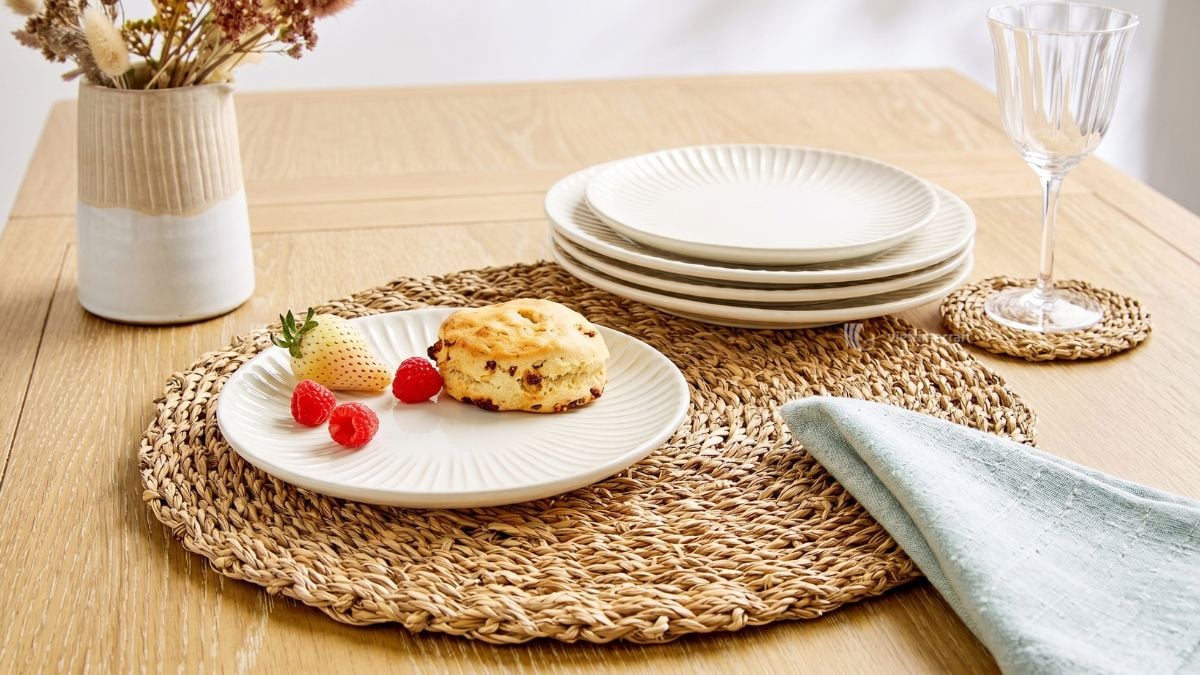
At Viettime Craft, we ship round woven placemats to over 30 countries, handling everything from material selection to anti‑mold treatment, space‑saving packing, and certificate‑ready export documentation. This page explains the concrete reasons importers choose Vietnam and why a growing number of them choose to partner with us.
Summary
- Cost advantage: Labor‑intensive weaving in Vietnam yields 20‑40% lower unit costs vs. Chinese factories for identical designs.
- Flexible MOQs: Standard MOQ starts at 200 pieces per design, with OEM projects scaling from 500 units.
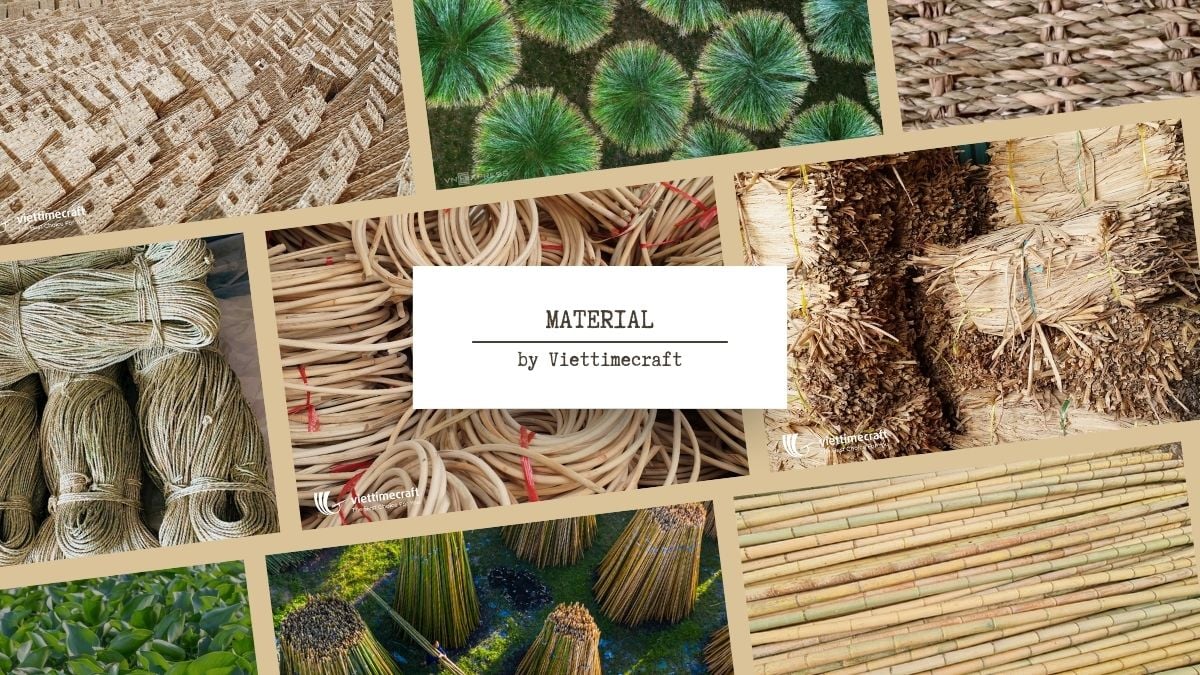
- Material variety: Rattan, seagrass, bamboo, water hyacinth, and jute blends are all available, each with specific lifetime and care profiles.
- Proven logistics: Average sea‑freight transit to the US West Coast is 25‑30 days; 40‑45 days to Northern Europe.
- Built‑in quality: In‑house anti‑mold treatment keeps moisture content below 12%, and export cartons are 5‑ply corrugated with drop‑test certification.
What Makes Vietnam the Best Source for Round Woven Placemats?
Vietnam’s position rests on three fundamentals: raw‑material proximity, a dense network of skilled weavers, and an export‑focused manufacturing culture that has matured alongside strict buyer compliance requirements.
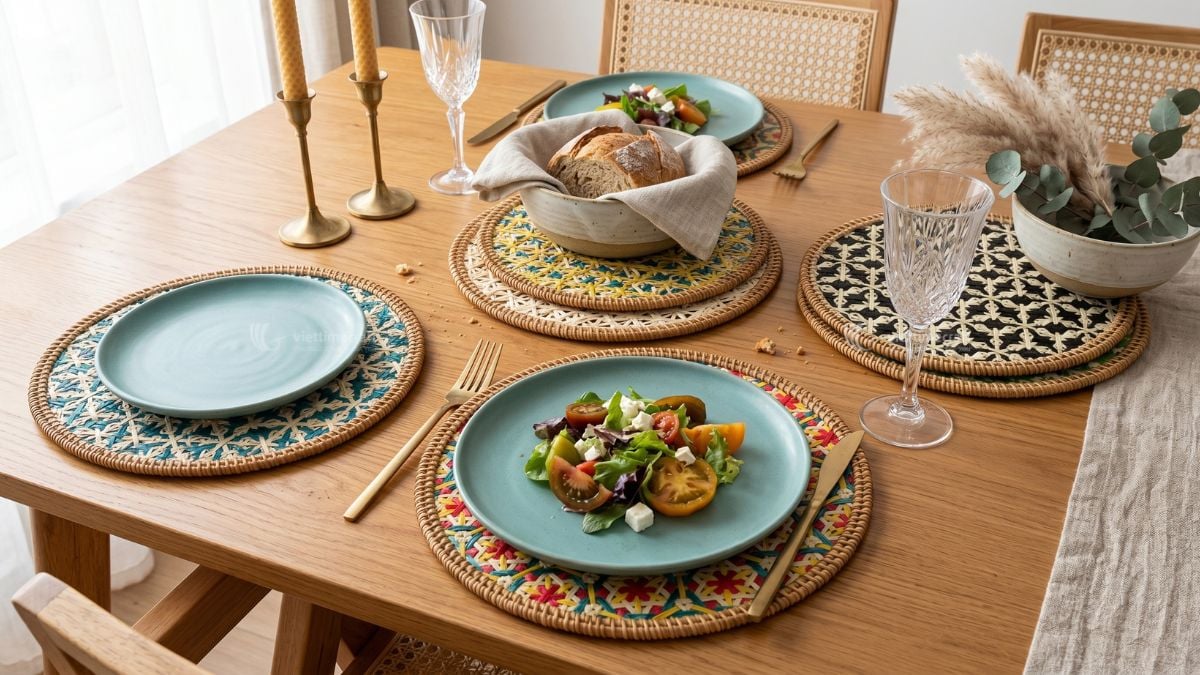
The country sits in a tropical belt where rattan palms, bamboo groves, and seagrass beds regenerate quickly, short supply chains trim material costs and lead times. Vietnamese artisans, many of them second‑ or third‑generation weavers, can replicate intricate braided patterns while maintaining tight diameter tolerances (±2 mm for a 30 cm round placemat). This consistency is hard to achieve in lower‑wage economies where weaving skills are thinner.
Additionally, Vietnam’s free trade agreements with the EU (EVFTA) and participation in comprehensive regional pacts have reduced tariff barriers on handmade home décor. For EU importers, rattan and bamboo placemats classified under HS code 4602 often enter at 0% duty when accompanied by a Certificate of Origin Form EUR.1.
How Do Vietnamese Artisans Achieve Consistent Quality for Wholesale Placemats?
Consistency matters most when a placemat lands on a buyer’s conference table or appears in a catalogue photo. Vietnamese workshops enforce three quality gates:
- Material sorting: Raw fibers are graded by color, flexibility, and thickness before weaving. Rattan poles, for example, are parted into uniform splines of 2‑3 mm width using manual stripping jigs.
- Mid‑weave inspection: Each batch of 20 finished placemats is checked against a reference sample. Weavers re‑tighten or trim any loose ends before the placemat moves to finishing.
- Moisture‑control finishing: After weaving, placemats enter a gas‑fired drying chamber until moisture content drops to 8‑12%. This step prevents mold during ocean freight. Silica gel sachets are then inserted into every export carton.
Viettime Craft is audited under the BSCI social compliance framework, meaning our quality system is linked to worker welfare and documented traceability. Learn how we meet BSCI certification requirements.
What Materials Are Commonly Used for Round Woven Placemats?
Each material brings a different look, price point, and functional profile. The table below summarizes the four most‑used fibers for round placemats sourced from Vietnam.
| Material | Appearance & Texture | Typical Lifespan (indoor dining) | Wholesale Price per Unit (USD) | Best For |
|---|---|---|---|---|
| Rattan core | Smooth, glossy when lacquered; mid‑weight | 5‑7 years | $1.80‑$3.20 at 500 pcs | High‑end dinner sets, boutique hotels |
| Seagrass | Soft, slight greenish tone; lightweight | 3‑5 years | $1.40‑$2.60 at 500 pcs | Casual dining, boho decor |
| Bamboo (split slats) | Uniform beige, slightly harder surface | 4‑6 years | $1.60‑$2.80 at 500 pcs | Minimalist/modern table settings |
| Water hyacinth | Chunky, textural, natural brown | 3‑4 years | $1.80‑$3.40 at 500 pcs | Chunky artisan looks, gift baskets |
Prices are approximations based on 30‑cm round placemates without added liners or lacquer. MOQs for custom colors or edge binding may be higher.
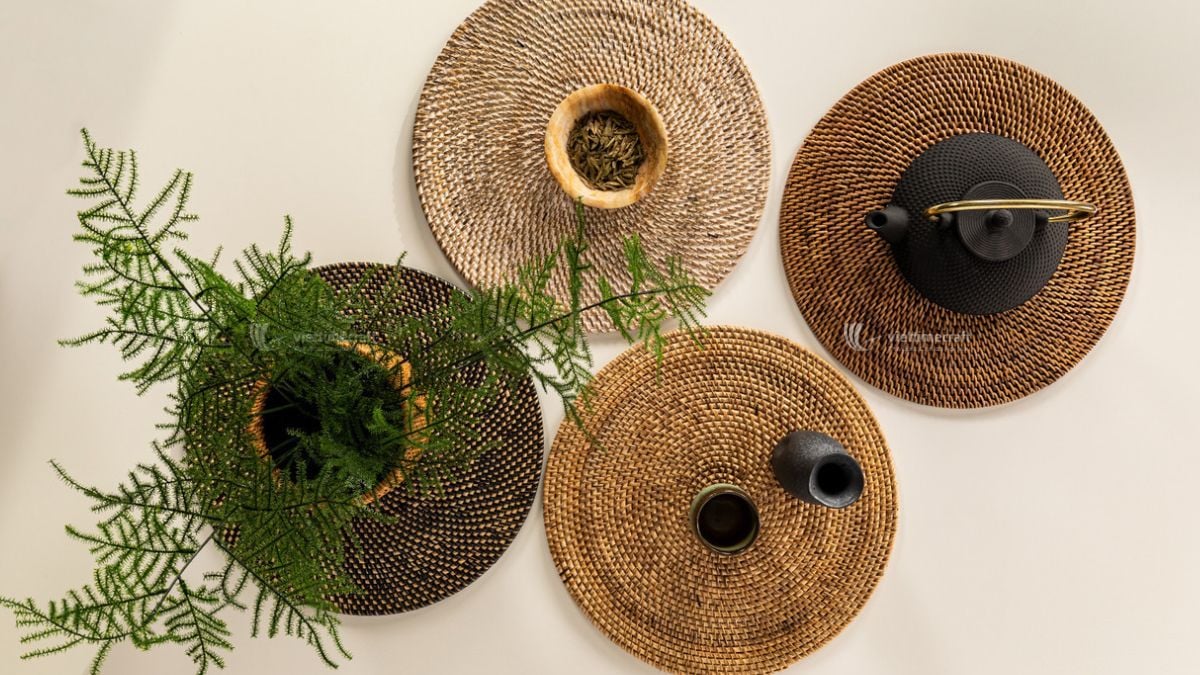
For importers focusing on a specific aesthetic, Viettime Craft has dedicated ranges: wholesale rattan products including rattan placemats, wholesale bamboo products, and wholesale seagrass products. Many buyers mix materials within a placemat line to offer cross‑sell clusters.
What Are the Price and MOQ Advantages of Vietnamese Manufacturers?
Vietnamese factories typically offer a tiered pricing structure that rewards importers who consolidate orders but does not lock out smaller boutique buyers.
| Order Size (pieces per design) | Typical Rattan Placemat Unit Cost (USD) | Typical Lead Time (working days) |
|---|---|---|
| 2100‑499 | $2.60‑$3.40 | 40‑50 |
| 500‑1,499 | $2.10‑$2.80 | 38‑48 |
| 1,500‑4,999 | $1.80‑$2.40 | 35‑45 |
| 5,000+ | $1.50‑$2.10 | 30‑40 |
These ranges assume FOB Vietnam port; freight and insurance are additional. For OEM projects (custom color, edge trim, or logo stamp), a one‑time sampling fee of US$150‑$300 per design is standard, with free sampling available at confirmed repeat order volumes.
Another under‑appreciated advantage is payment flexibility. While many Chinese suppliers require 100% upfront payment for smaller orders, Vietnamese manufacturers frequently accept T/T 30% deposit, 70% against a copy of the bill of lading – preserving your working capital.
How Does Shipping and Packaging Impact Your Placemat Order?
Woven placemats are light but bulky. Optimized packing is therefore a critical cost lever.
Space‑Saving Packaging at Viettime Craft
We naturally nest round placemats in stacks of 10‑12 pieces, then shrink‑wrap each stack before packing into 5‑ply corrugated cartons. Our R&D team measured a 20‑ft container carrying standard flat‑packed round placemats (4,000 cartons) vs. the same cartons with nested stacking. The nested method increased container capacity by 18% – adding roughly 700 extra cartons per container and reduced per‑unit ocean freight by approximately US$0.15 per placemat.
| Shipping Mode | Typical Transit (Asia to USWC) | Notes |
|---|---|---|
| Sea freight (FCL) | 25‑30 days | Most cost‑effective above 3‑4 cbm |
| Sea freight (LCL) | 30‑35 days | Slower consolidation; watch warehouse cutoff dates |
| Air freight | 5‑7 days | Only for sample runs or last‑mile stock gaps |
Our normal production lead time for repeat styles is 8‑10 weeks, so we encourage importers targeting a spring‑summer launch to share purchase orders by late autumn to account for production, pre‑shipment inspection, and ocean transit.
Mistakes to Avoid When Sourcing Round Woven Placemats
- Ignoring moisture specs: Placemats that arrive with internal moisture above 14% will develop mold inside sealed cartons within weeks. Always request a moisture‑content certificate in the pre‑shipment inspection report.
- Ordering the wrong size for the target market: US dinner plates are typically 26‑28 cm, while European plates often exceed 30 cm. Verify your plate diameter and add at least 8 cm to the placemat edge.
- Skipping a sample against the production batch: Colors shift slightly between dye lots. Hold a retained sample from the same batch as the production run so you have a reference for any dispute.
- Ignoring inner carton packagingL Bulk single‑stack shipping saves space but can crush edges. Always specify inter‑leaved tissue or cardboard sheets between stacked placemats.
Important Considerations Before Sourcing Handmade Placemats
Vietnamese handmade placemats are not the right solution for every business:
- Ultra‑tight timelines: If you need placemats delivered in less than 4 weeks from order, an offshore production model won’t work. In‑stock options from a local importer or buying domestic surplus may be the only viable path.
- Extreme commodity pricing: For high‑volume discount stores where the target retail is under US$1.50 per placemat, a fully automated, large‑scale synthetic‑fiber operation (often in China or Bangladesh) will deliver lower per‑unit cost even after accounting for duties.
- Highly regulated food‑contact requirements without additional certification: While our placemats use food‑safe lacquers, a buyer requiring formal EU Regulation (EC) 1935/2004 testing paperwork on every batch will need to commission laboratory tests; we can coordinate but the cost and lead‑time add‑on may eat into margins.
We believe being upfront about fit helps buyers make smarter decisions and that trust leads to longer‑term partnerships.
How Much Container Space Do Round Placemats Actually Use?
During Q4 2025, Viettime Craft ran a controlled packing trial using 500‑piece pallets of 30‑cm round rattan placemats, comparing five loading patterns. The winning design (spiral‑layered nesting with V‑tuck cardboard separators) achieved:
- 14,600 placemats per 20‑ft container (standard 5‑ply carton, 218 gms cardboard).
- Damage‑in‑transit rate dropped from 1.4% to 0.3% against the conventional flat‑stack method.
- Carton void‑fill reduction of 22%, lowering plastic usage by roughly 8 kg per container.
We applied the same pattern to seagrass and bamboo placemats with similar improvement ratios (±2‑3%). These metrics allow importers to quote confident landed‑cost estimates. A calculator comparing FOB price, freight share, and expected damage margin is available on request.
Why Partner with Viettime Craft for Your Round Woven Placemat Import?
Viettime Craft manufactures under one roof: raw‑material processing, weaving, finishing, quality inspection, and container loading. Buyers who visit our Hanoi showroom see the entire pipeline in a single day.
We carry BSCI certification, maintain a dedicated sample room with over 200 placemat designs, and support OEM recoloring and pattern adaptation with a standard 10‑day sampling turnaround. Our account managers speak English, handle FOB, CIF, and L/C documentation in‑house, and provide weekly production‑status updates via WhatsApp or email.
Ready to stock your next season? Contact us to obtain the latest wholesale placemat catalog and discuss your custom requirements. For a broader look at our dining product range, visit our kitchen and dining category where you’ll find placemats, trays, and tabletop accessories.
Frequently Asked Questions
What is the minimum order quantity for round woven placemats in Vietnam?
Our standard MOQ is 100 pieces per design. For OEM/ODM projects where a new mold, pattern, or color finish is required, the MOQ rises to 500 pieces. We also offer smaller trial runs of 50‑100 pieces for existing catalog designs, subject to availability and prior commercial relationship.
How long does shipping from Vietnam to the US/EU take?
Sea freight to the US West Coast usually takes 25‑30 days port‑to‑port, while transit to Northern Europe ranges from 40‑45 days. Adding 3‑5 days for inland trucking is normal. Air freight can compress this to 5‑7 days but costs roughly 6‑10× more per kilogram. We always recommend ordering at least 12 weeks before your in‑store date to absorb any port delays.
Can I customize the size, color, and material of woven placemats?
Yes. Viettime Craft’s OEM service can adjust diameter, add colored edge binding, apply water‑based stains or lacquer, and mix materials such as a rattan center with a seagrass outer ring. Minimums for custom material blends start at 100 pieces. We provide lab dips and a pre‑production sample before mass manufacturing.
How do I verify the quality and safety of woven placemats for food contact?
We can provide third‑party test reports for formaldehyde content, heavy metals, and migration of food‑contact substances upon request. Our standard lacquers are food‑safe according to U.S. FDA 21 CFR and EU Regulation (EC) 1935/2004 guidelines. For clients with in‑house compliance teams, we also welcome social‑compliance audits at our factory by appointment.