
 Home
Home
Premium retailers who supply luxury interiors, high‑end hospitality projects, and designer showrooms increasingly turn to Vietnam for customized mother‑of‑pearl (MOP) tile. Unlike mass‑produced ceramic or printed look‑alikes, Vietnamese hand‑inlaid MOP tile combines centuries‑old lacquerware skill with modern OEM/ODM flexibility, allowing retailers to offer surfaces that tell a story and command higher margins.
ViettimeCraft, a leading Vietnamese manufacturer of eco‑friendly home décor and lacquerware, has pioneered a scalable model for fully customized mother‑of‑pearl inlay. Our factory integrates traditional craftsmanship with export‑ready quality systems, enabling you to source bespoke tiles that meet your clients’ toughest specifications without sacrificing lead‑time predictability or budget control. Explore our mother‑of‑pearl collection to see hand‑inlaid surfaces designed for demanding retail environments.
What Makes Hand‑Inlaid Mother‑of‑Pearl Tile a Premium Choice for Retailers?
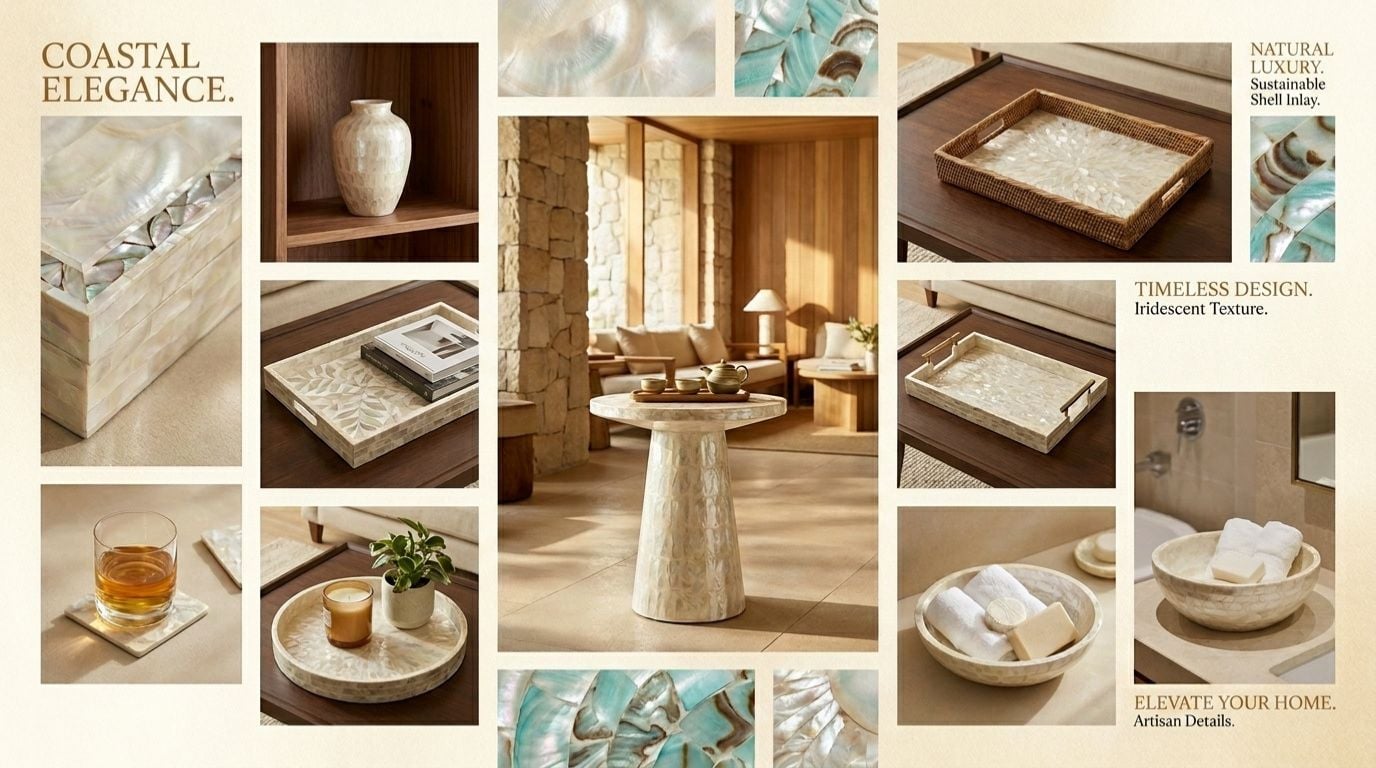
The optical depth of genuine mother‑of‑pearl cannot be replicated by digital printing. When light strikes an inlaid shell surface, the natural iridescence shifts subtly across the tile, creating a living finish that customers instantly recognize as luxury. For high‑end kitchen backsplashes, hotel feature walls, and upscale bathroom décors, this tangible difference is what turns a browsing shopper into a buyer.
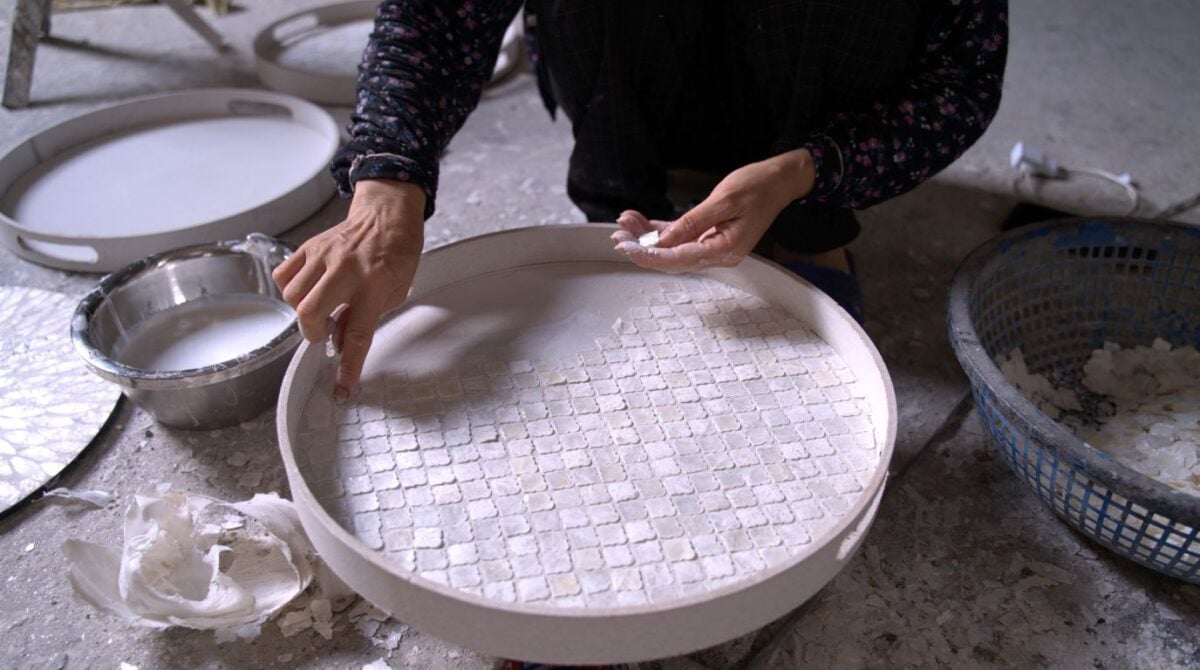
In Vietnam, mother‑of‑pearl inlay has been practiced for over a thousand years. ViettimeCraft preserves this heritage while integrating modern process controls that ensure consistency across large production runs. Each shell piece is cut, fitted, and polished by skilled artisans, yet every batch passes through standardized thickness gauges, gloss testing, and anti‑mold stages. The result is a product that satisfies the emotional draw of handcraft while meeting the repeatability demands of global retail.
Retailers also benefit from the rising consumer preference for natural, authentic materials. A 2024 survey by Grand View Research noted that sales of natural‑surface home décor were growing 6.8% year‑over‑year in North America and Europe . Stocking genuine MOP tile positions your store within that trend while competitors may still rely on synthetic imitations.
How Does Customization Elevate Retailer Margins?
When you sell a one‑of‑a‑kind design that your buyers cannot find anywhere else, you escape price‑based competition. ViettimeCraft’s OEM/ODM service lets you specify the shape (hexagonal, scalloped, arabesque), the exact shell colors (white abalone, green‑blue, copper‑tone oyster), the background lacquer shade, and even the tile substrate (waterproof MDF, plywood, or cement board).
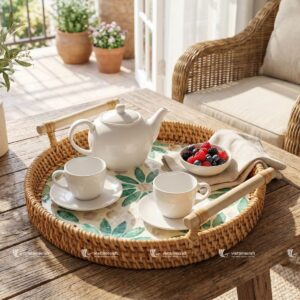
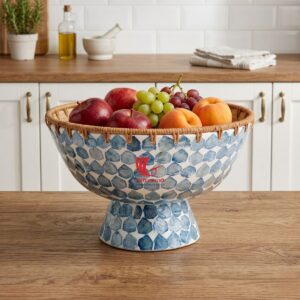
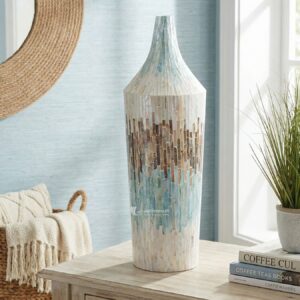
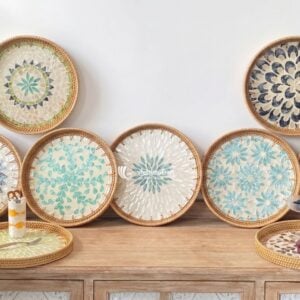
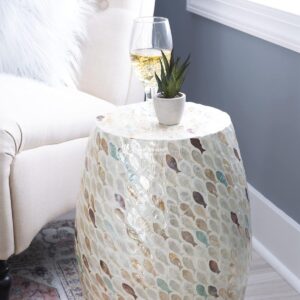
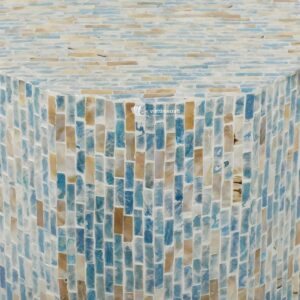
Customization also reduces your dead‑stock risk. Instead of holding generic inventory that might go out of style, you order only what a project requires.
What Quality Controls Ensure Durability and Consistency?
B2B buyers routinely ask about defect rates and long‑term performance. At ViettimeCraft, every batch of mother‑of‑pearl tile undergoes:
- Moisture‑resistance treatment: Substrates are kiln‑dried to below 10% moisture content before inlay. Silica gel packs are included in each 5‑ply export carton to prevent humidity damage during ocean transit.
- Anti‑mold protocol: Natural shell and lacquer surfaces receive an anti‑fungal dip that meets export requirements for the US and EU .
- Gloss hardness test: Finished tiles are tested with a pencil‑hardness gauge (minimum 4H) to confirm scratch resistance.
- Drop‑test packaging: Cartons are drop‑tested at 1.2 m height to simulate typical handling. This standard has kept our damage‑in‑transit rate below 0.3% for three consecutive years .
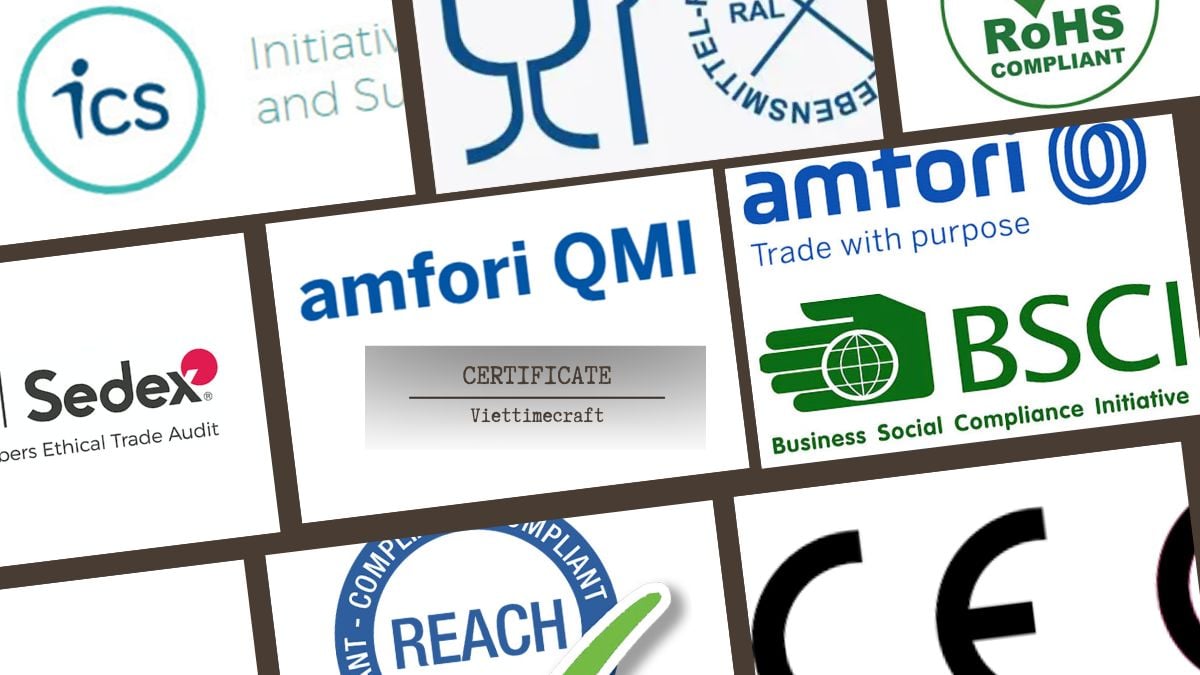
Our factory also holds BSCI certification, confirming fair labor practices and safe working conditions. You can review our BSCI compliance for additional peace of mind.
Mistakes to Avoid When Sourcing Custom Mother‑of‑Pearl Tile from Vietnam
- Skipping the anti‑mold step – Request a certificate of anti‑mold treatment. Without it, tiles stored in humid shops or during transit may develop surface spotting.
- Choosing the wrong substrate – Cement board is ideal for wet areas, but MDF is lighter and more cost‑effective for wall features. Confirm the end‑use before finalizing specifications.
- Underestimating sea‑freight lead time – From Ho Chi Minh City to Long Beach averages 28‑32 days, plus customs clearance. Build this into your project calendar.
- Ordering without a pre‑production sample – Always request a pre‑production sample and approve it before bulk manufacturing. This is the most effective way to prevent disappointment.
- Not checking for shell‑source certification – Vietnamese shell suppliers should provide CITES‑free statements, confirming no endangered mollusks are used.
Frequently Asked Questions
What is the maximum tile size for mother‑of‑pearl inlay?
Our artisans can work up to 600×600 mm per tile while maintaining uniform shell density. For larger murals, multiple tiles are supplied with numbered backing for seamless assembly on site.
Do you provide design assistance for custom patterns?
Our in‑house R&D team can work from your concept sketches, CAD files, or mood boards. Explore our manufacturing process to see how we translate ideas into production‑ready products.
What certifications accompany the exported tile?
Each shipment includes an anti‑mold treatment certificate, a quality control report with ISO 9001 traceability, and a CITES‑free shell origin statement. Our facility also holds BSCI certification.
Contact ViettimeCraft for Your Custom MOP Tile Project
Partnering with a dedicated manufacturer gives you control over design, quality, and margins. We are ready to discuss your idea, send a pre‑production sample, and provide a transparent quote with estimated lead times.
Contact us today to request our wholesale luxury tile catalog and schedule a consultation with our OEM team.